Our In-House Dental Laboratory
The question that matters most about veneers, crowns and implant teeth is whether anyone will be able to tell. Much of the answer is decided in the laboratory, by choices about the proportion of each tooth, the way light passes through it and the texture of its surface.
Your consultation, including a 3D X-ray (CT scan), is free.
Send photos if you have them. Either way, we reply with a cost. No obligation.
Ask about your new teeth
Reviewed by our treatment coordination team. Call or text (310) 770-3335 if you would rather speak now.
Request received
A treatment coordinator will call you within two hours during office hours (Monday to Friday, 9 to 4).
To talk now, call (310) 770-3335.
- A call within two hours during office hours.
- A written cost from us, before you commit to anything.
- No obligation. Many patients take weeks to decide. That is normal.
- Free consultation and 3D X-ray (CT scan)
- Private practice since 2012
- IV sedation in our own office
- In-house dental laboratory
Before, and after.
Every smile on this site was made here: our patients, our laboratory, our work.
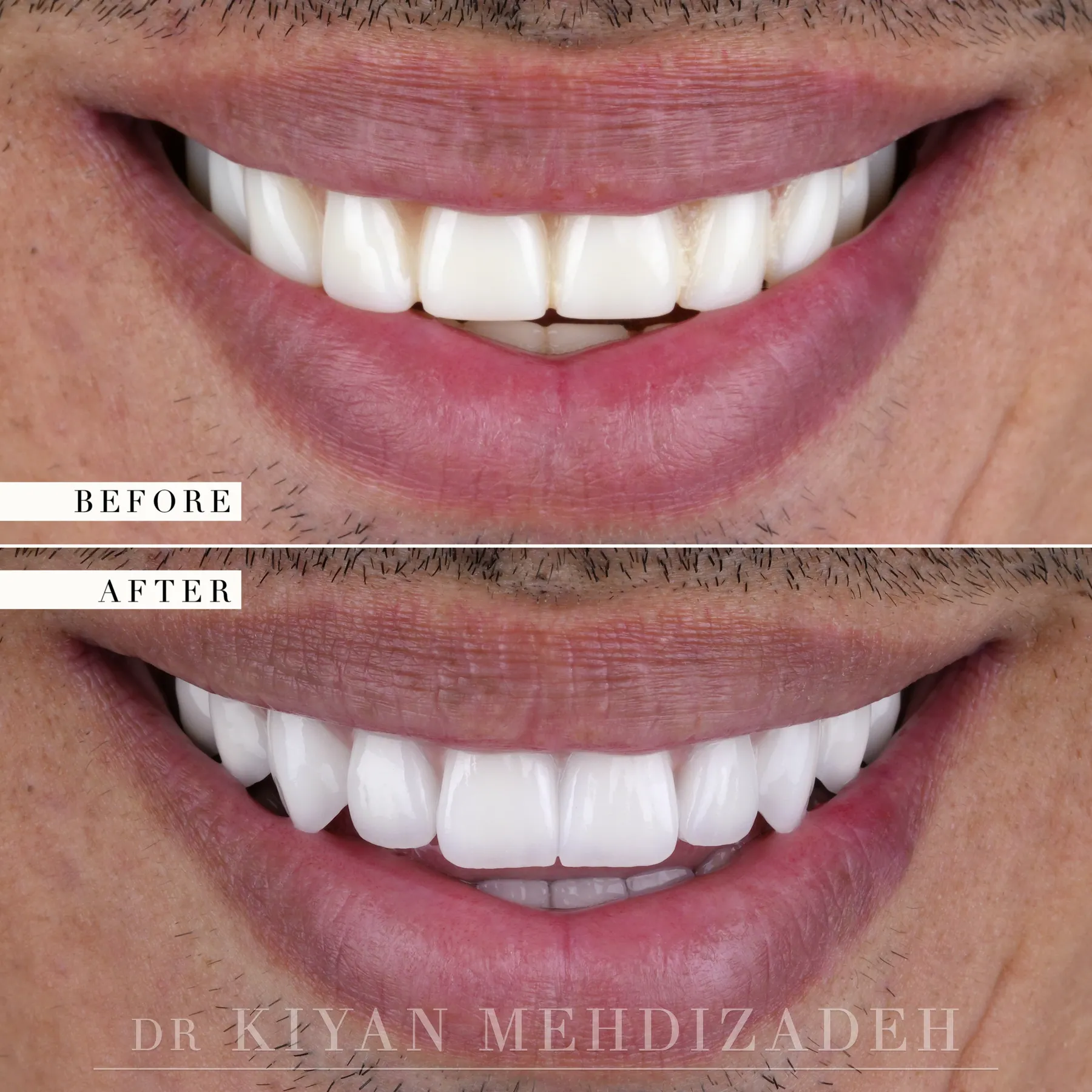 Acrylic teeth on implants placed elsewhere, replaced with hand-stacked porcelain.See the case →
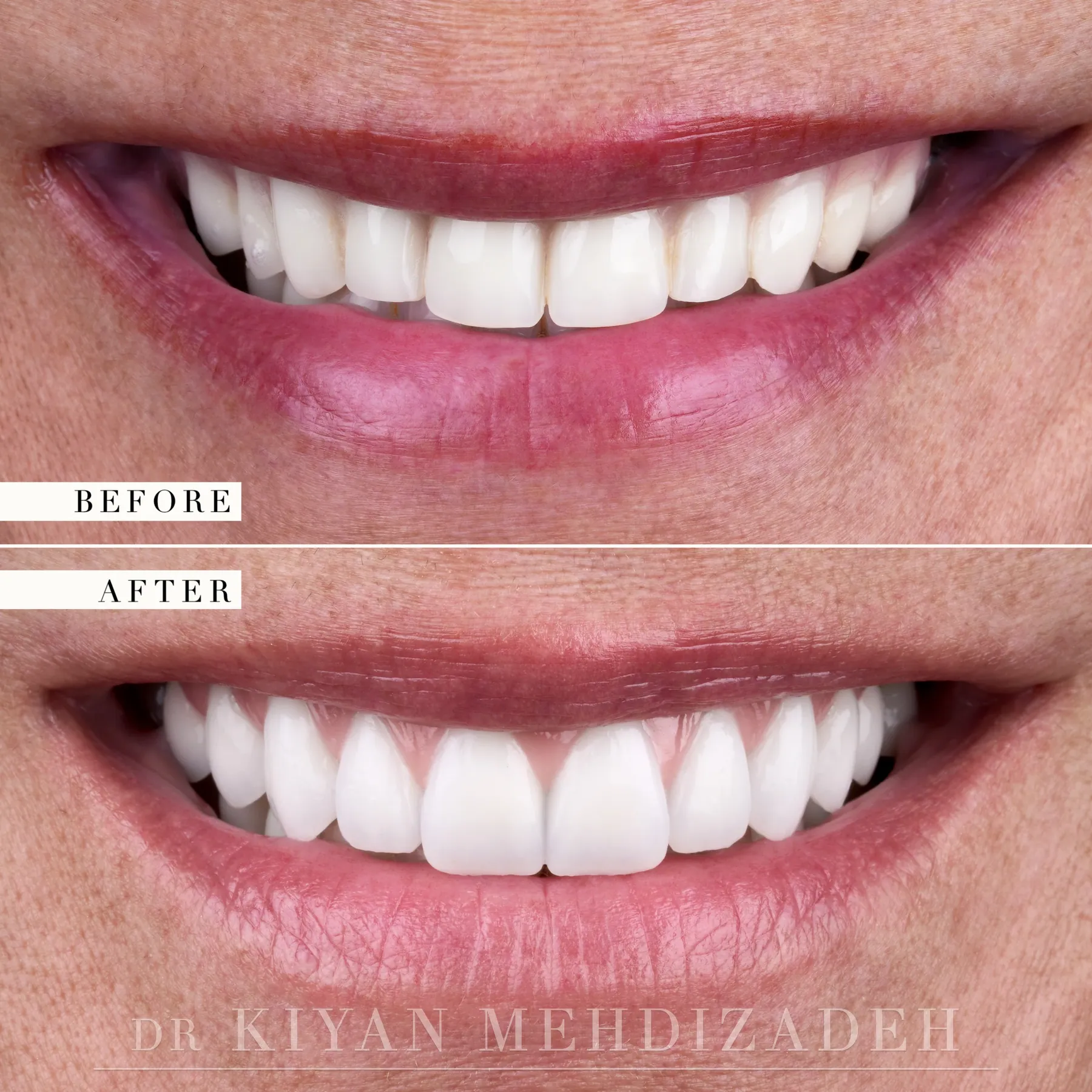 An upper arch rebuilt around the teeth worth keeping.See the case →
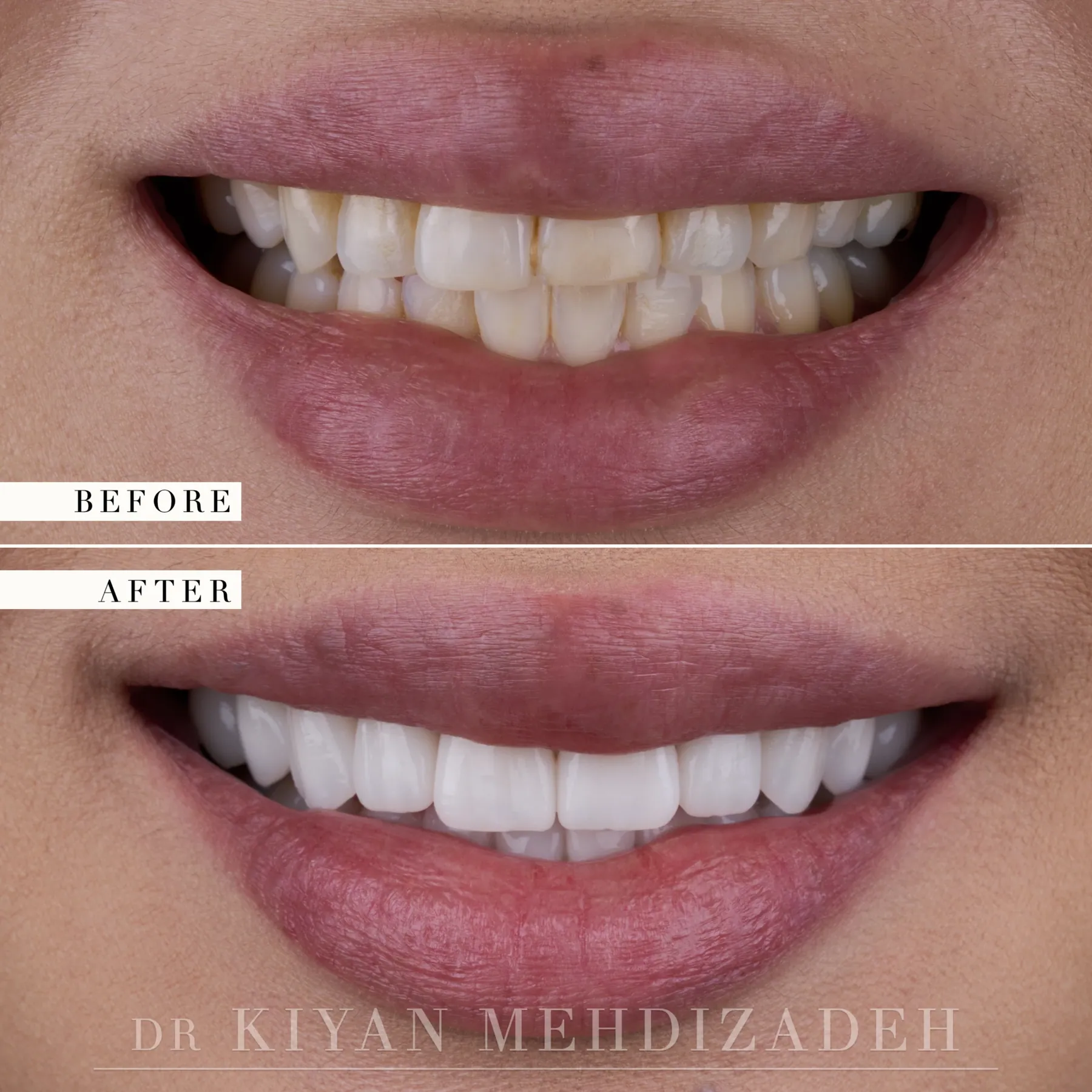 Very white teeth that still look like teeth.See the case →
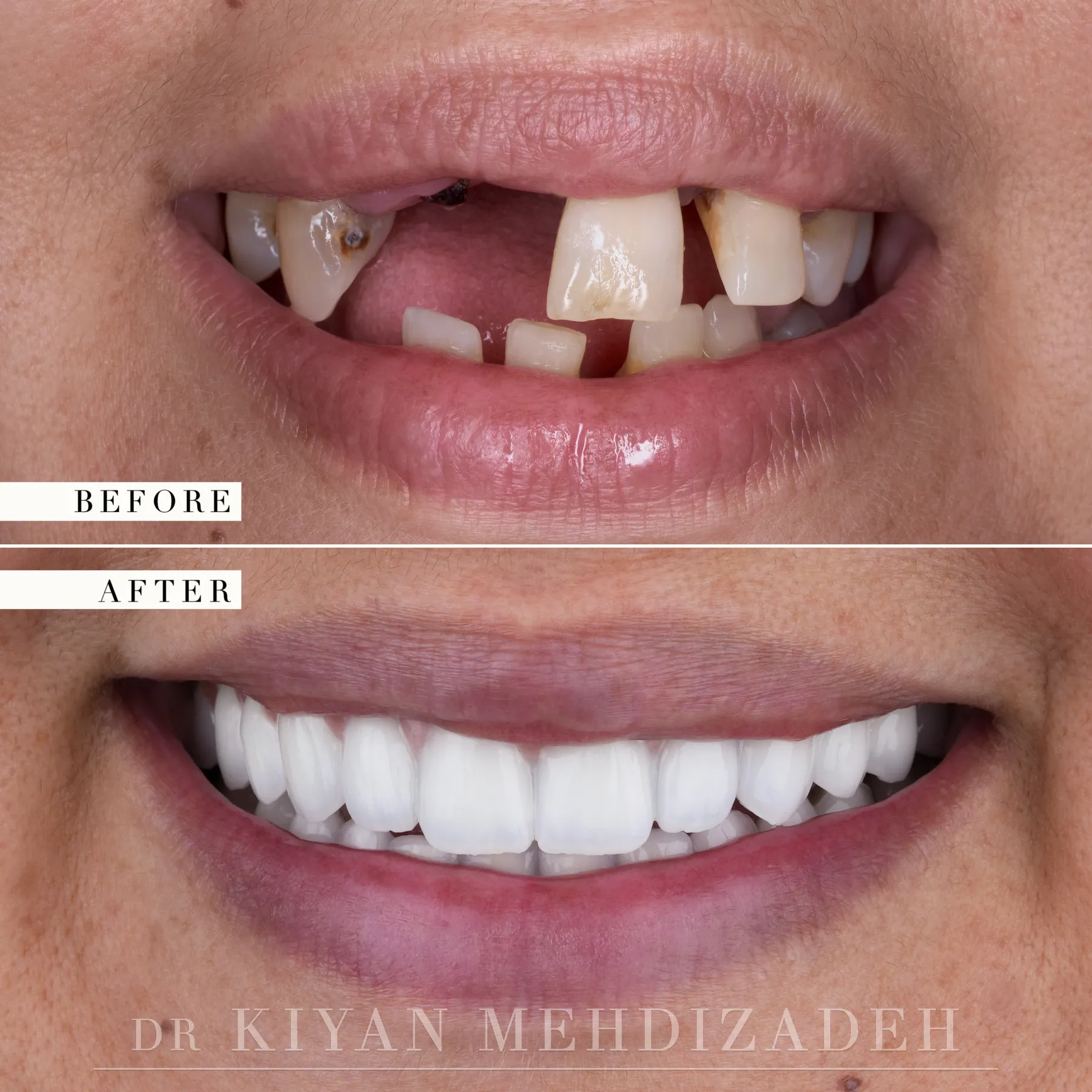 Both arches in hand-stacked porcelain over titanium, with the gum line rebuilt in porcelain.See the case →
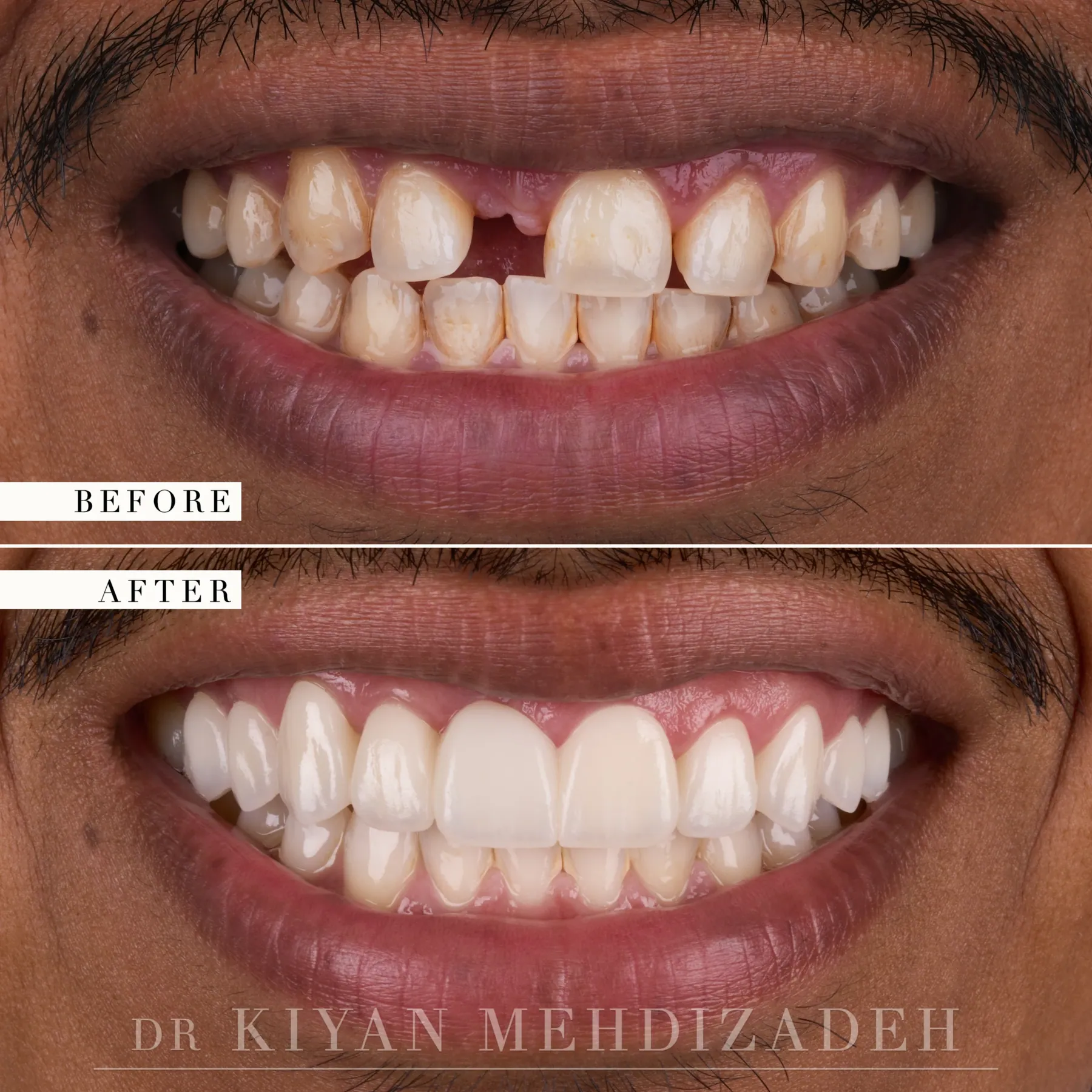 A missing front tooth replaced with a porcelain-layered zirconia bridge and veneers.See the case →
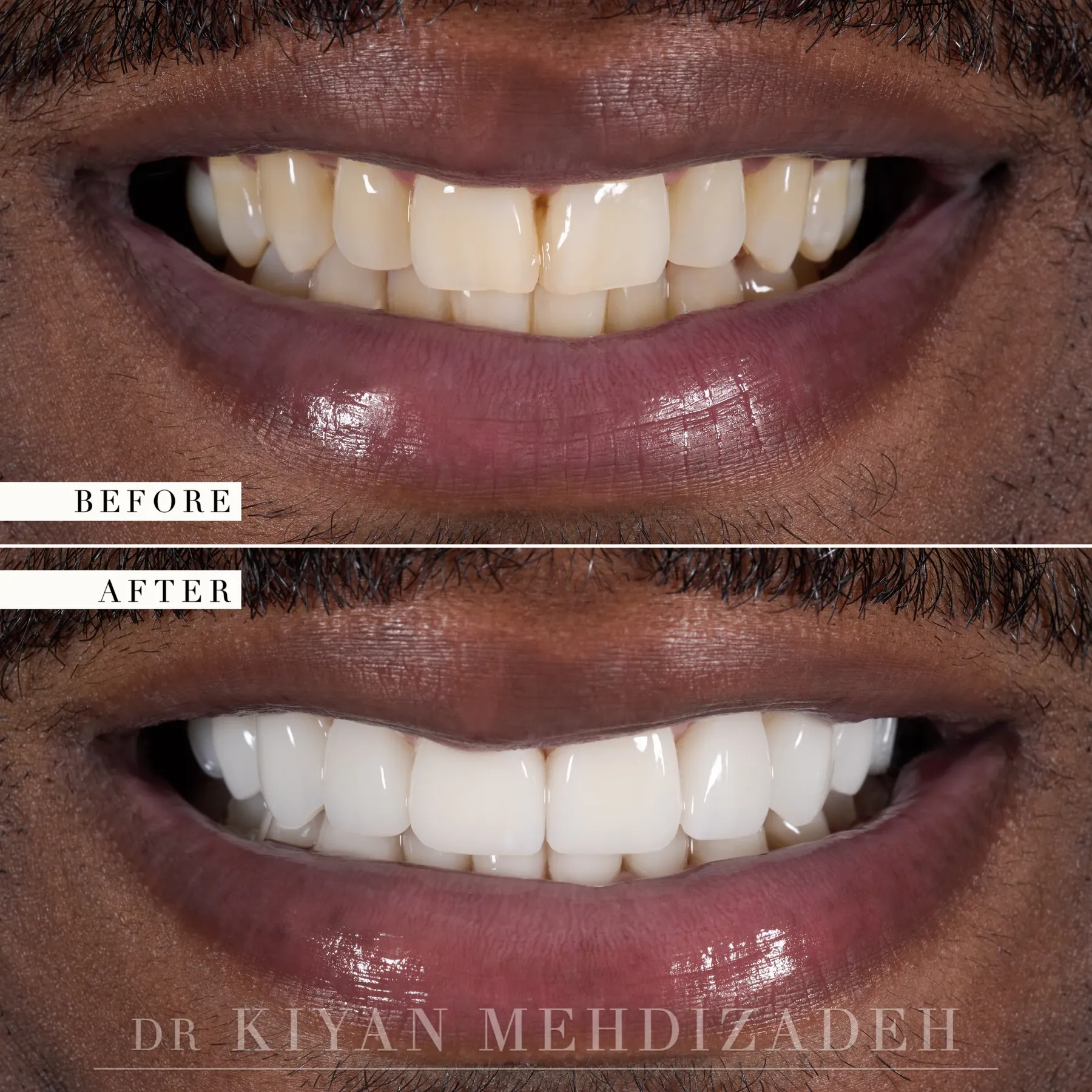 Three implant crowns and seventeen veneers in e.max, designed as one set.See the case →
What Dr. Mehdizadeh and the ceramist decide together.
This page is about those choices, not about machines: scanning and milling are standard tools, and a photograph of them says little about how a tooth will look.
Our laboratory is in the same building as the treatment rooms. One master ceramist works there and makes every veneer, crown and bridge we place.
Dr. Mehdizadeh designs the teeth for the face they belong to: the length and width of each tooth, the line of the edges, where the gum line sits and how the teeth show under the lip at rest and in a broad smile. The ceramist builds that design in porcelain, and decides with him how the color, translucency and surface of each tooth will carry it.
Because the laboratory is in the building, the ceramist and Dr. Mehdizadeh work on your case together, over the case itself.
Proportion, and teeth that suit your age.
Proportion is what the eye reads first, before shade or shape. A tooth that is too long, too wide or too even for the face looks made, at any shade.
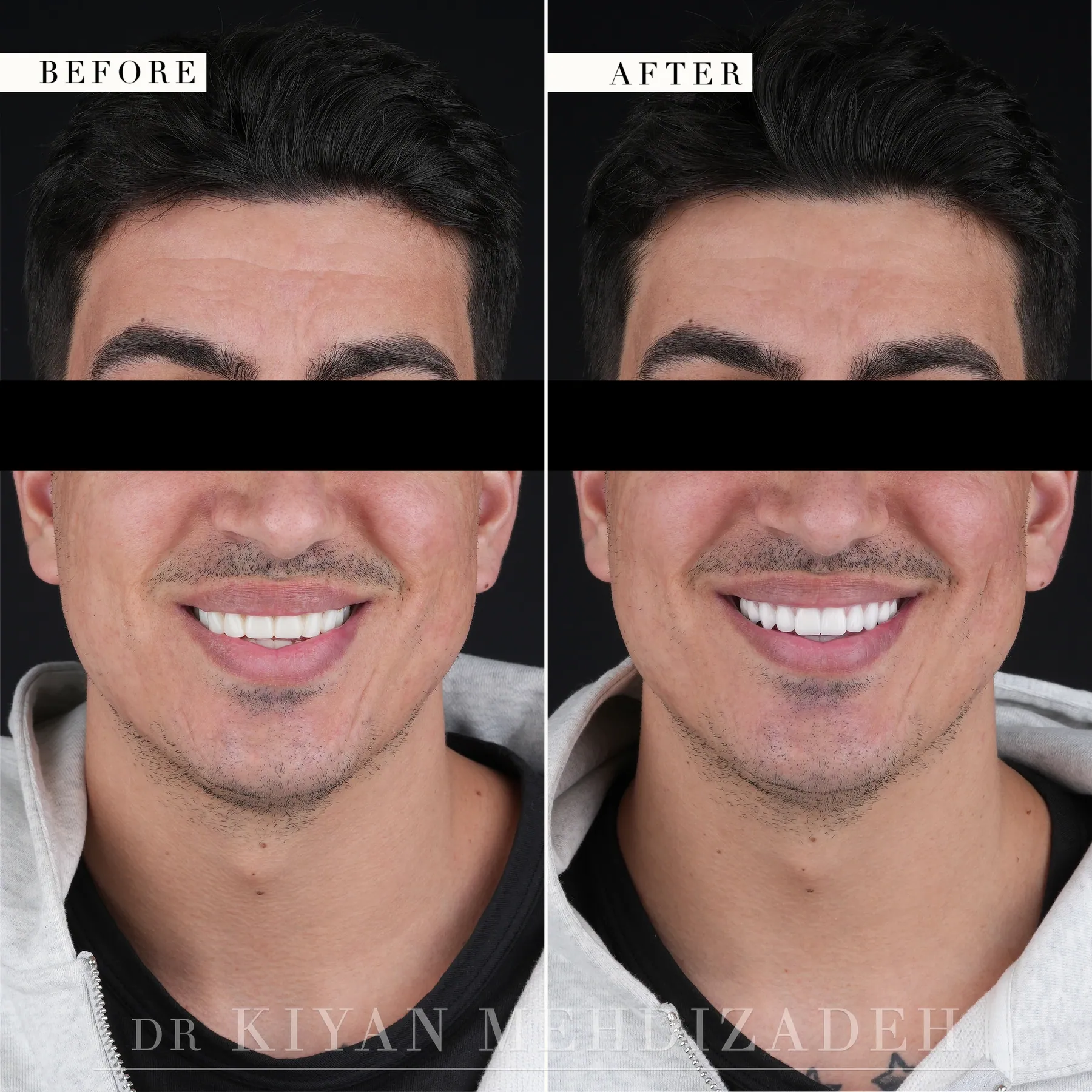
Age shows in teeth. A young canine is pointed; years of wear flatten it. In this case, a man in his thirties, Dr. Mehdizadeh left the canines sharp and varied the edges along the arch rather than running them in one line, so the teeth read as his own age. Teeth that do not suit the age of the face are what people notice as fake.
The same judgment applies to character. Defined angles, slightly flatter edges and balanced proportions carry a masculine smile; in another, the aim was a softer, natural and more youthful result, and we made the shapes soft rather than rectangular.
Matching one tooth to its neighbors.
Natural enamel is not one color. Its saturation runs as a gradient from the gum to the edge, a band of translucency crosses the edge where the enamel thins, and fine texture on the surface scatters light rather than reflecting it evenly. A shade tab records only the first of the three.
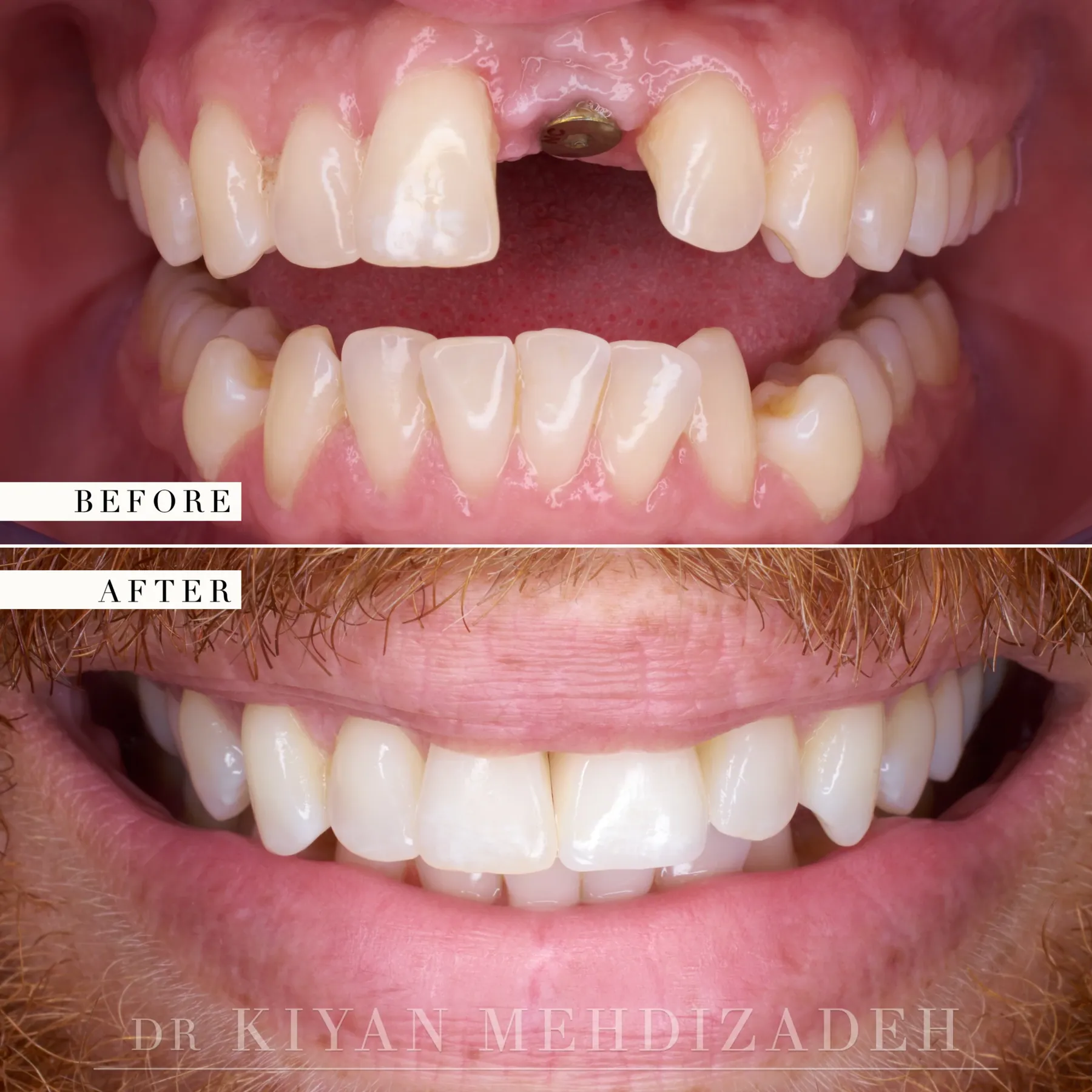
Porcelain also does not respond to whitening, so its color is fixed once it is made. Where natural teeth stay beside a new restoration, we whiten them first, let the shade settle, and record the shade from the neighboring tooth itself. In this case, a single implant replaced an upper front tooth beside eight untouched natural teeth. The ceramist layered porcelain over a zirconia framework to reproduce the gradient, the translucency and the surface of the incisor beside it, and the gum around the implant sits level with its neighbor.
The custom shade match is included in the price of a single implant. A single implant with a custom shade-matched crown is $7,000. $84/month: 144 payments at 9.99% APR, on approved credit.
What hand layering does.
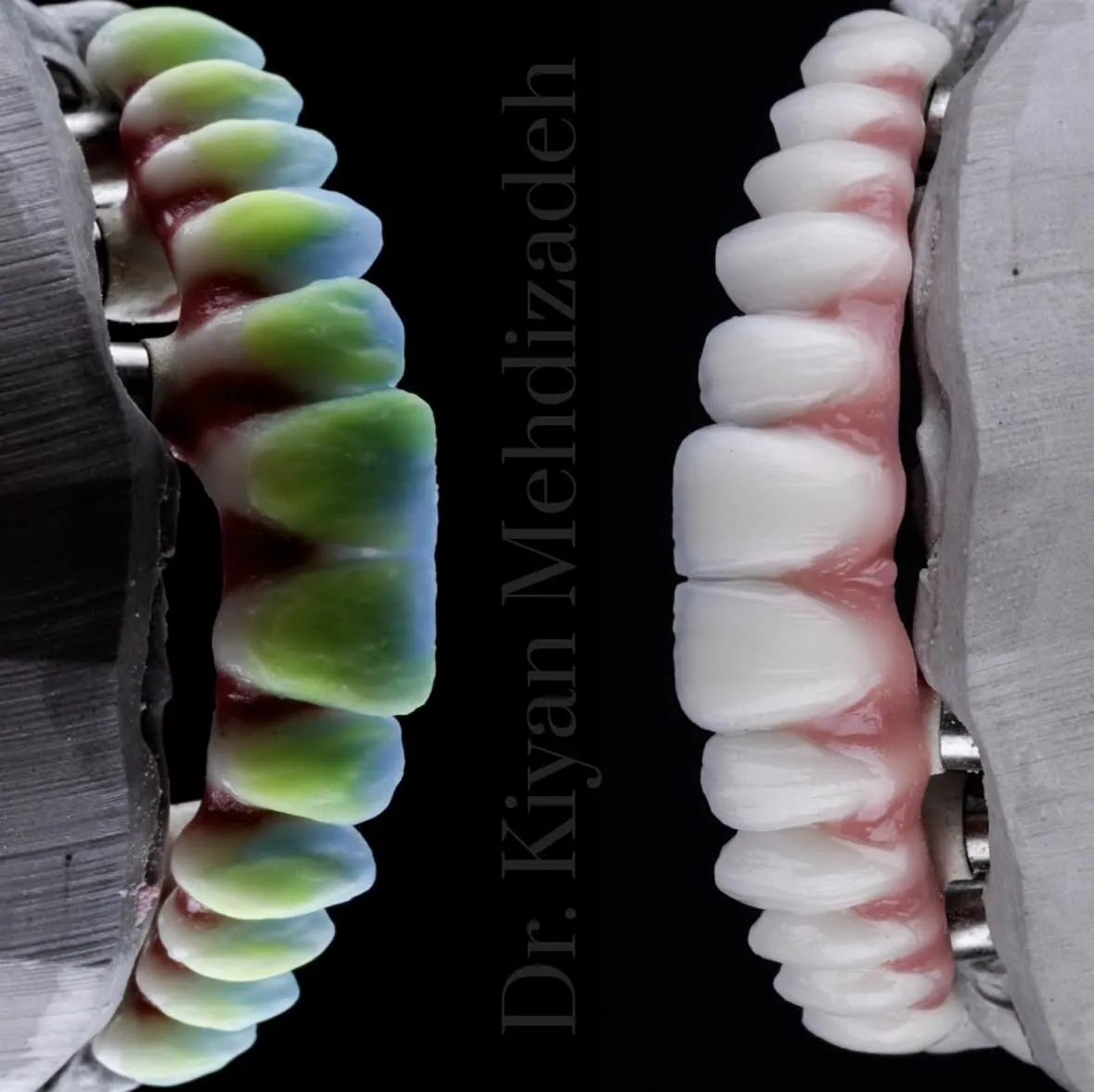
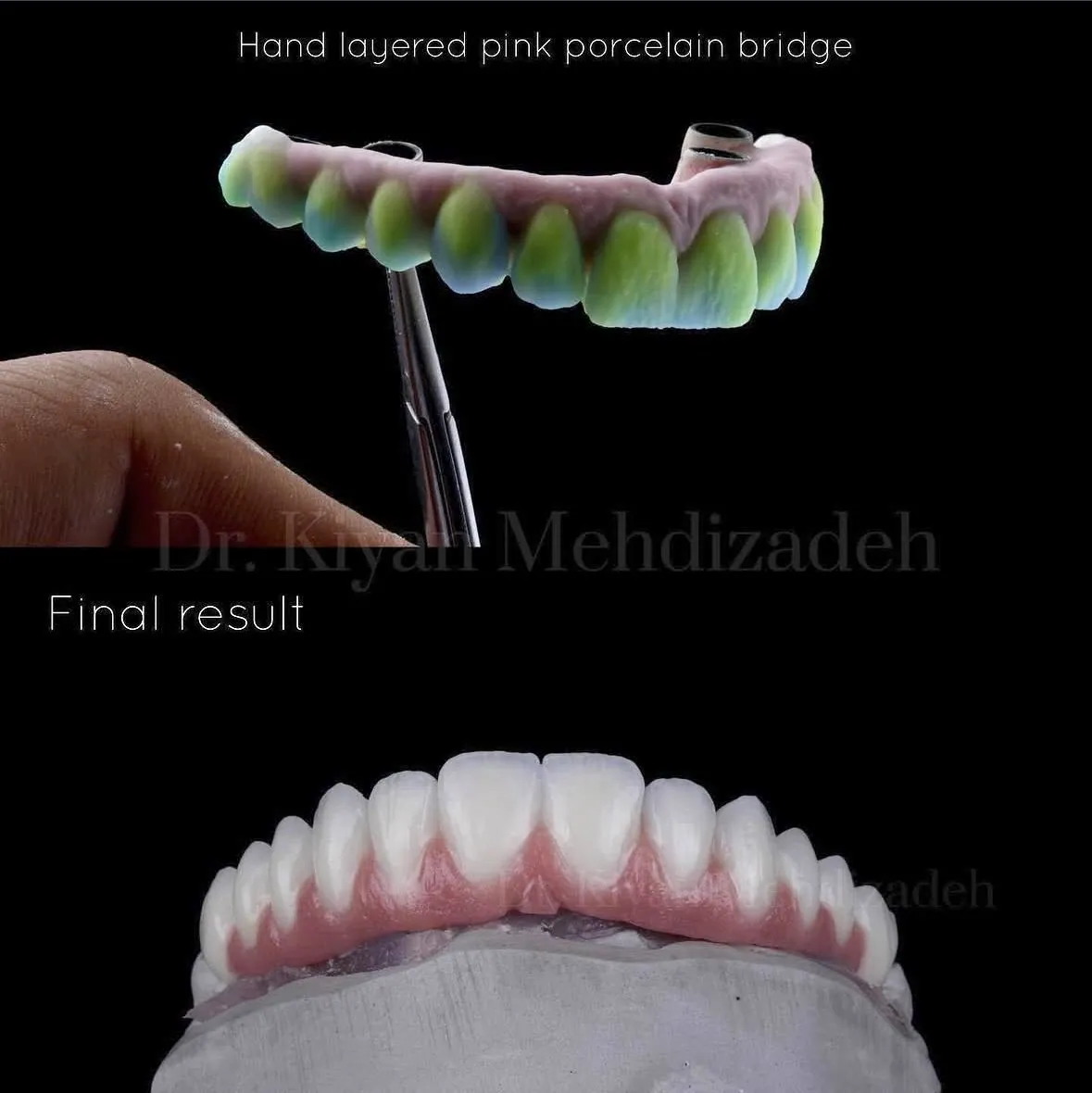
A tooth milled from a single block of ceramic reproduces the gradient and translucency of enamel only approximately. Hand layering builds the tooth the way a natural tooth is built: a body that carries the color, then thinner layers toward the surface, with translucency increasing toward the edge, where a natural tooth is least opaque. That is what gives a layered tooth depth, so that its color seems to come from inside it.
The edge and the surface finish the work. The ceramist varies the edges from tooth to tooth and gives the surface the texture enamel has, which breaks light up instead of returning it in one flash. In this case, that texture is why the new teeth could run brighter than the old ones without the smile looking lit.
That case, this one and this one show the method across a full arch: hand-stacked porcelain over milled titanium, the titanium carrying the bite.
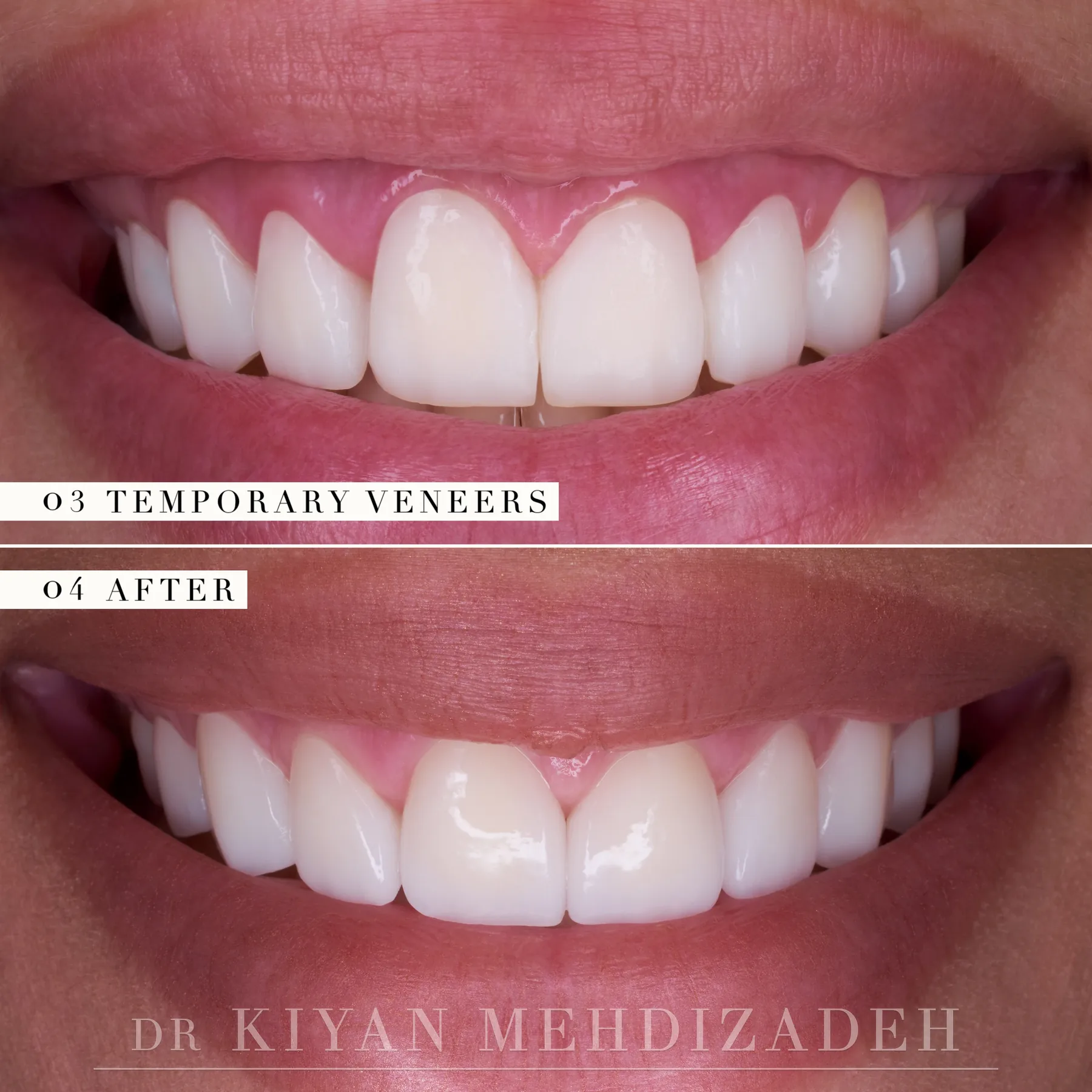
Brightness alone is not what makes teeth look artificial. In this case the patient wanted a much lighter shade, and the twenty-one restorations still look like teeth because their shape and texture were set before the shade was chosen.
Seeing the teeth before they are made.
Nothing final is made from a description. For veneers, we make the design first in temporary veneers, which you wear and we revise in the mouth until you approve them; the ceramist then reproduces what you approved. For a full arch, you wear a try-in prototype, anywhere from a week to several weeks, and approve the shape, shade and length before the final teeth are made.
The laboratory between appointments.
When something needs changing at a try-in, the ceramist changes it in the building, and nothing waits on a courier. Where a restoration has to be made again rather than adjusted, the ceramist makes it here too.
For patients who travel, from within the United States or from abroad, this is what can shorten the second trip.
The materials, in plain terms.
e.max (lithium disilicate). A glass-ceramic that is strong at the thickness of a veneer and lets light through the way enamel does. It is bonded to the tooth. Our laboratory made the veneers and implant crowns of this case, this one and this one in e.max.
Hand-layered porcelain. Porcelain built up by hand in layers over a stronger framework, for the depth and translucency a front tooth needs. In this case and this one, the ceramist layered an implant crown and a bridge over zirconia.
Zirconia. A very strong white ceramic, used as the framework under layered porcelain, for full arches in hand-layered zirconia, which resists staining and wear, and for custom abutments, the connectors on an implant, so that no metal shows gray through the gum.
PMMA on milled titanium. A dense acrylic forming the teeth and gum on a bar milled from titanium, which gives the bridge its rigidity. It is lighter than ceramic and quicker to repair or remake; it wears and can take on stain, so the teeth are expected to need refurbishment at some point. This case shows it in both arches.
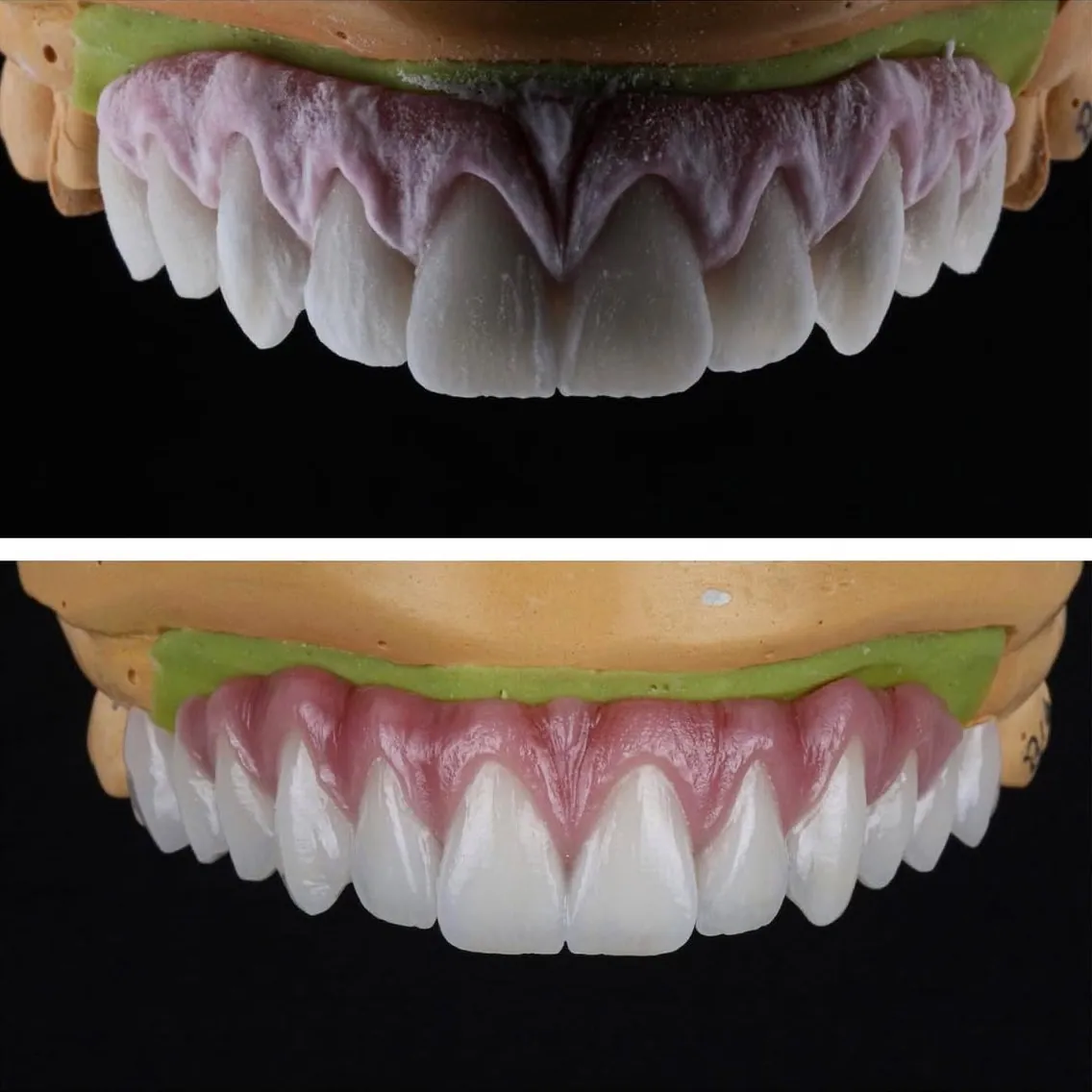
Pink porcelain. Porcelain shaded to match gum rather than tooth. It replaces gum and bone height that has been lost, after gum disease, an infection or years of failing dental work. It is needed when the gum line has receded: rebuilding only the teeth onto that gum line leaves them too long. Pink porcelain rebuilds the gum line where it used to sit, and the papilla, the small triangle of gum between teeth, so the teeth can keep natural proportions. The ceramist layers it like the teeth, so the color varies the way gum does. The alternative is to rebuild the gum and bone themselves with grafting where the site allows it; where it does not, pink porcelain is how the lost height is replaced. This case and this one show it.
Prices for each treatment are on our dental implants and porcelain veneers pages.
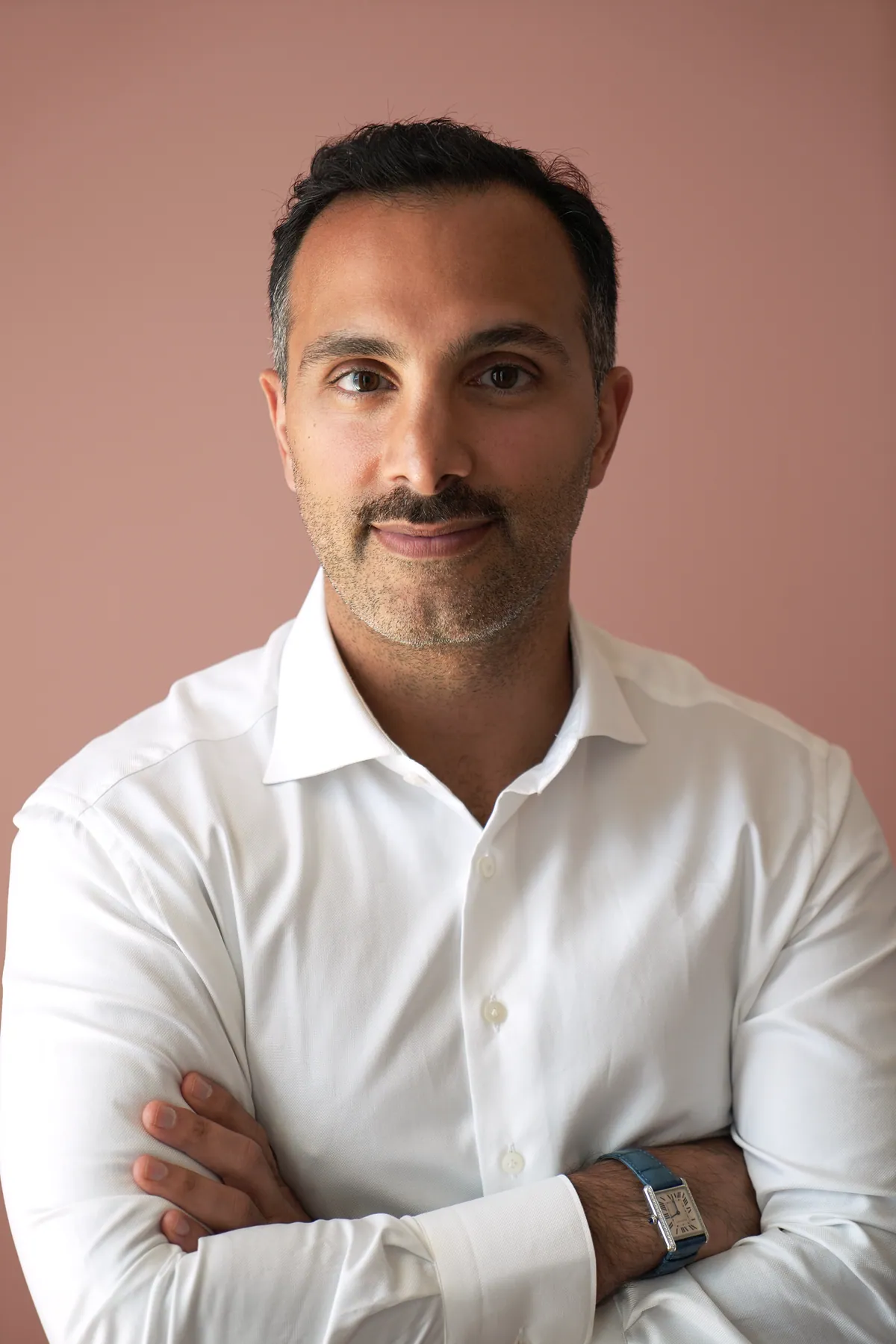
One doctor, from the design to the final porcelain.
Dr. Mehdizadeh designs every case himself, and our laboratory, in the same building, makes it. He completed the Master Program in Fixed Prosthodontics with Fradeani Education in Italy, and trained in Aesthetic Dentistry at the UCLA School of Dentistry.
Find out what your new smile would cost.
Tell us what is going on. Add photos if you have them; if not, we will call and talk it through.
Or call (310) 770-3335.
Ask about your new teeth
Reviewed by our treatment coordination team. Call or text (310) 770-3335 if you would rather speak now.
Request received
A treatment coordinator will call you within two hours during office hours (Monday to Friday, 9 to 4).
To talk now, call (310) 770-3335.
Frequently Asked Questions
Who makes my veneers and crowns?
The master ceramist in our laboratory, in the same building as the treatment rooms. The ceramist makes every veneer, crown and bridge we place, to the design Dr. Mehdizadeh sets.
What does hand layering add?
Depth. Layering builds color in the body of the tooth and translucency toward the edge, which a tooth milled from one block reproduces only approximately, and the ceramist finishes the surface with the texture enamel has.
What are e.max veneers?
Veneers in lithium disilicate, a glass-ceramic that is strong at veneer thickness and lets light through the way enamel does. They are bonded to the tooth.
Can very white teeth still look natural?
Yes, when the shape and surface are right first. A tooth looks natural because of its proportions and texture; a flat, even tooth looks made at any shade. In one of the cases on this page, the shape was approved before the shade was chosen.
How do you match an implant crown to my own teeth?
We whiten the natural teeth first if you want them lighter, let the shade settle, and record the shade from the tooth beside the implant. The ceramist then layers porcelain to reproduce its gradient, translucency and surface.
Will I see my new teeth before they are made?
Yes. We design veneers first in temporaries that you wear and approve. For a full arch, you wear a try-in prototype and approve the shape, shade and length before the final teeth are made.
What is pink porcelain, and when is it needed?
Porcelain shaded to match gum. It is needed when gum and bone have been lost, because teeth built onto a receded gum line come out too long. Pink porcelain rebuilds the gum line and the papilla so the teeth keep natural proportions. Where the site allows, grafting can rebuild the tissue instead.
Can changes be made after the try-in?
Yes. The ceramist adjusts the restoration in the building, without sending it away, and remakes it here if it has to be made again.
Last Updated: October 2026