Last Updated: October 2026
What this case cost
$323/month
144 payments at 9.99% APR, on approved credit.
Total: $27,000 for the orthodontics, a three-unit porcelain-layered zirconia bridge and seven porcelain veneers.
Missing a front tooth for years?
When a tooth has been gone a long time, two things happen quietly: the neighboring teeth drift into the space, and the bone underneath it shrinks. That changes what it takes to replace it well - sometimes an implant is the right answer, and sometimes a bridge is the more predictable one. If you've been living with a gap, send us a photo and we'll tell you honestly what your options are.
- A call within two hours during office hours.
- A written cost from us, before you commit to anything.
- No obligation. Many patients take weeks to decide. That is normal.
Ask about your case
Reviewed by our treatment coordination team. Call or text (310) 770-3335 if you would rather speak now.
Request received
A treatment coordinator will call you within two hours during office hours (Monday to Friday, 9 to 4).
To talk now, call (310) 770-3335.
Treatment Plan by Dr. Mehdizadeh
- Professional cleaning and health baseline
- Orthodontics to reopen and redistribute the space
- Whitening to set the base shade
- Gum lift (gingival recontouring) for symmetry
- Three-unit bridge in porcelain-layered zirconia
- Porcelain veneers to harmonize the surrounding teeth
The Patient's Journey
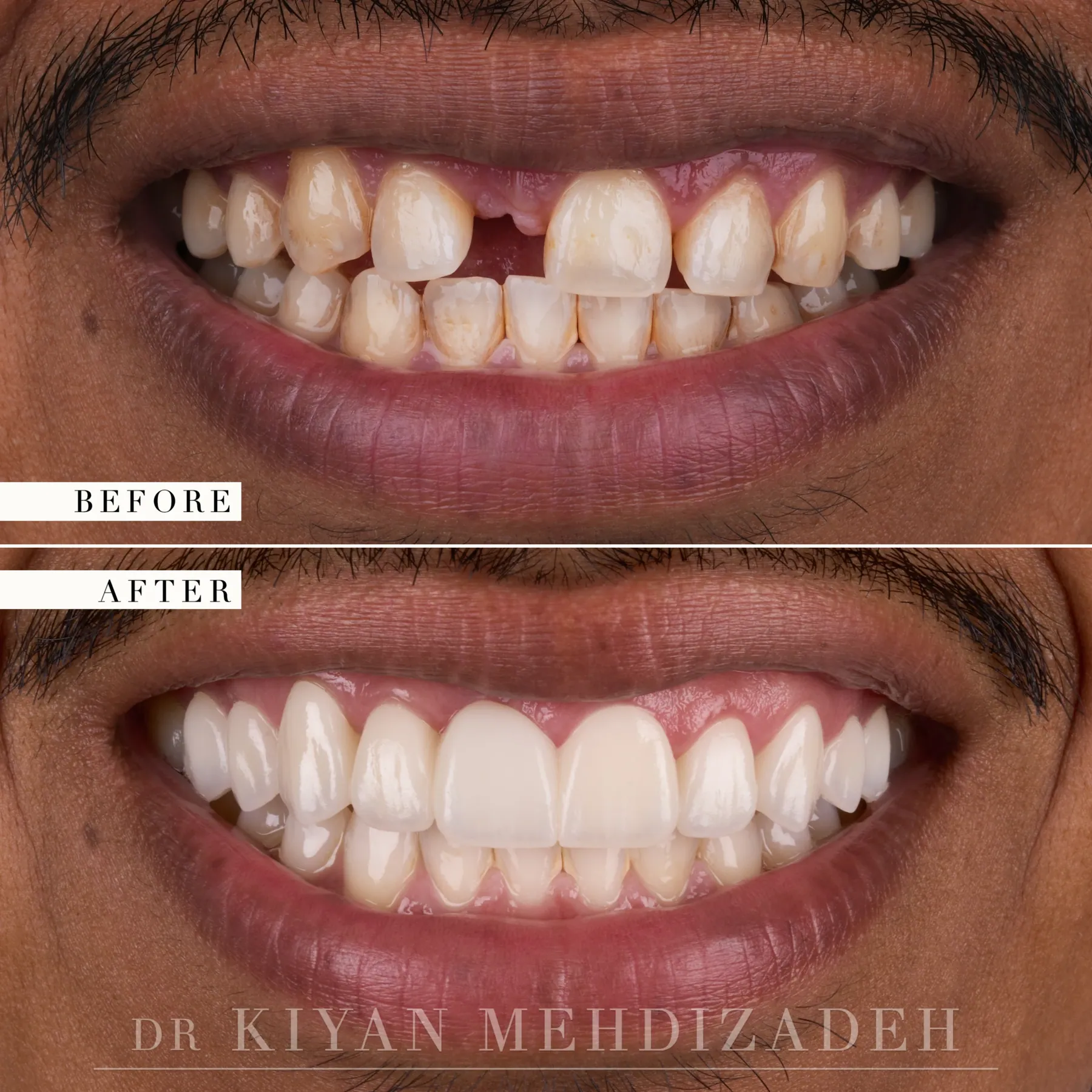
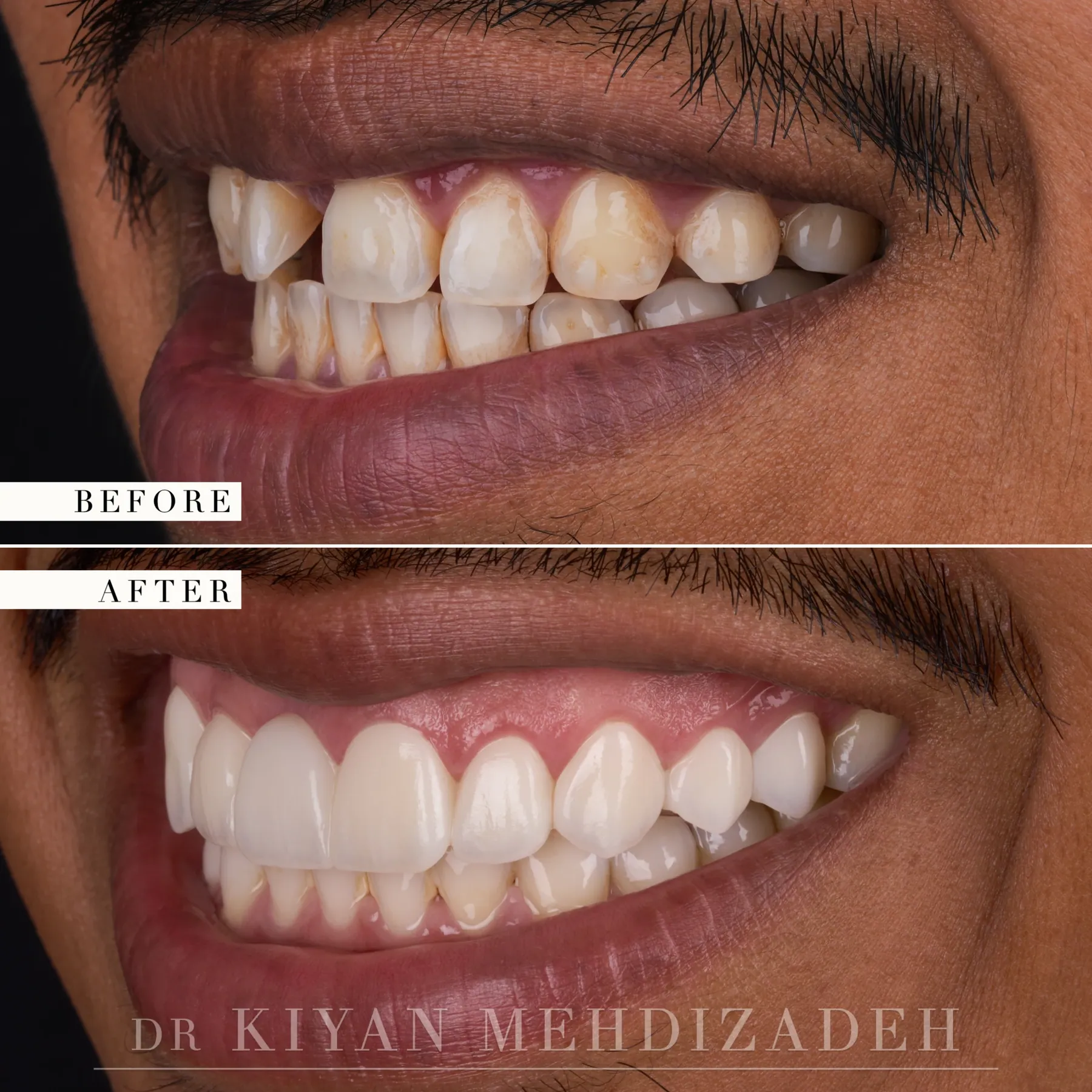
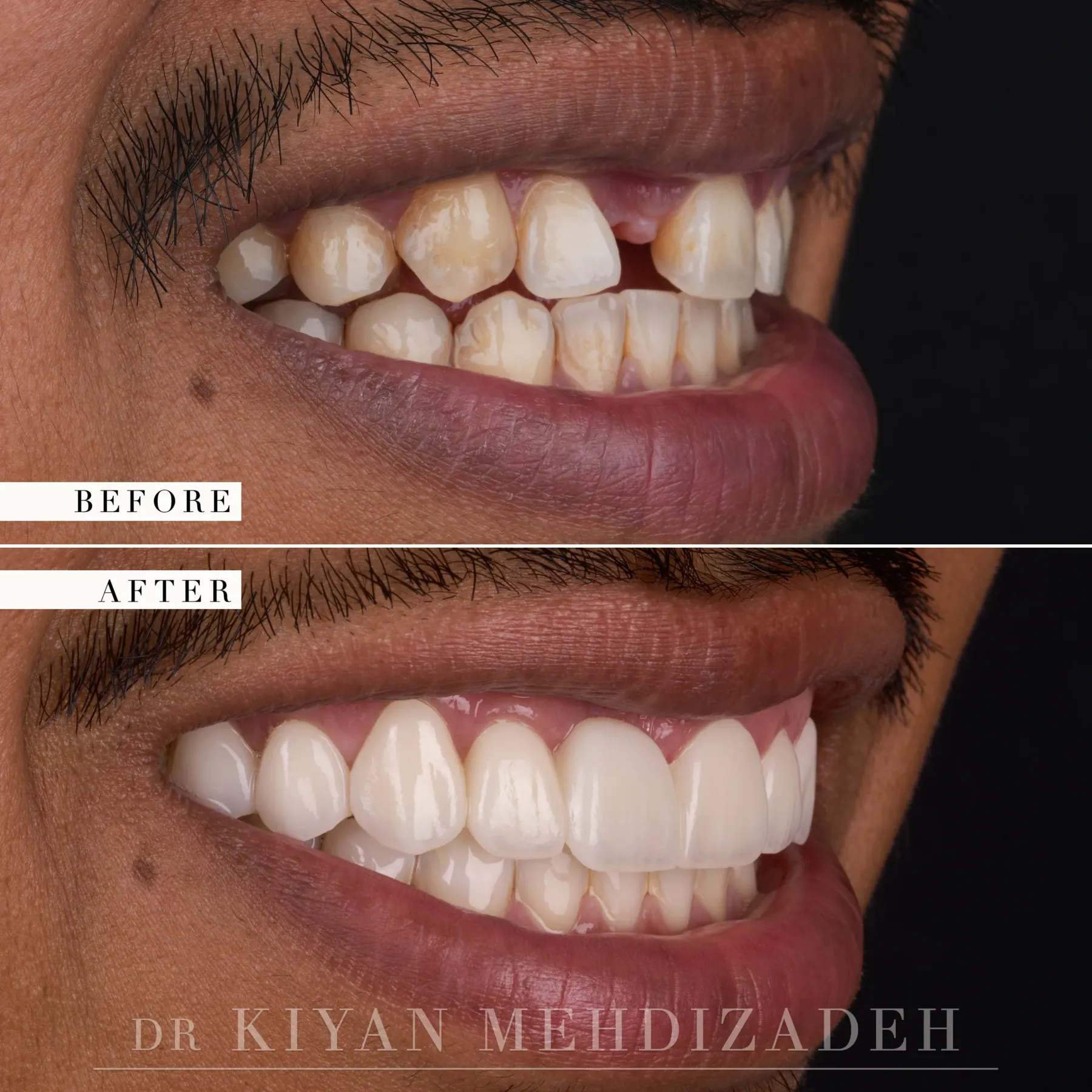
This patient had been missing an upper front tooth since childhood. Over the years, the neighboring teeth drifted toward the empty space - which narrowed the gap, shifted the spacing, and changed the way the smile filled the lower third of his face. He wanted what most people in his position want: a smile that looks complete and natural, not obviously worked on.
A missing tooth is never just a gap. The teeth around it move, and the bone beneath it changes - so the longer it has been, the more there is to account for.
Understanding the Challenge
A tooth that has been missing since childhood complicates its own replacement in two ways. First, the adjacent teeth tip and drift into the space, so the opening left behind is rarely the right width or shape for a properly proportioned replacement. Second, once a tooth is gone the ridge of bone that held it gradually resorbs - losing width and height over time. That matters, because a dental implant needs a certain volume of healthy bone to be placed predictably, especially in the front of the mouth where the gum line is on full display.
Here, the site would have required significant bone grafting to rebuild enough ridge to support an implant - and grafting in an esthetic zone carries a less predictable gum-line result. Weighing that against the patient's goals, a three-unit bridge was the more dependable path to a natural, stable outcome.
Initial Findings
A long-standing edentulous space in the esthetic zone; adjacent teeth drifted into the gap; insufficient ridge volume for a straightforward implant; overall shade and proportion that needed harmonizing.
The Treatment Sequence
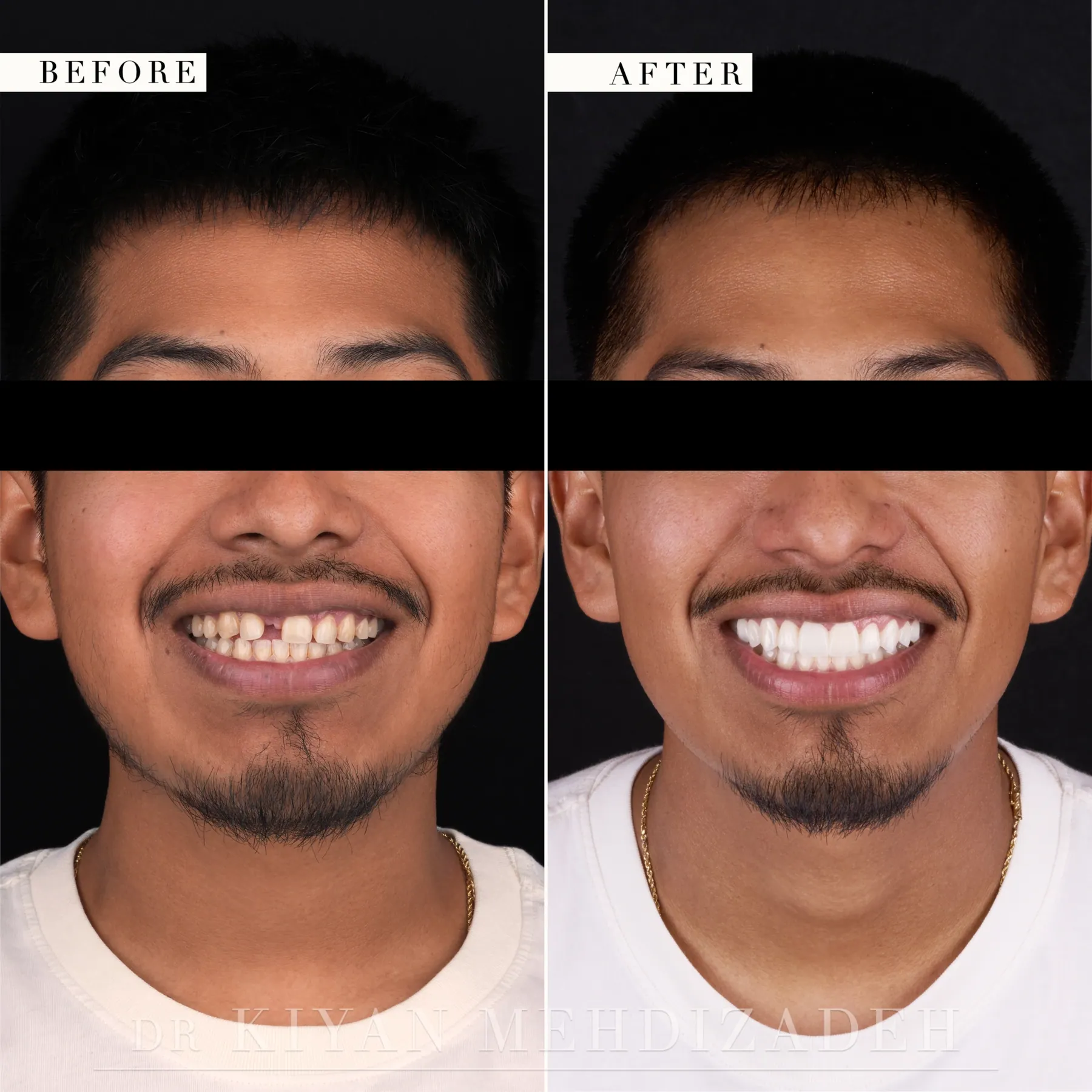
Orthodontics came first, to reopen the space and distribute it correctly - so the replacement tooth would sit at the right width and the midline would read properly. With the arch aligned, whitening set the base shade, since porcelain is matched to the lightened natural teeth, not the other way around. A gum lift refined the gum levels for symmetry as part of the smile design.
The missing tooth was then replaced with a three-unit bridge: the two teeth on either side of the gap serve as anchors (abutments) for a single replacement tooth (the pontic) suspended between them. It was made in porcelain-layered zirconia - a strong zirconia core for durability, with hand-layered porcelain on top for the translucency and depth that make a front tooth look real. Finally, porcelain veneers harmonized the surrounding teeth in shape, proportion, and shade, so the bridge disappears into the smile rather than standing out from it.
The Result
A complete, natural smile - one that restores the way it fills his face, not just the individual tooth. The work he had been putting off for years was resolved in a single, sequenced plan.
Frequently Asked Questions About Bridges and Veneers
Can you replace a missing front tooth without an implant?
Yes. A fixed dental bridge replaces a missing tooth by anchoring a replacement to the teeth on either side of the gap - no implant or surgery into the bone required. It is often the more predictable choice when the site has lost bone.
What is a three-unit bridge?
Three connected units: crowns on the two teeth bordering the gap (the abutments) support a replacement tooth between them (the pontic), all fabricated as one piece and cemented in place.
Why choose a bridge instead of an implant here?
After a tooth has been missing for years, the ridge often resorbs. This site would have needed significant bone grafting to place an implant, with a less predictable gum-line result in a highly visible area. A bridge replaced the tooth dependably without relying on that grafting.
Why was orthodontics needed first?
Because the neighboring teeth had drifted into the space over the years, the gap was the wrong size and shape. Orthodontics reopened and redistributed it so the replacement tooth could be properly proportioned.
What is a porcelain-layered zirconia bridge?
A bridge with a zirconia framework for strength, finished with hand-layered porcelain for a lifelike appearance - a common choice for front teeth where both durability and esthetics matter.
How long does a dental bridge last?
With good hygiene and regular care, bridges typically last around 10 to 15 years, and often longer. Longevity depends on keeping the supporting teeth and gums healthy.
Why add veneers to the other teeth?
To harmonize the smile. Matching the surrounding teeth in shape, proportion, and shade lets the bridge blend in rather than read as a single different-looking tooth.
Will it look natural?
That is the goal and the reason for the layered-porcelain material and the whitening and veneer work around it - the replacement is designed to match its neighbors in color, texture, and proportion.
How do you clean under a bridge?
A floss threader, interdental brush, or water flosser cleans beneath the pontic. Keeping the supporting teeth and gums healthy is what protects the bridge over time.
What does treatment like this cost?
This case was $27,000, covering the orthodontics, a three-unit porcelain-layered zirconia bridge and seven porcelain veneers. $323/month: 144 payments at 9.99% APR, on approved credit.
Last Updated: October 2026