Replacing Old Veneers or Implants in Beverly HillsDental work that failed, or that looks wrong.
Veneers, bonding, crowns and implants placed elsewhere can fail in health or in how they look. Both are failure, and both get the same attention here.
Replacing veneers: from $16,000
$192/month 144 payments at 9.99% APR, on approved credit.
Single-implant revision $8,000. Full arch from $34,000 per arch.
Your consultation, including a 3D X-ray (CT scan), is free.
Send photos if you have them. Either way, we reply with a cost. No obligation.
Ask about replacing old work
Reviewed by our treatment coordination team. Call or text (310) 770-3335 if you would rather speak now.
Request received
A treatment coordinator will call you within two hours during office hours (Monday to Friday, 9 to 4).
To talk now, call (310) 770-3335.
- A call within two hours during office hours.
- A written cost from us, before you commit to anything.
- No obligation. Many patients take weeks to decide. That is normal.
- Free consultation and 3D X-ray (CT scan)
- Private practice since 2012
- IV sedation in our own office
- In-house dental laboratory
Before, and after.
Every smile on this site was made here: our patients, our laboratory, our work.
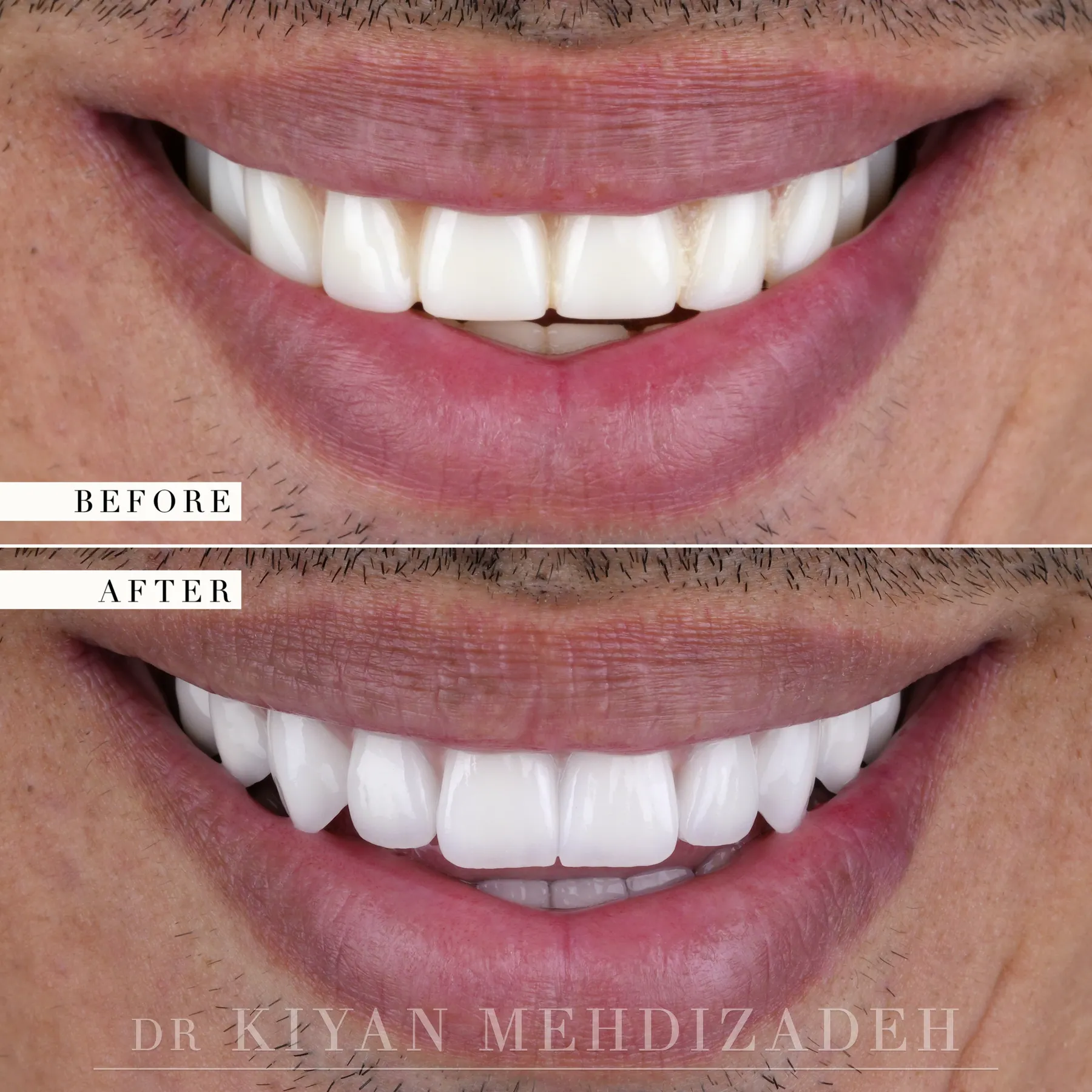
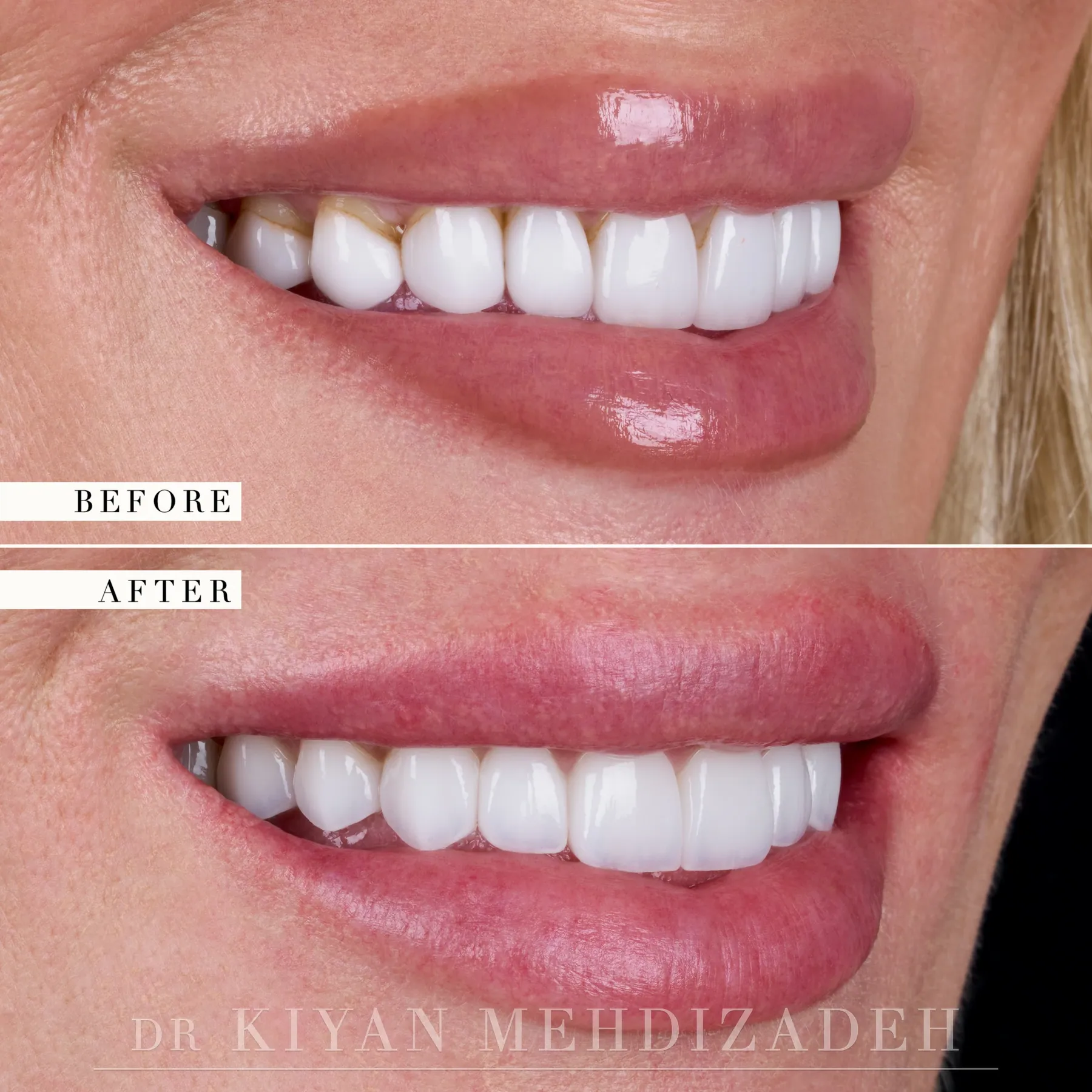
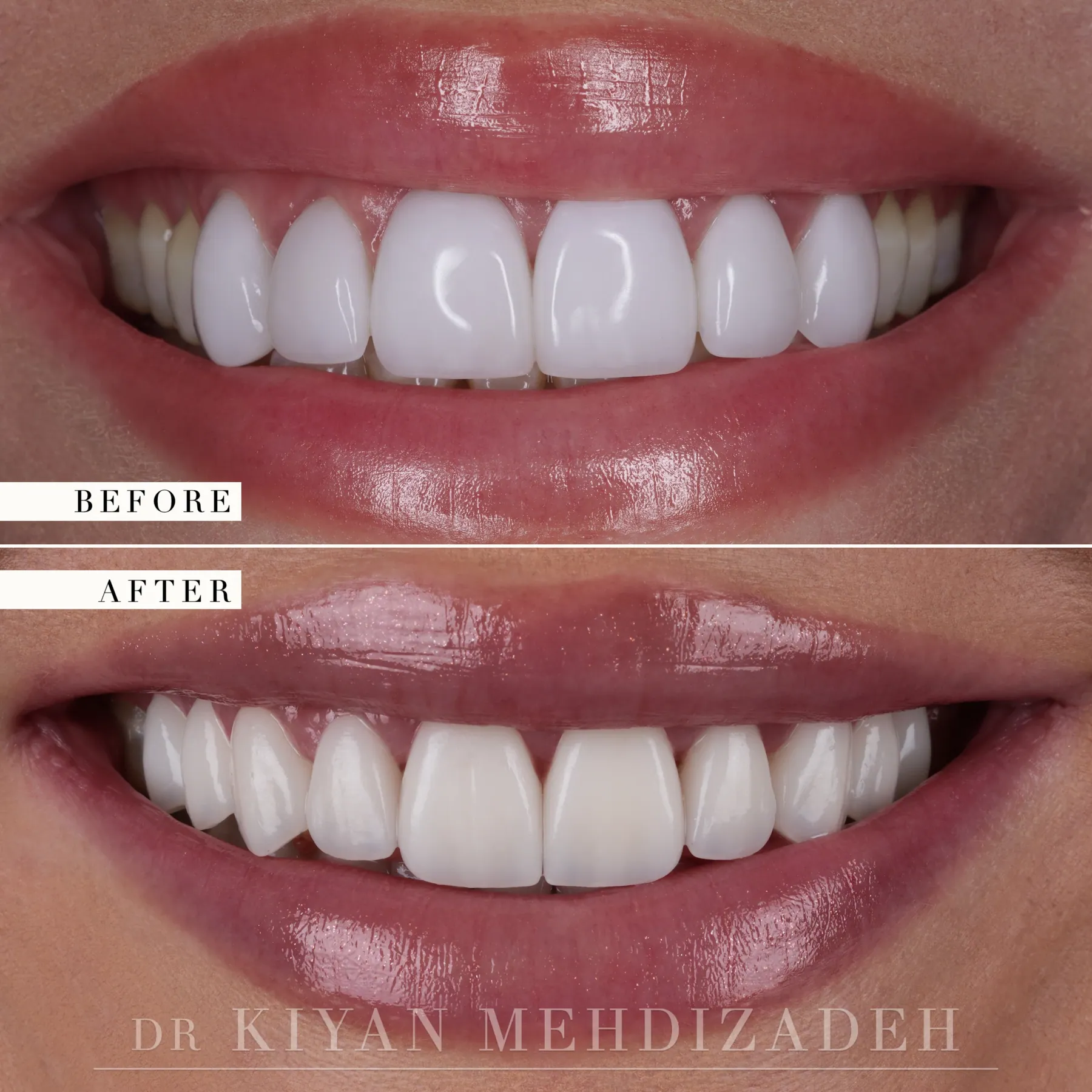 Bulky, opaque veneers from another practice replaced, with the gum line corrected first.See the case →
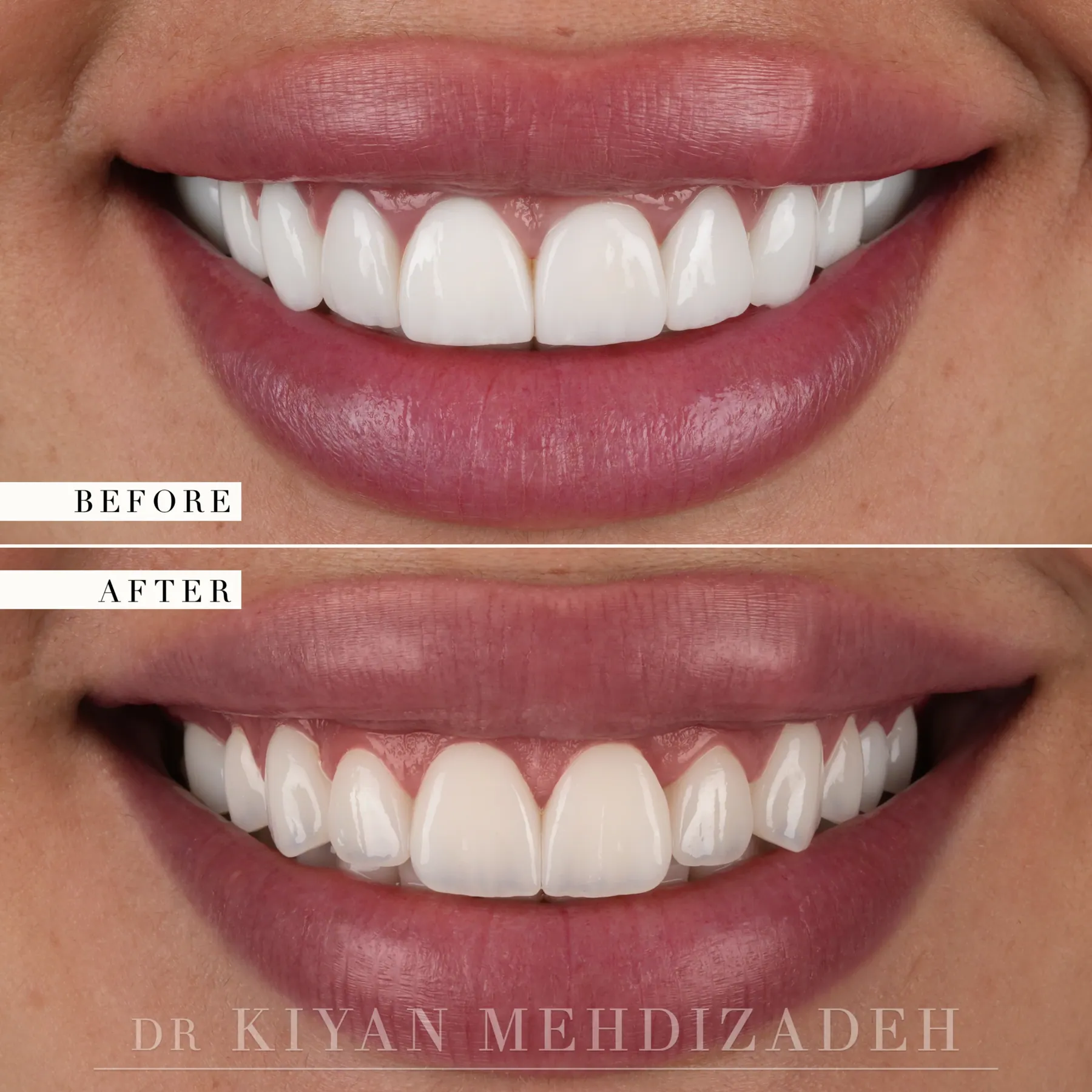 Bulky veneers placed abroad, redesigned with a gum lift and twenty new veneers.See the case →
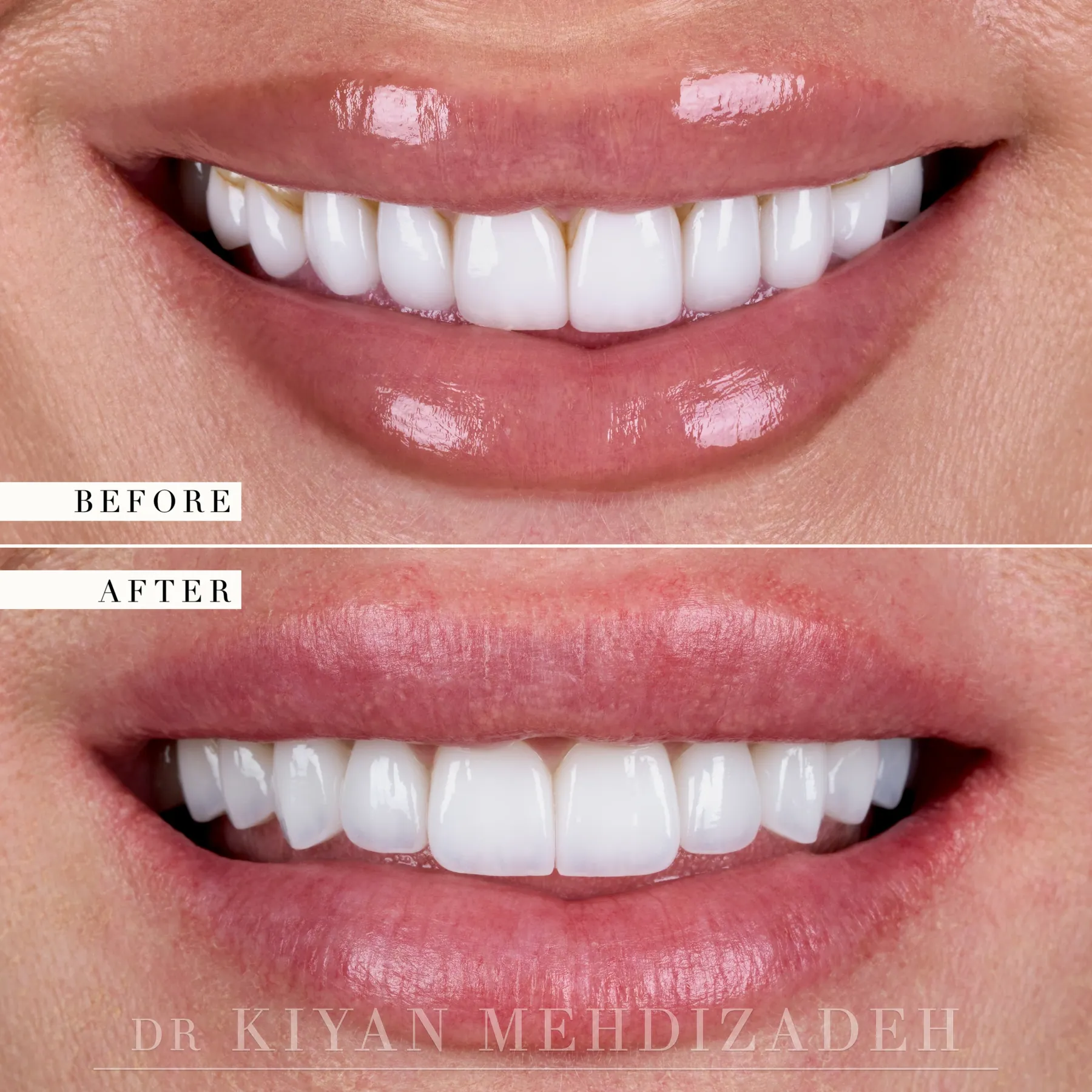
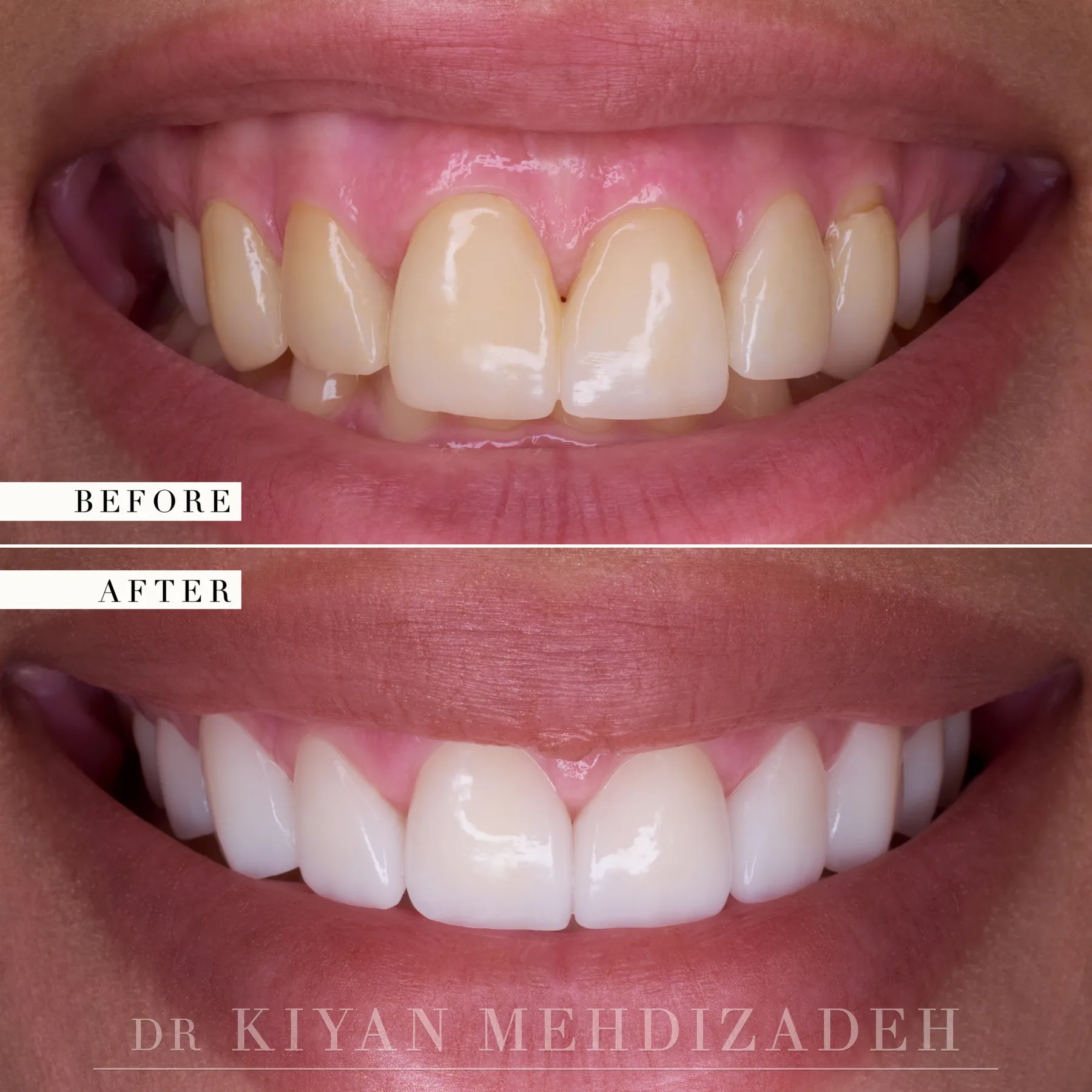 Six overlong veneers on a gummy smile, replaced after the gum line and lip were corrected.See the case →
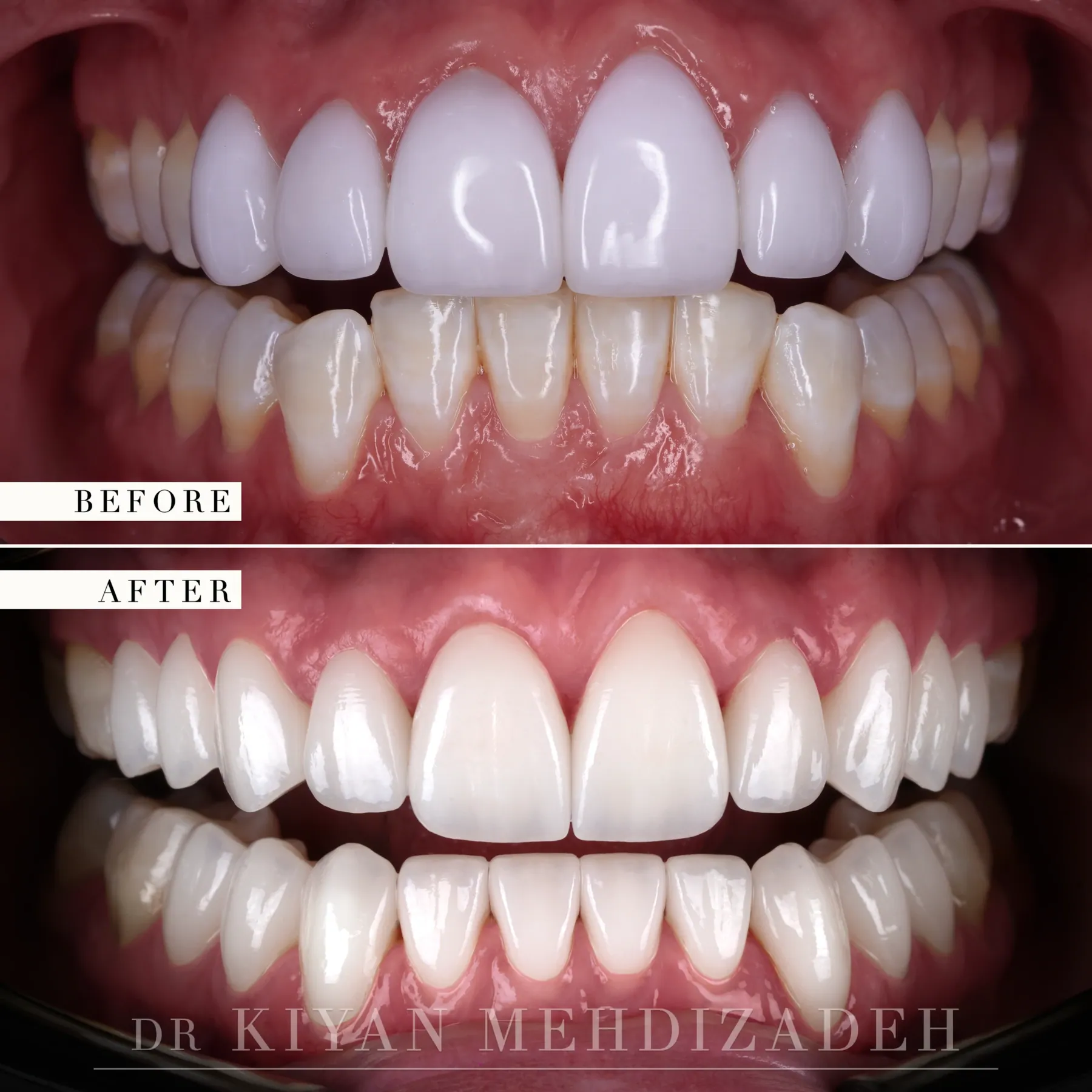
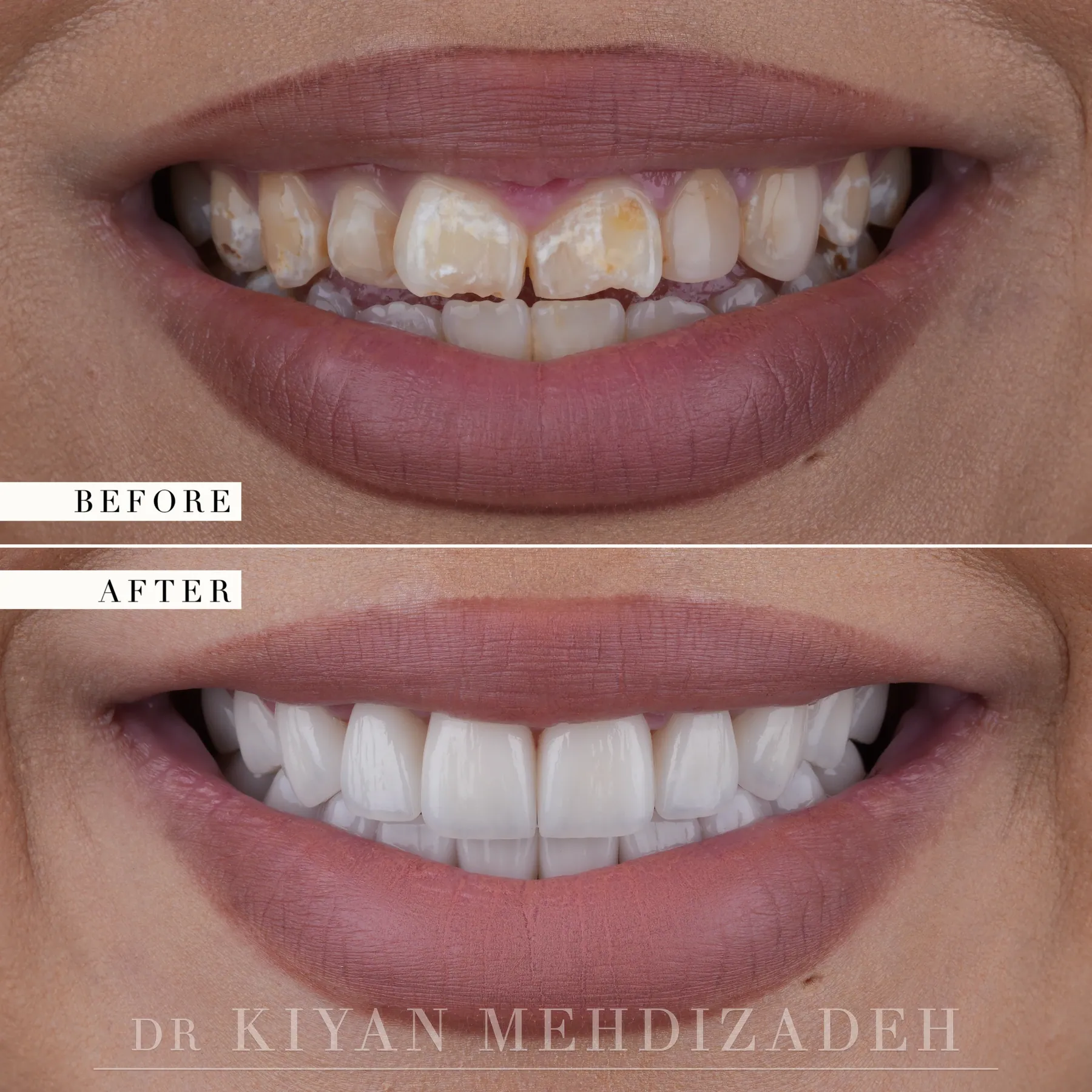 Failed bonding over damage from braces, replaced with porcelain veneers.See the case →
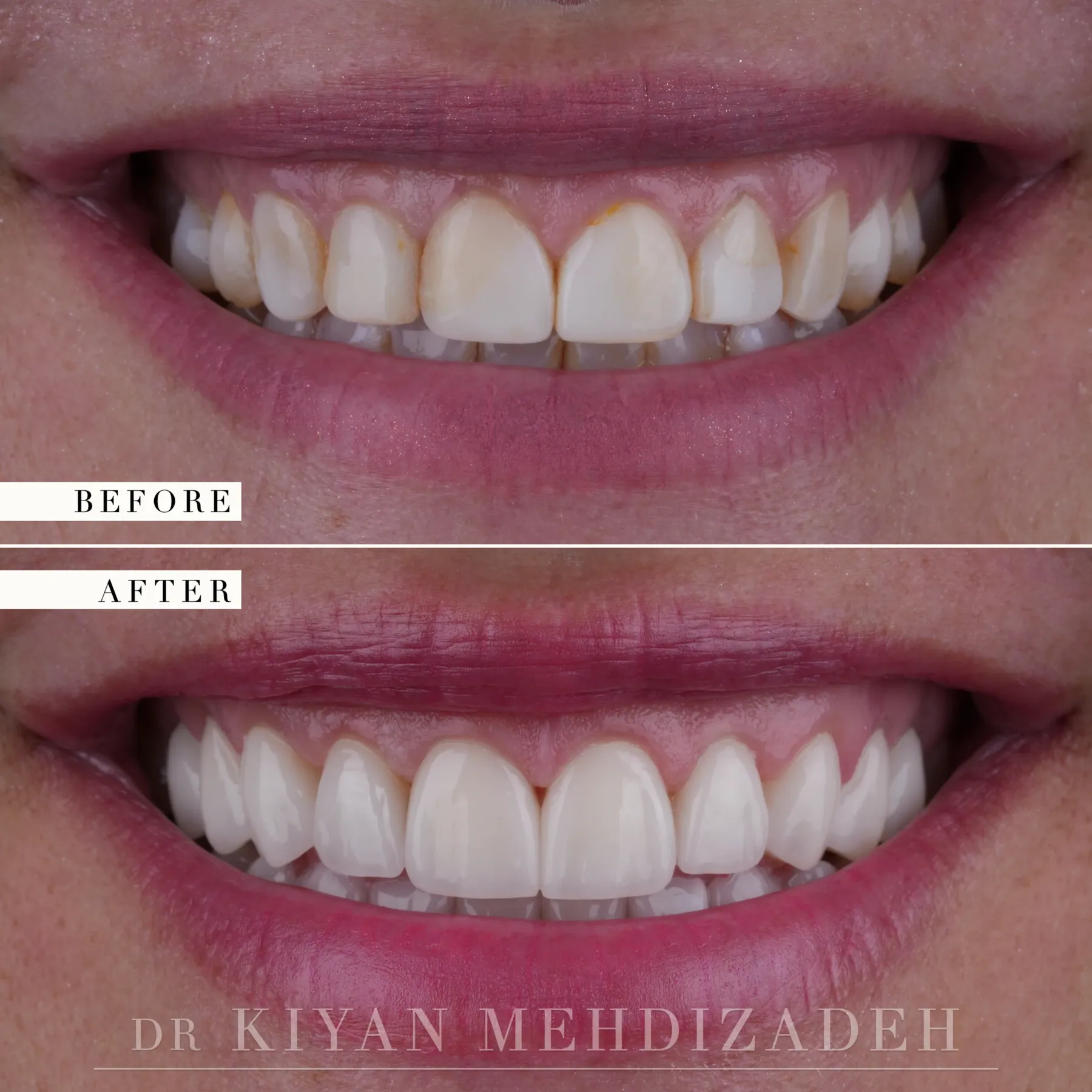
 Acrylic teeth on implants placed elsewhere, replaced with hand-stacked porcelain.See the case →
 Dark veneer margins and two failed implants, corrected together.See the case →
What replacing old work costs.
Replacing veneers costs the same as new veneers, by the number of veneers, and there is no separate fee for removing the old work, on veneers or on implants. Each case is quoted as a whole, after the examination.
Replacing veneers
$192/month
From $16,000
144 payments at 9.99% APR, on approved credit.
The veneer prices: 4 veneers $16,000 - $18,000; 8 veneers $20,000 - $24,000; 10 veneers $24,000 - $28,000; 20 veneers $38,000 - $50,000. Most cases also include a gum lift or whitening. Porcelain veneers
Single-implant revision
$96/month
$8,000
144 payments at 9.99% APR, on approved credit.
The revision of one implant.
Full-arch revision, Complex Reconstruction
$407/month
$34,000 per arch
144 payments at 9.99% APR, on approved credit.
Complex Reconstruction is one price that includes the removal of failed implants, grafting and sinus work, with the surgery, IV sedation, extractions, temporary teeth, the try-in prototype, the final bridge and the follow-up visits until the final teeth are delivered.
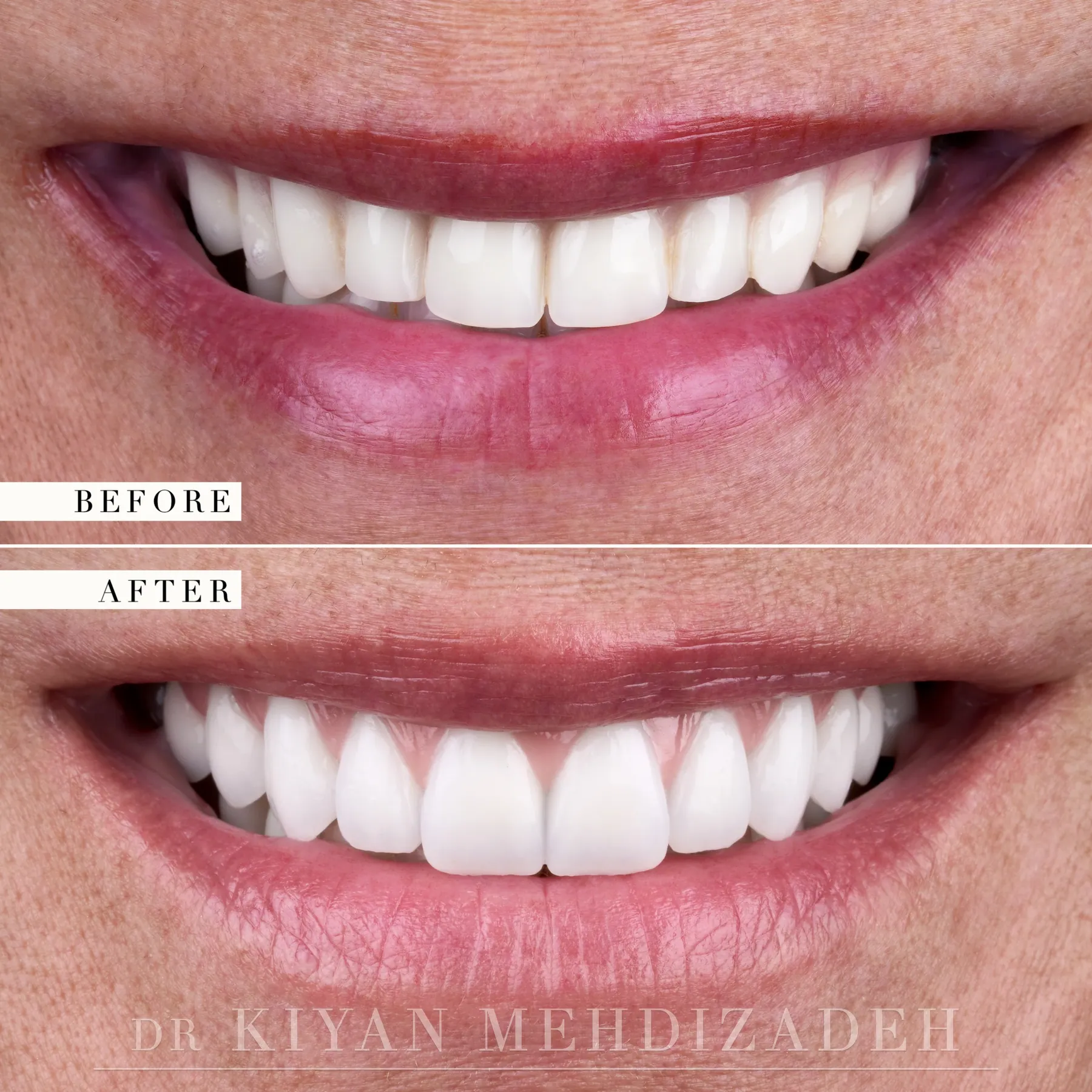
Veneers that are bulky, opaque or too long.
Veneers that are too white, too bulky or too uniform do not look like teeth; they look like dental work. The usual causes are porcelain made too thick over too little preparation, opaque porcelain that blocks the light natural enamel lets through, a shade chosen without regard to the tooth beneath, and a design made to a template rather than to the face. Replacing them well is harder than doing it right the first time, and it starts with working out why the first set failed.
The gum line is often part of the problem. Teeth are framed by the gum, and where the gum sits at different heights, new veneers look uneven however well they are made. In this case and this one, a gum lift came before the new veneers.
Veneers that are too long are often an attempt to hide a gummy smile. Lengthening the teeth at the edge does nothing to the gum showing above them, and the teeth then look too long for the face as well. In this case, six overlong veneers were replaced only after the gum line was raised and the rise of the upper lip lowered, with ten new veneers designed to the new frame.
The old veneers are removed and the teeth beneath them assessed. You wear the new design first as temporary veneers, adjusted in the mouth until you approve it, and the final porcelain is copied from them. In the case from abroad, the veneers had gone in without temporaries or a try-in, so the design was not tested in her mouth before the porcelain was bonded.
Bonding that has stained or chipped.
Composite bonding is softer, more porous and less color-stable than porcelain, and those three properties decide how it fails. It absorbs stain from coffee, tea and wine, its edges chip under the same forces that damaged the tooth in the first place, and it yellows and dulls while the natural teeth around it do not. Stained bonding does not respond to whitening; it can only be replaced.
Bonding placed over enamel damaged during braces fails sooner, because weakened enamel holds the bond less well. In this case the bonding had discolored and chipped, and removing it showed decay underneath, which was treated before porcelain veneers went on.
In this case and this one, bonding that had aged the smile or kept chipping was replaced with porcelain, which is denser and holds its color.
Crowns that no longer match.
A crown is made to the gum line and to the teeth around it as they were on the day it was fitted. When the gum recedes, its edge shows; when the teeth around it change color, the crown does not. Porcelain does not respond to whitening, so where you want your teeth lighter, we whiten them first and match the new crown to them.
In this case, an old crown on a front tooth was replaced together with three new implant crowns, so all four matched her own whitened teeth. In this one, receding gum had exposed the dark edges of old veneers.
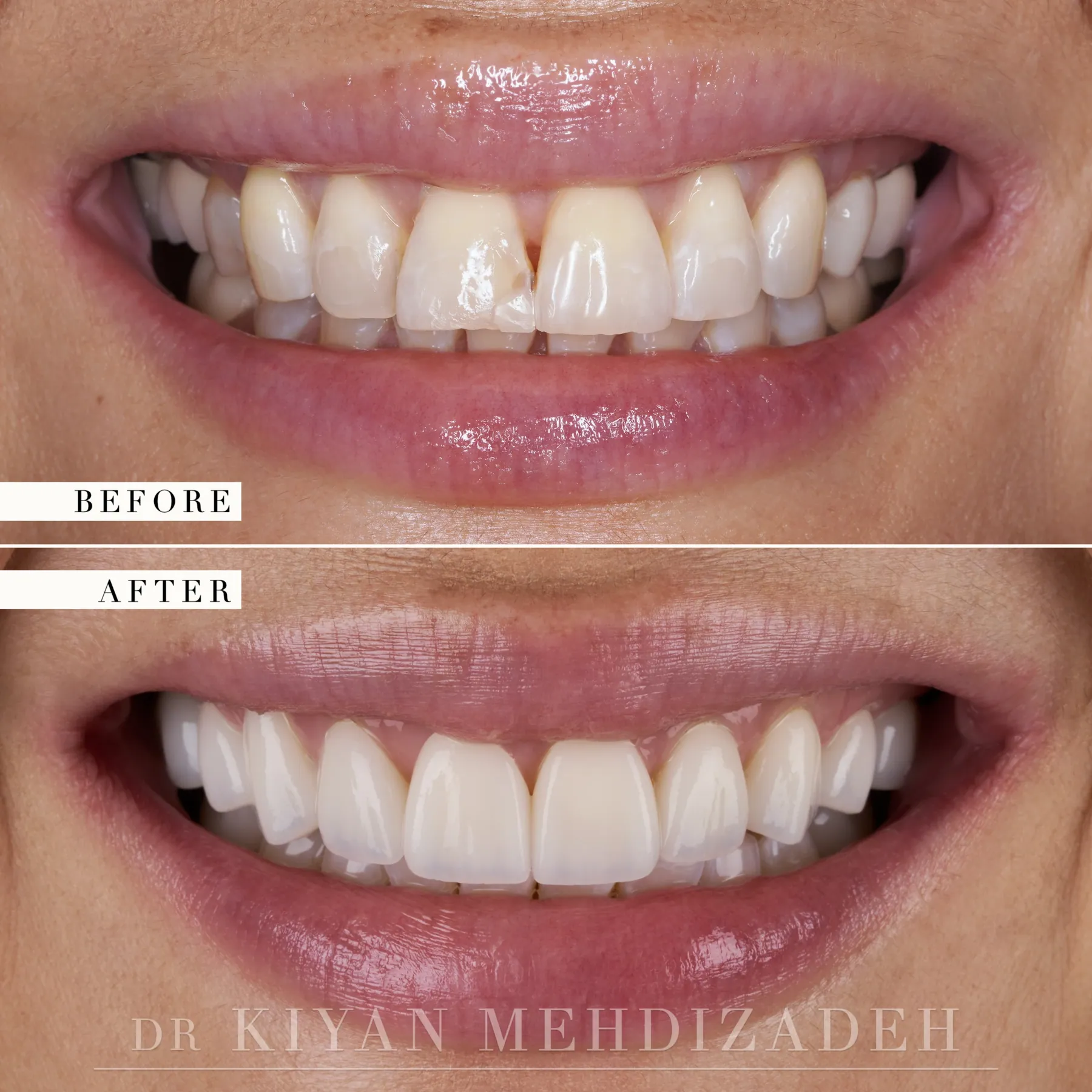
Implants: functional and cosmetic revision.
Implant revision is functional or cosmetic. Functional revision deals with an implant that loosens, loses bone or becomes inflamed, or with teeth on it that crack. Cosmetic revision deals with implants that work and teeth on them that do not look like teeth: too long, too bulky, one flat shade, a pink edge that shows when you laugh. Both get the same attention here.
Patients with implant work that needs revision are often told that everything has to come out. Often it does not.
The first question is which part is at fault: the implant in the bone, or the crown or bridge screwed onto it. A crown or bridge that moves is often held by a loose or broken screw, and that is a repair. An implant that moves has lost the bone that held it, and it cannot be tightened back into place.
The most common cause of that bone loss is peri-implantitis, an inflammation of the tissue around an implant together with progressive loss of the bone supporting it. The strongest evidence links it to a history of gum disease, poor plaque control and missed maintenance.
Position is the other common cause. An implant carries the force of the bite directly into bone. Placed or angled poorly, it concentrates that force where the bone can least carry it, and the bone resorbs. In this case, two upper implants had been lost this way.
Full-arch bridges also fail in their materials. Acrylic teeth wear and can fracture, porcelain over zirconia can chip, and grinding without a night guard raises the rate of both. Screws that keep loosening point to an uneven fit or an overloaded bite, which retightening does not correct.
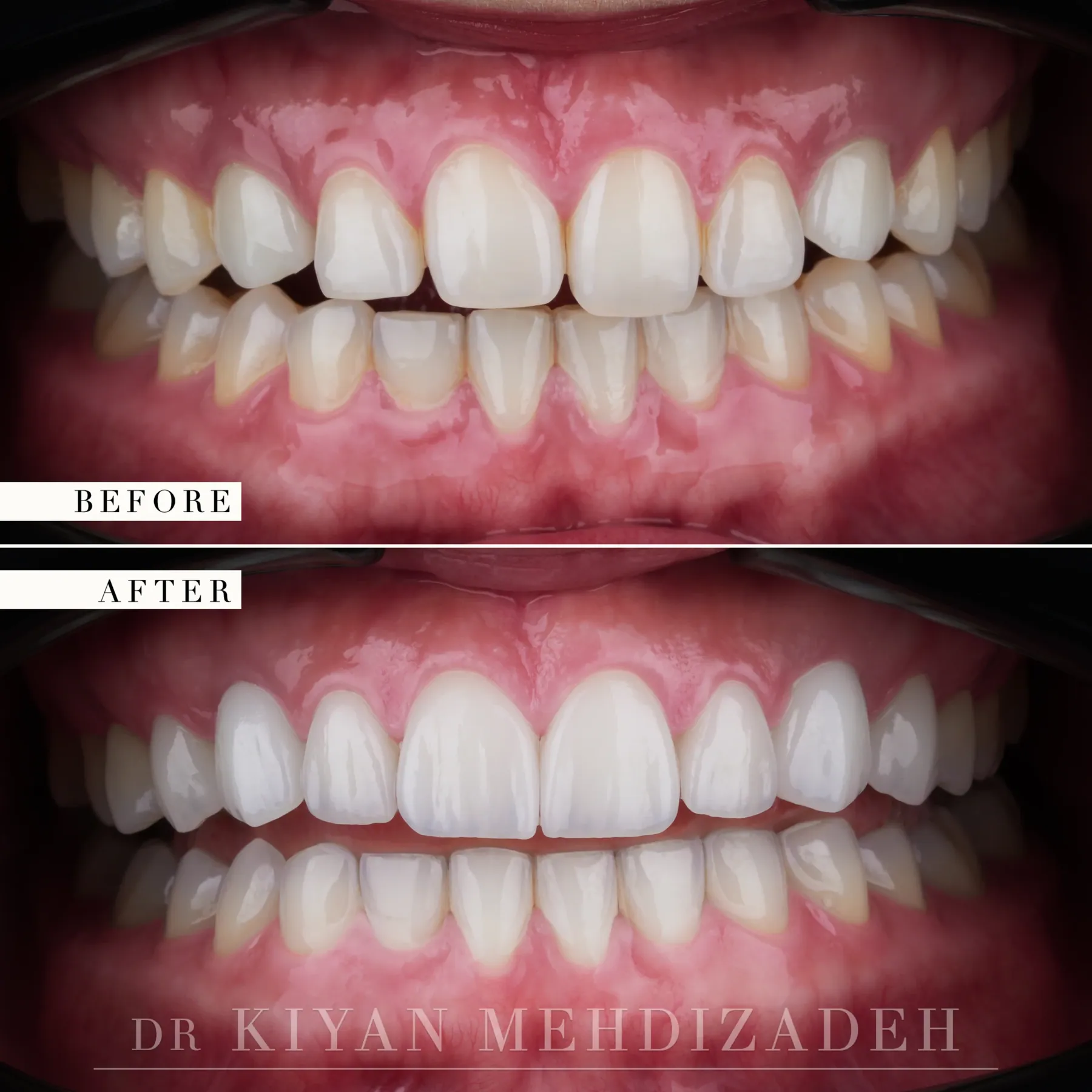
When the teeth look wrong.
An implant that is sound can carry teeth that are not, and for many patients that is why they stopped smiling in photographs. A single implant crown has natural teeth beside it, so any mismatch shows: a crown longer than its neighbors, a shade that sits apart from them, or a gray shadow through thin gum from a metal abutment. In this case, two implants placed in adolescence ended up higher than the natural teeth, and their crowns looked short and wide.
In a full arch there is nothing left to match, and the common failures are failures of design. The teeth are too large or too long for the face, too white for the person's age, or one flat shade with every edge in a straight line. A visible join shows where pink acrylic meets the gum. The bridge is bulky, pushing the lip out or crowding the tongue; bulk on the palate side is a common cause of a lisp, and reducing it returned speech to normal in most patients in one study.
Teeth that are too long usually mean gum was lost and never rebuilt. A bridge that rebuilds only the teeth onto a receded gum line leaves them too long, because every tooth has to stretch to reach the tissue. Pink porcelain, porcelain shaded to match gum, replaces the gum and bone height that was lost, including the small triangles between the teeth, so the teeth keep natural proportions. It is needed where gum and bone have been lost; where little has been lost, the bridge can carry teeth alone.
The four things that decide how a full-arch bridge looks.
Implant position decides where the teeth can go. Prosthetic space, the room between the implants, the opposing teeth and the lip, decides how the teeth can be built. Material decides how they handle light and how they age: acrylic returns light as one flat sheet and takes up stain, while layered porcelain carries the texture of enamel and scatters light. Design decides the rest: tooth length and width, the midline, the line the edges follow, how much the bridge supports the lip and where it meets the gum.
Most cosmetic failures live in the material and the design, which a new bridge can change. Some live in the implant position or the bone, and correcting those means surgery.
How we find out what needs revision.
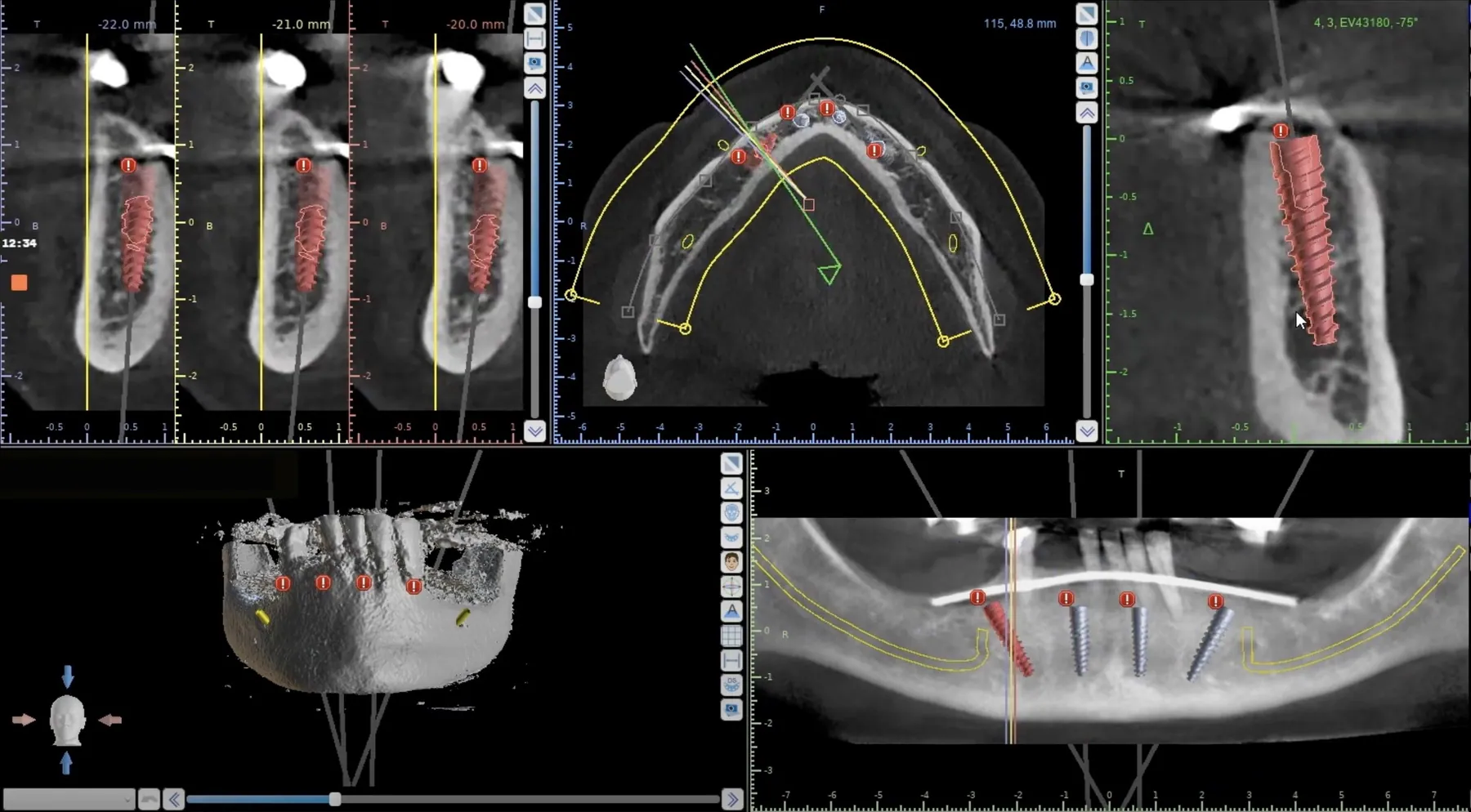
Revision starts with a revision consultation and a review of the 3D X-ray (CT scan), which shows the bone around each implant, the sinus and the nerve canal. Dr. Mehdizadeh examines the crown or bridge, the gum and the bite, and for a cosmetic concern he studies the face at rest, speaking and smiling. The consultation, including the CT scan, is complimentary.
The question for each implant is the same: is it integrated in healthy bone, in a position that can carry teeth that can be cleaned and that look right? Every implant that passes is kept.
What revision can involve.
Keeping the implants and remaking the teeth. In this case, another practice had placed the implants, and Dr. Mehdizadeh found them integrated and usably positioned, so the case needed no surgery: the stained acrylic was replaced with hand-stacked porcelain over milled titanium, with the gum line rebuilt in pink porcelain. In another the two implants were healthy, so we designed around them with a gum lift, six veneers and new implant crowns on custom zirconia abutments.
Removing failed implants and rebuilding the bone. In this case, Dr. Mehdizadeh removed two failed implants, grafted both sites and placed new implants under IV sedation.
Keeping what is sound. In this case, Dr. Mehdizadeh removed nine hopeless upper teeth and two failed implants and placed five implants in one surgical day; the sound natural teeth were kept.
Surgery is done in this office under local anesthesia or IV sedation, and the sedation is given by Dr. Mehdizadeh, who holds a California moderate sedation permit.
Testing the new design before it is final.
Dr. Mehdizadeh designs the tooth length, width, midline, edge position and lip support against your face. The design is made as a try-in prototype, which you wear for anywhere from one week to several weeks, speaking, eating and seeing it in your own life. Once it is adjusted and approved, our laboratory makes the final teeth to it. The results are on our case pages.
If your implants were placed abroad.
We assess and revise implant work wherever it was done, and many patients treated abroad were treated well. Bring the records you have: the make and size of each implant, the parts on it and any scans. This case, bulky veneers placed abroad and redone here, shows the same approach applied to veneers. What to ask before treatment abroad, and what to bring home, has its own page.

One doctor, from consultation to final teeth.
Dr. Mehdizadeh carries a revision from the consultation to the final teeth: he reviews the 3D X-ray (CT scan), removes and places any implants, performs the grafting and any gum surgery, and designs the new teeth, with our laboratory in the same building.
Find out what replacing it would cost.
Tell us what is going on. Add photos if you have them; if not, we will call and talk it through.
Or call (310) 770-3335.
Ask about replacing old work
Reviewed by our treatment coordination team. Call or text (310) 770-3335 if you would rather speak now.
Request received
A treatment coordinator will call you within two hours during office hours (Monday to Friday, 9 to 4).
To talk now, call (310) 770-3335.
Frequently Asked Questions
Can old veneers be replaced?
Yes. The old veneers are removed, the teeth beneath them are assessed, and the new design is worn as temporary veneers before the final porcelain is made.
Does replacing old veneers cost more than new ones?
No. Replacing veneers costs the same as new veneers, by the number of veneers, with no separate fee for removing the old ones.
Can stained bonding be whitened?
No. Composite bonding absorbs stain and does not respond to whitening; it can only be replaced.
My veneers look too long. Can they be made shorter?
Yes, by replacing them. Where the length was hiding a gummy smile, the gum line and the lip are corrected first, and the new veneers are designed to the new frame.
Can a loose implant bridge be fixed without new implants?
Often, yes. A bridge that moves is frequently held by a loose or broken screw. If the CT scan and the examination show the implants integrated and usably positioned, the bridge is repaired or remade on them, as in the acrylic-to-porcelain case on this page.
Can a failed implant be replaced in the same place?
Yes, but not immediately. The failed implant is removed and the lost bone grafted, because a new implant needs bone to hold it. Once the graft heals, a new implant is placed in a position chosen to carry the bite.
My implants work, but the teeth look fake. Can that be changed?
Yes, by remaking only what sits on the implants: tooth length, shape, shade, surface and bulk all live in the bridge or crown. The new design is worn as a try-in prototype before the final teeth are made.
Will I be without teeth during the revision?
No. Depending on the case, the existing bridge carries you through, an interim denture is made before surgery, or a fixed temporary is attached the same day when the implants are stable enough. You know which before treatment starts.
How long does revision take?
When the implants are sound and only the teeth are remade, there is no healing to wait out: the acrylic-to-porcelain case on this page took three months. With grafting, healing sets the pace: the case with two failed implants took five months. Patients who travel usually make two trips, three to six months apart.
How long does a revised implant last?
Long-term studies report implant survival above ninety percent at ten years. The crown or bridge on top is a wearing part, and in time it may need repair or replacement.
Does insurance cover implant revision?
Most PPO plans contribute toward the cost of treatment.
Last Updated: October 2026