Last Updated: October 2026
Do your veneers look too long, or does your smile show too much gum?
A gummy smile is corrected at the gum line and the lip, not by lengthening the teeth. Send us a photograph of your smile and we will tell you what is involved.
- A call within two hours during office hours.
- A written cost from us, before you commit to anything.
- No obligation. Many patients take weeks to decide. That is normal.
Ask about your case
Reviewed by our treatment coordination team. Call or text (310) 770-3335 if you would rather speak now.
Request received
A treatment coordinator will call you within two hours during office hours (Monday to Friday, 9 to 4).
To talk now, call (310) 770-3335.
Treatment Plan by Dr. Mehdizadeh
- Smile analysis of the gum line, the upper lip and the six existing veneers.
- Crown lengthening on teeth 4 to 13, second premolar to second premolar, to raise the gum line.
- Lip repositioning to lower how far the upper lip rises in a smile.
- Removal of the six existing veneers.
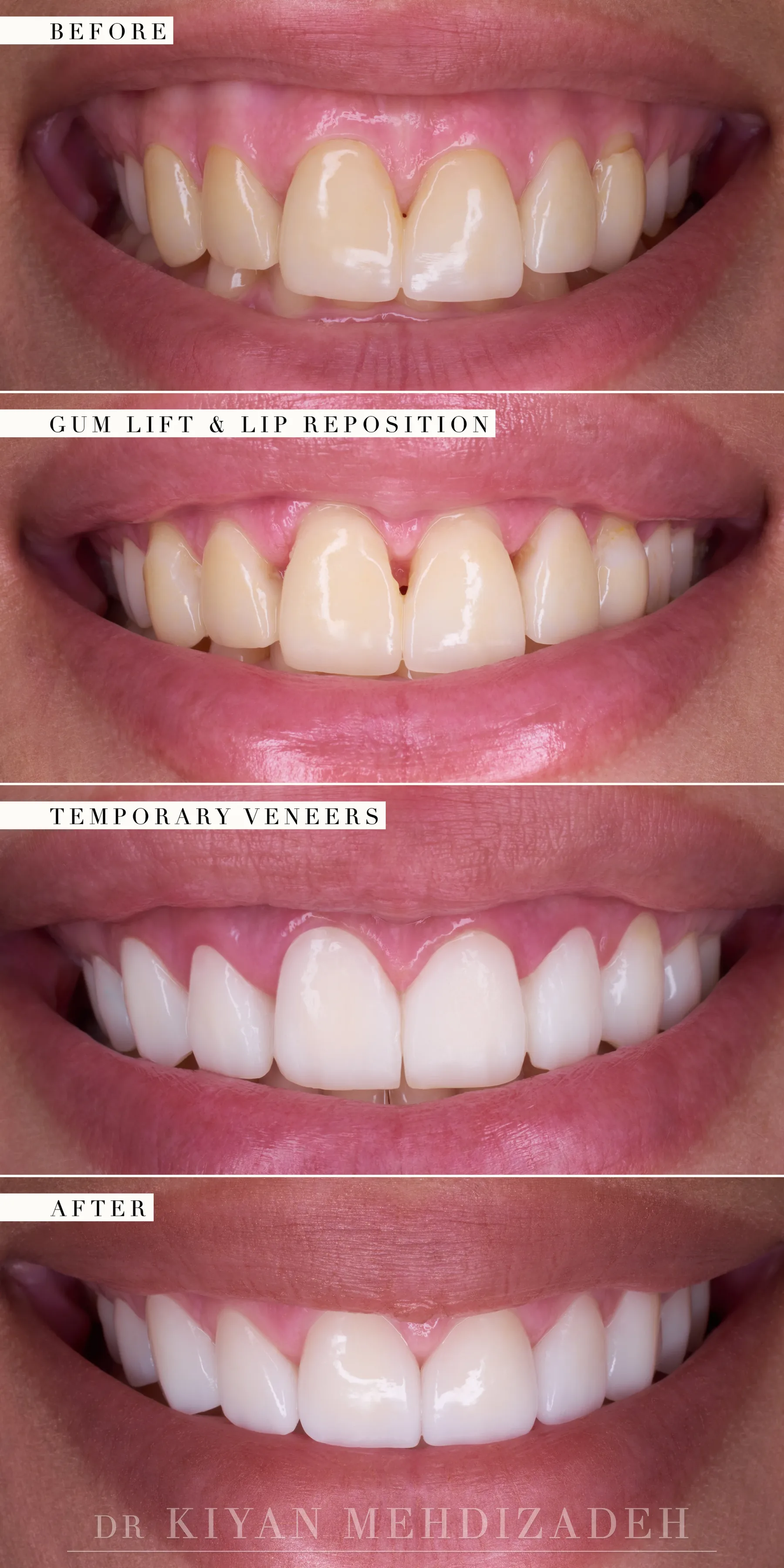
- A new, shorter smile design worn in temporary veneers and adjusted in the mouth until she approved it.
- Ten e.max veneers on teeth 4 to 13, copied from the approved temporaries.
The Patient's Journey
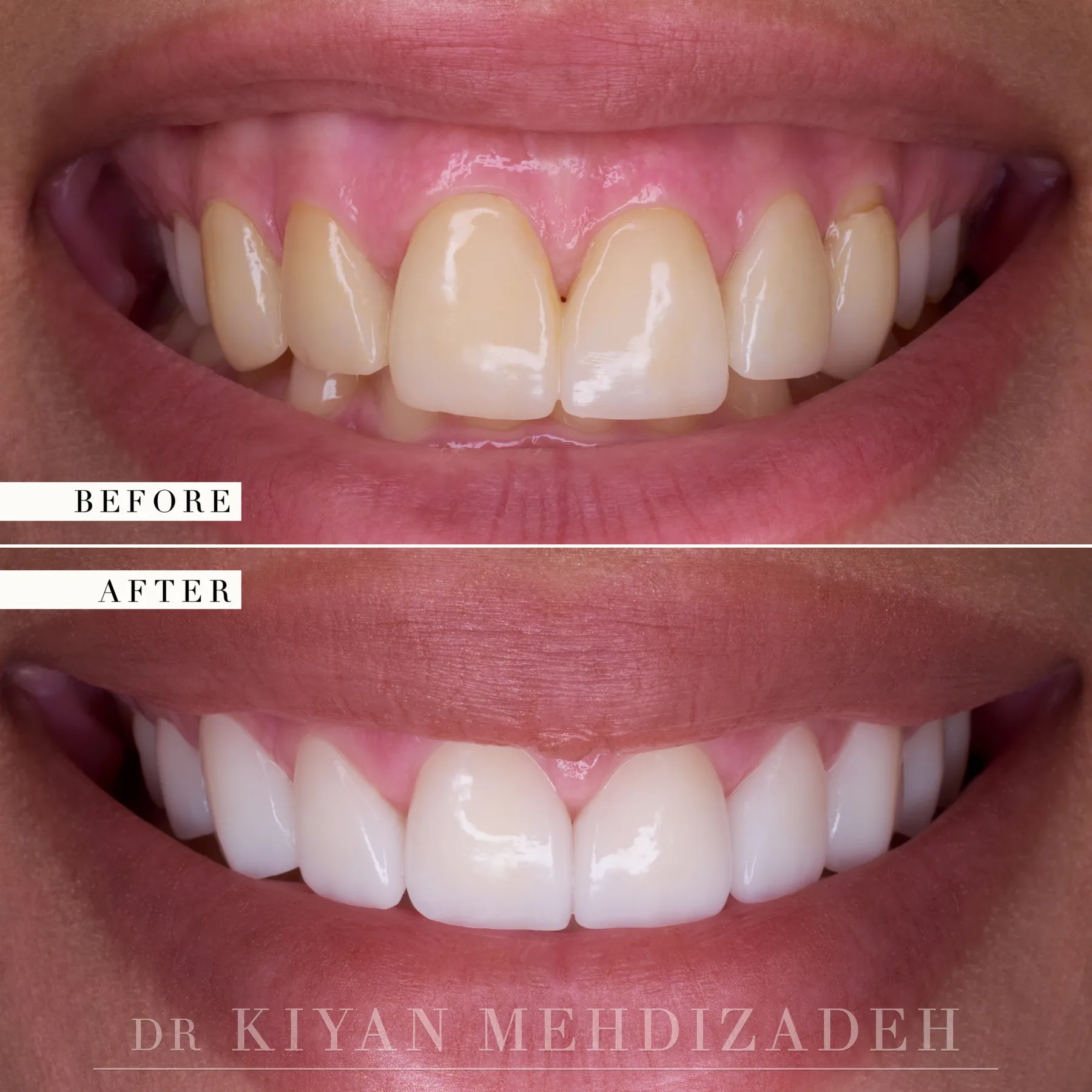
She came to us with six veneers that had been placed elsewhere, and they were far too long. She also had a very gummy smile, and the long veneers made it look worse rather than better. She wanted a smile she could finally be happy with in time for her 21st birthday.
Why Longer Veneers Do Not Fix a Gummy Smile
A gummy smile has two possible sources: gum tissue that covers too much of each tooth, and an upper lip that rises higher than usual when a person smiles. Often both are present, and she had both. Making the teeth longer at the biting edge does nothing to either one. The gum still shows above the teeth, and the teeth now look too long for the face as well.
Correcting it means working at the gum line, not at the edge. Dr. Mehdizadeh planned her case in that order: raise the gum line first, lower the lip's rise second, and only then design the teeth to the new frame.
Raising the Gum Line: Crown Lengthening
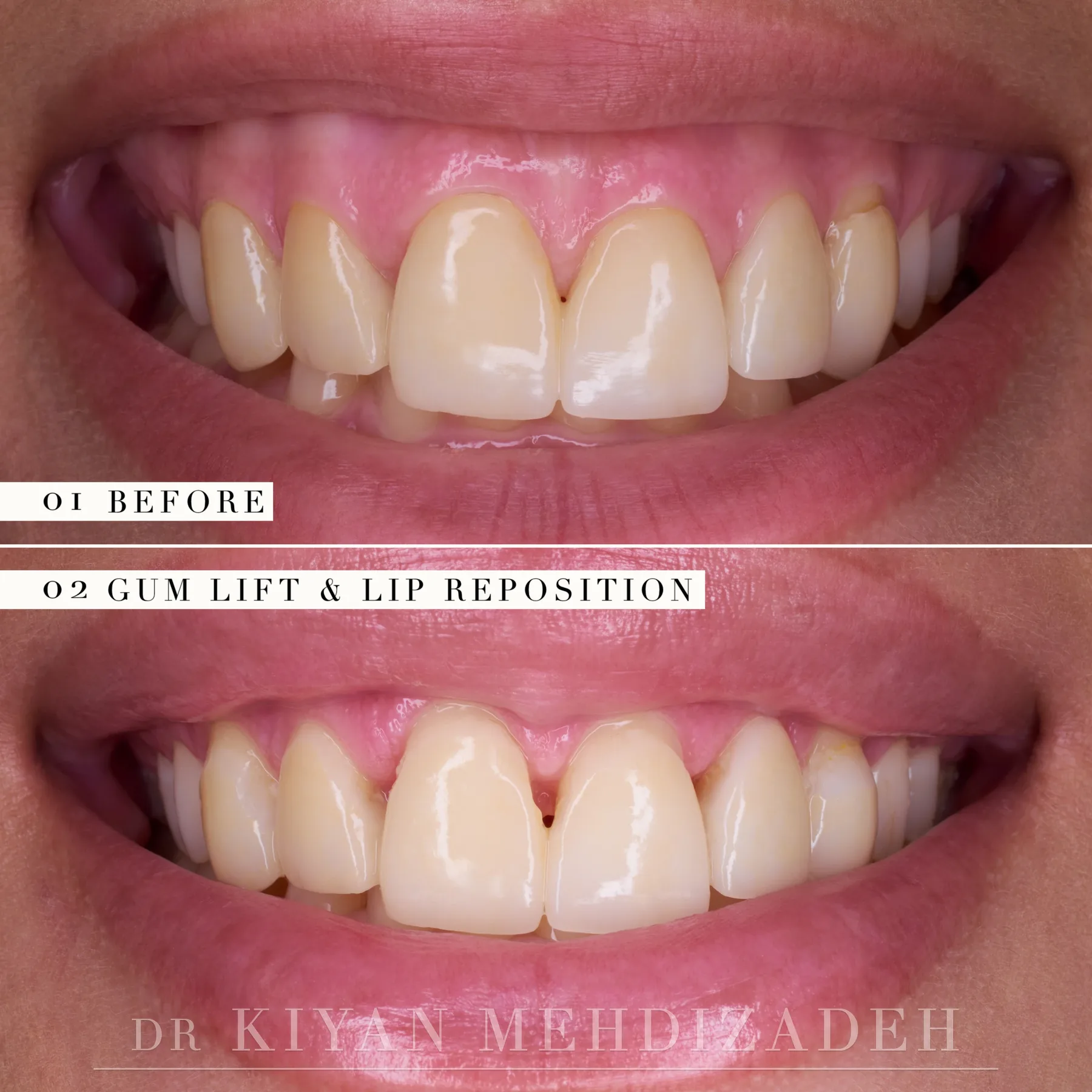
Crown lengthening removes gum tissue so that more of each natural tooth is visible, and reshapes the bone beneath the gum where that is needed, so the new gum line holds where it is placed. We treated ten teeth, 4 to 13, from the second premolar on one side to the second premolar on the other. That span is the width of her smile, so the gum line is even across everything that shows.
Lowering the Lip: Lip Repositioning
Lip repositioning limits how far the upper lip pulls up in a smile. A strip of tissue is removed from inside the upper lip, where no scar shows, and the lip is stitched to a slightly lower position. When she smiles now, the lip stops lower on the teeth and less gum is exposed.
Test-Driving a Shorter Smile
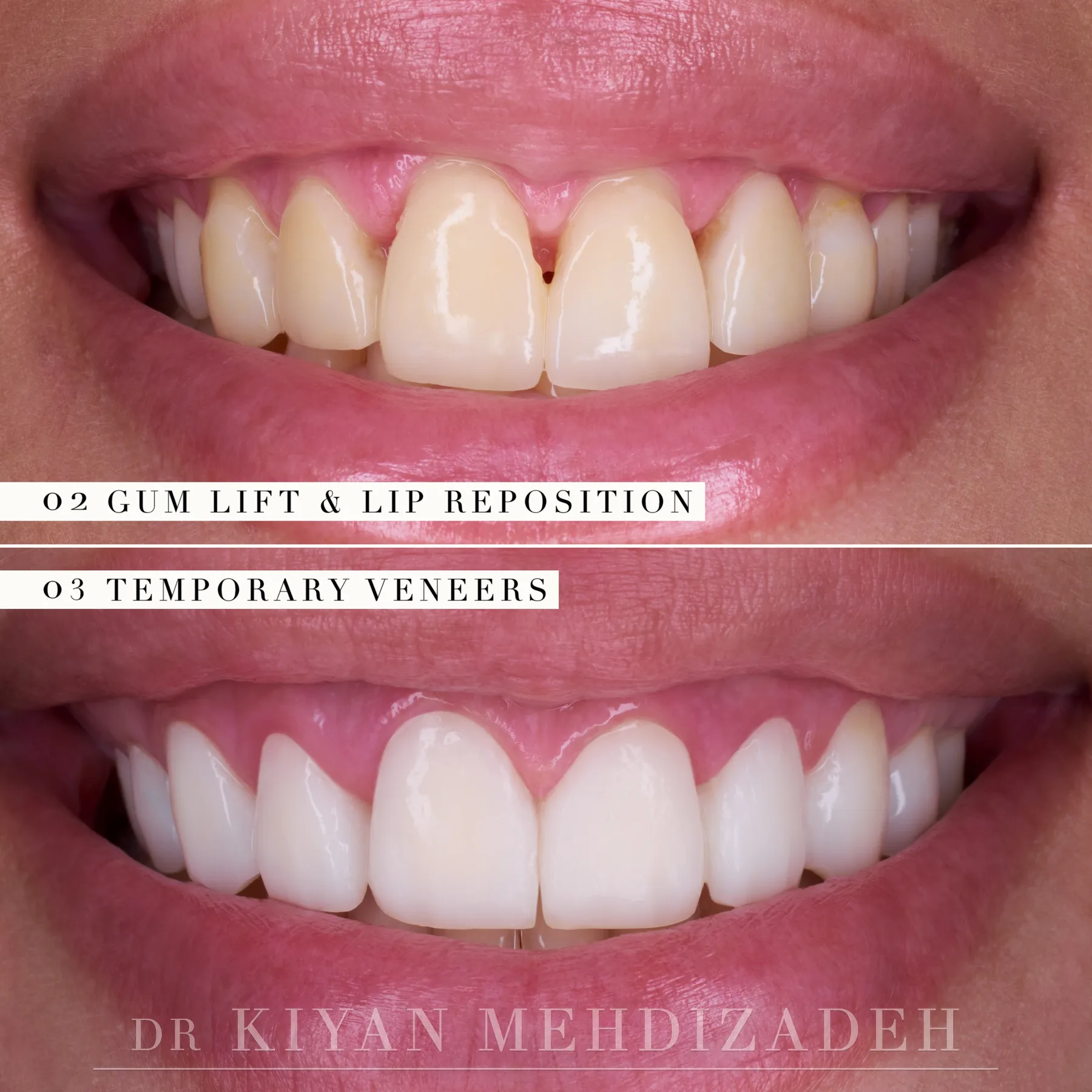
With the gum line raised and the lip lowered, the old veneers came off and Dr. Mehdizadeh designed a completely new smile, shorter and in proportion to her face. She wore it first in temporary veneers. Temporaries in the planned shape let a patient see the design while she talks, laughs and eats, and we adjusted them in the mouth until she was satisfied with every tooth.
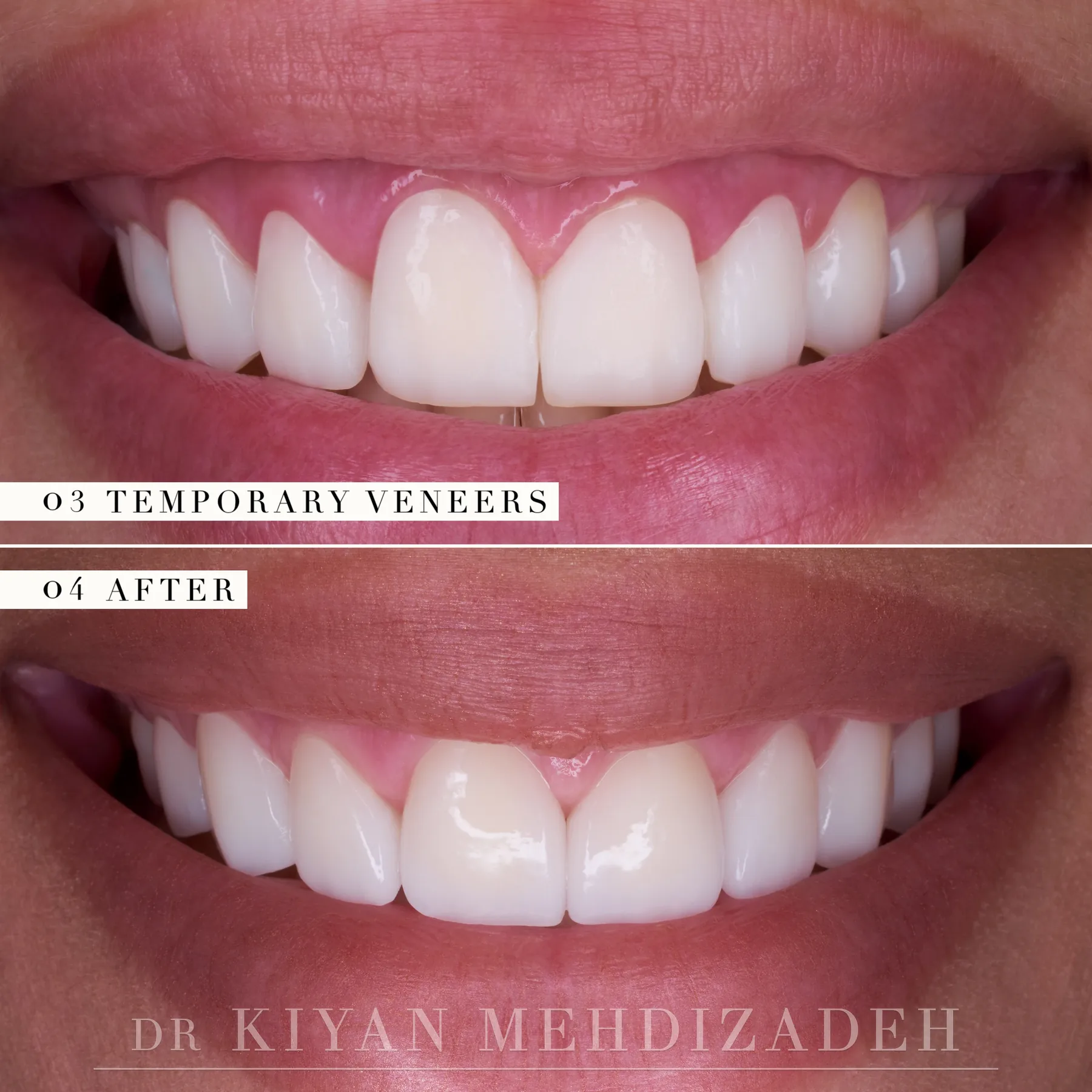
The final veneers are ten e.max veneers on the same teeth, 4 to 13, copied from the temporaries she had approved. E.max is a lithium disilicate ceramic, strong enough for veneers across the front of the mouth and translucent the way enamel is.
The Result
The whole treatment took eight weeks. Her teeth are shorter, her gum line is even, and her smile shows teeth rather than gum. Nothing in the plan was left undone: the gum, the lip and the teeth were each corrected, in the order that lets each step support the next.
Frequently Asked Questions About Correcting a Gummy Smile
What causes a gummy smile?
Usually gum tissue that covers more of each tooth than it should, an upper lip that rises higher than average in a smile, or both. Treatment depends on which of these is present.
Can veneers alone fix a gummy smile?
No. Veneers change the teeth, and a gummy smile comes from the gum and the lip. Lengthening the teeth at the edge leaves the gum showing and makes the teeth look too long.
What is crown lengthening?
A procedure that removes gum tissue, and reshapes the bone beneath it where needed, so more of the natural tooth shows and the gum line sits higher and evenly. Here it was done on ten teeth, 4 to 13.
What is lip repositioning?
A procedure that limits how far the upper lip rises in a smile. Tissue is removed from inside the lip, so no scar shows, and the lip is stitched to a slightly lower position.
Why were the old veneers replaced rather than shortened?
The whole smile was being redesigned around a new gum line. Six veneers cut down to size would not have matched the proportions of the new design, so all ten teeth across the smile were designed together.
What are temporary veneers for?
They let the patient wear the planned smile before the final veneers are made. We adjust them in the mouth until the patient approves them, and the final veneers copy them.
Why e.max?
E.max is a lithium disilicate ceramic. It is strong enough for veneers across the front teeth and passes light the way enamel does, so it reads as natural tooth.
How long did treatment take, and what did it cost?
Eight weeks from the first appointment to the final veneers. This case was $28,000, covering the crown lengthening of ten teeth, the lip repositioning, the temporary smile design and ten e.max veneers. $335/month: 144 payments at 9.99% APR, on approved credit.
Last Updated: October 2026