Last Updated: October 2026
What this case cost
$454/month
144 payments at 9.99% APR, on approved credit.
Total: $38,000 for twelve upper veneers, two lower ceramic crowns, two implants and two implant crowns.
Tired of re-fixing the same chipped tooth?
Composite bonding is a quick fix for a chip - but it chips again and discolors over time, so you end up re-doing it. Porcelain veneers are the more durable answer, and if you're missing back teeth, replacing them protects the whole bite. If you're ready to stop patching and fix it properly, send us a photo.
- A call within two hours during office hours.
- A written cost from us, before you commit to anything.
- No obligation. Many patients take weeks to decide. That is normal.
Ask about your case
Reviewed by our treatment coordination team. Call or text (310) 770-3335 if you would rather speak now.
Request received
A treatment coordinator will call you within two hours during office hours (Monday to Friday, 9 to 4).
To talk now, call (310) 770-3335.
Treatment Plan by Dr. Mehdizadeh
- Smile design
- Gum lift to harmonize the gum line
- Two posterior implants to replace missing molars and stabilize the bite
- Whitening of the lower natural teeth for color matching
- Twelve upper porcelain veneers
- Two lower ceramic crowns
- Two implant crowns on the healed posterior sites
The Patient's Journey
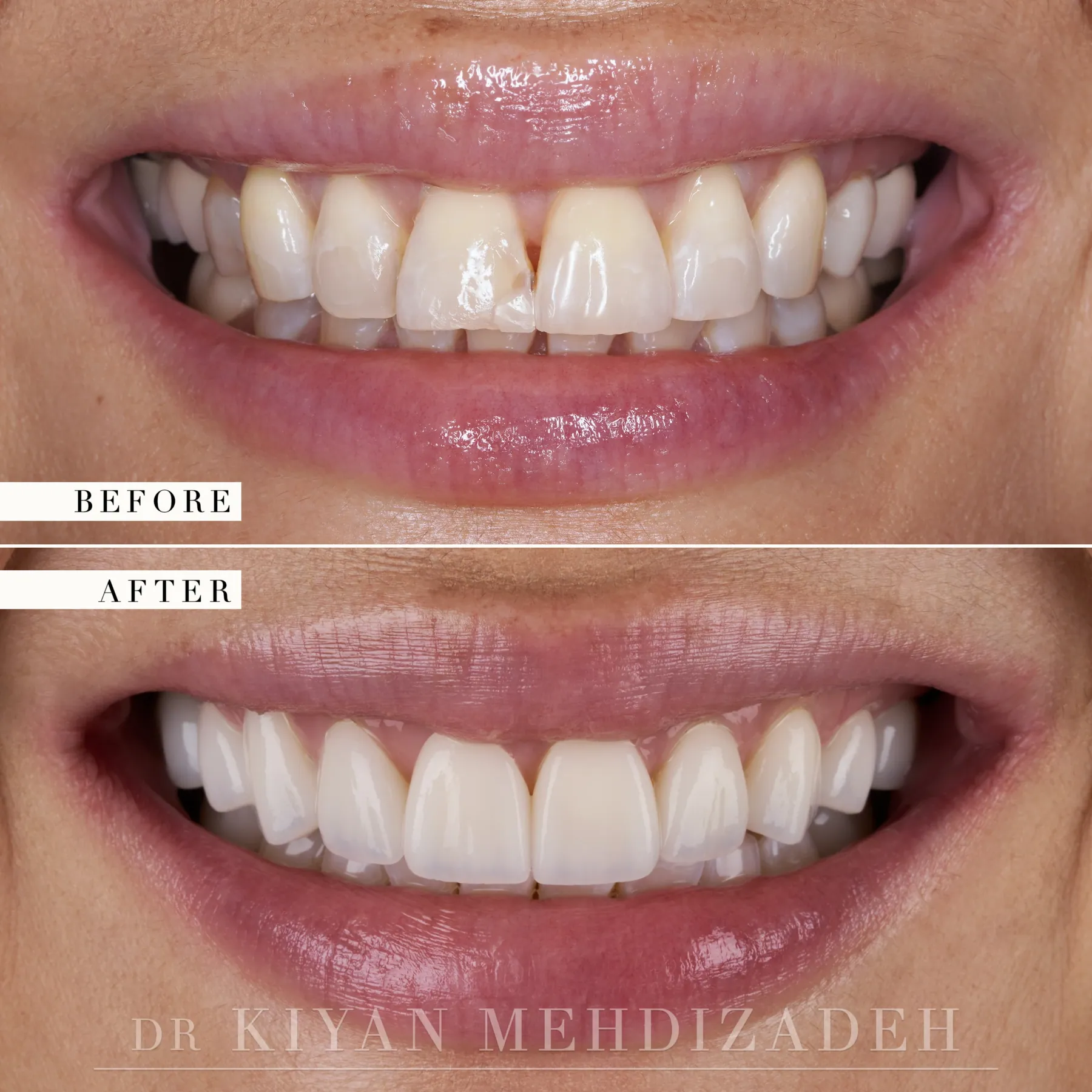
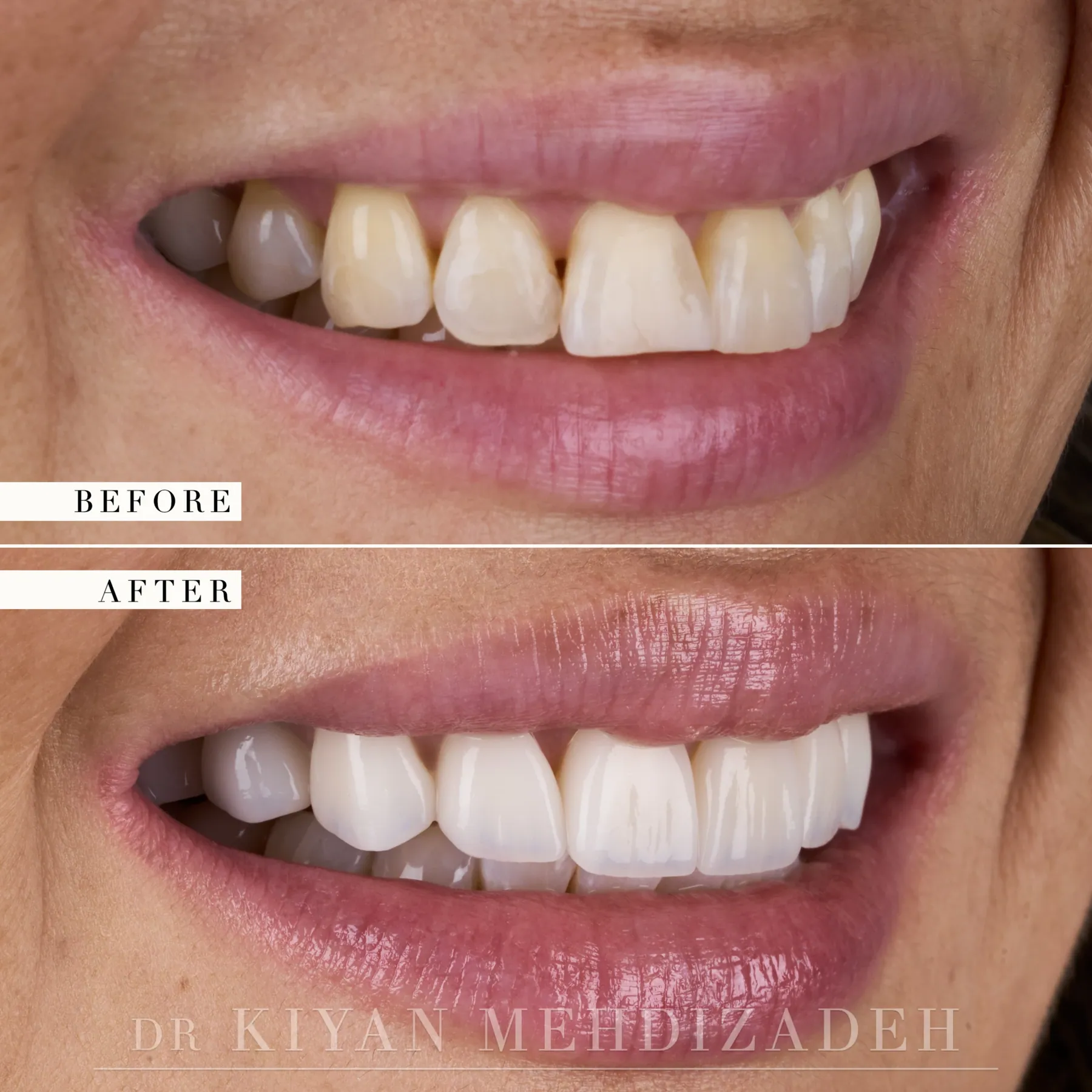
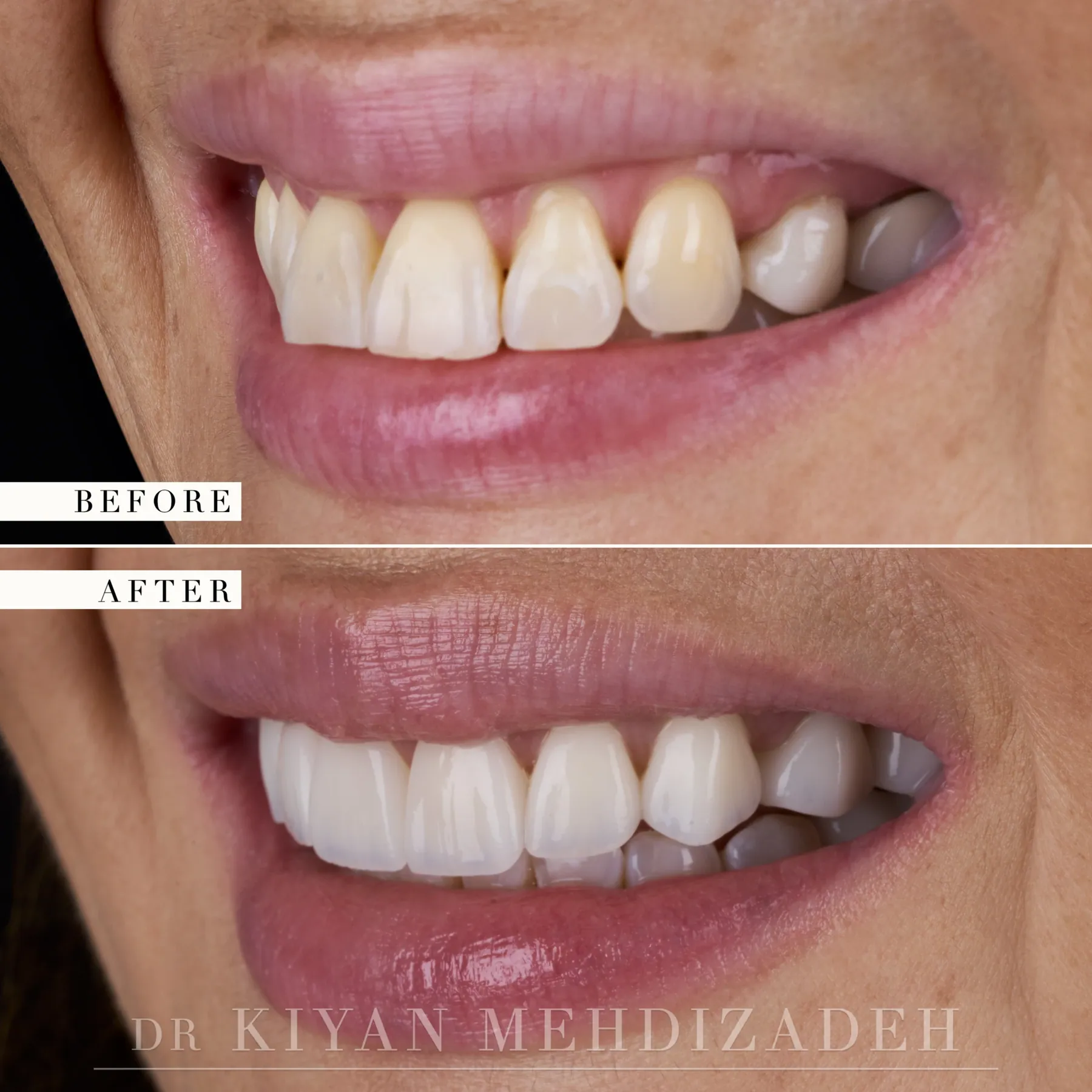
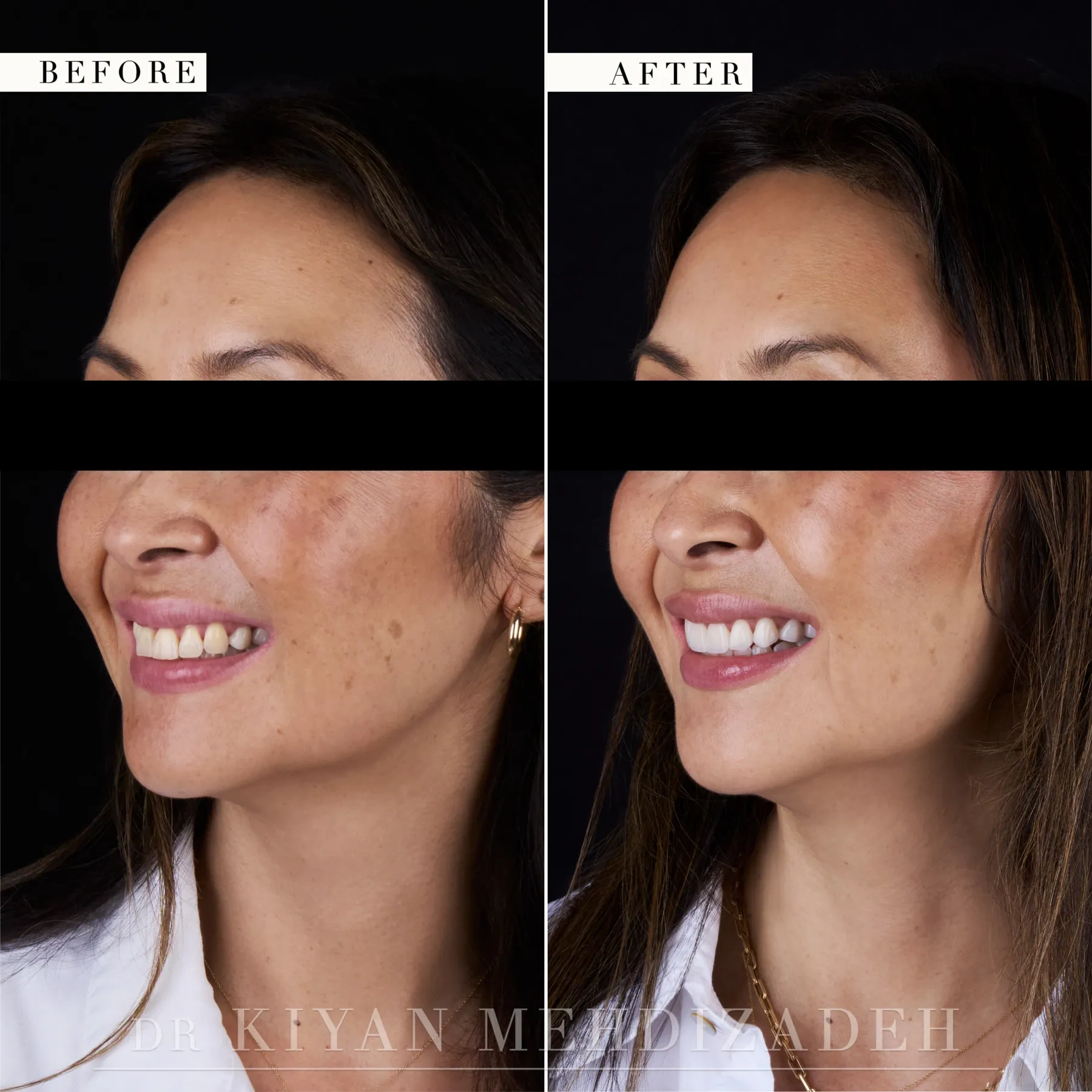
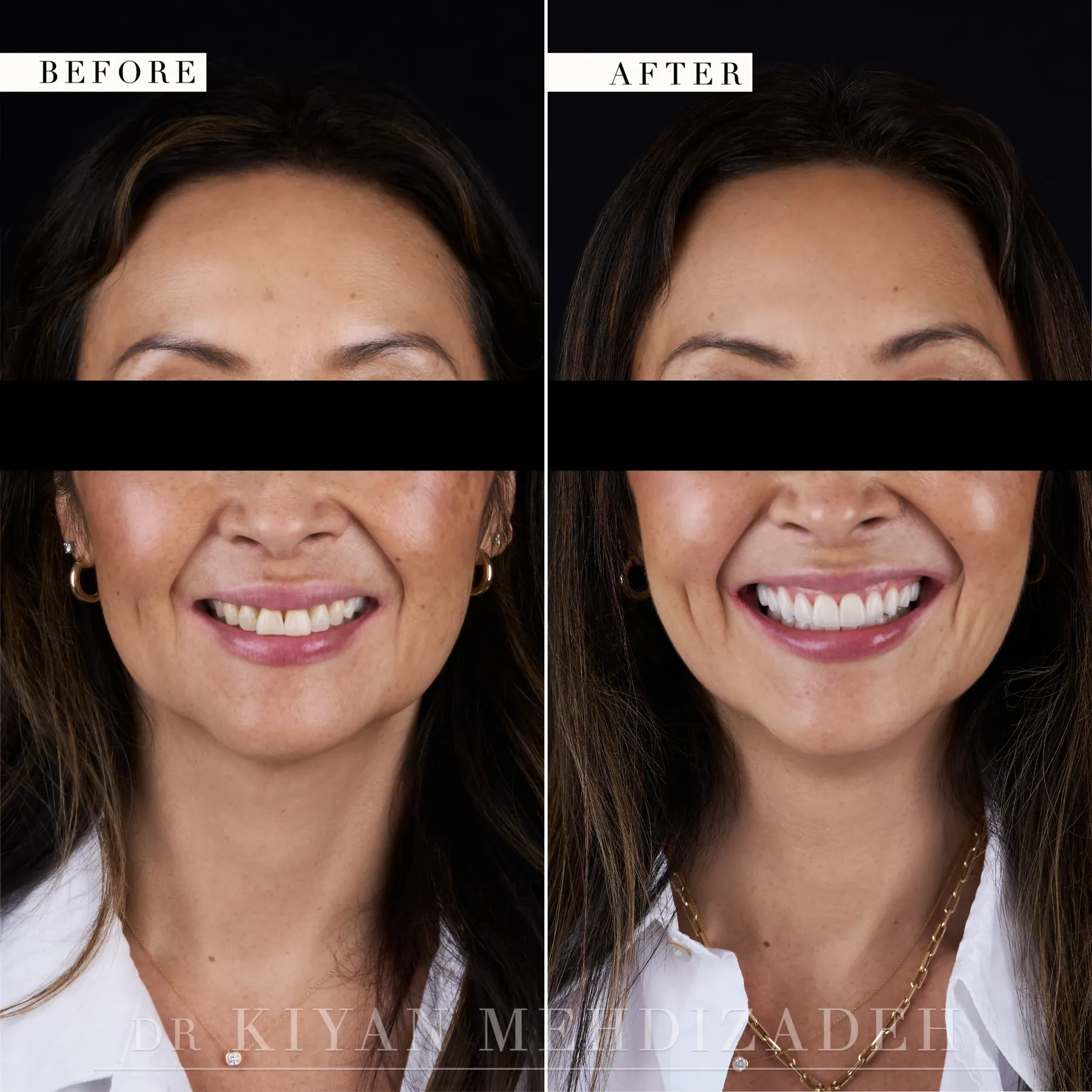
This patient presented with recurring damage to the edges of her upper front teeth. The chipping had been repaired previously with composite bonding. That is a reasonable first treatment, and it had held for a period before failing in the way composite generally fails. The material had discolored unevenly against the natural teeth around it, and fresh chips had appeared at the same margins that had been repaired before. She had also lost two posterior teeth, which was not visible when she smiled but was affecting how the remaining teeth were loaded during function.
Her stated priority, from the first consultation, was a restoration that would not need repeating. She had already been through one cycle of repair and wanted a durable outcome rather than another temporary correction. She also wanted the change to stay understated.
Understanding the Challenge
Composite bonding is softer, more porous and less color-stable than porcelain, and those three properties determine how it fails. It absorbs staining from ordinary diet over time, and its edges chip under the same forces that damaged the underlying enamel in the first place. That is why bonding placed on a chipping tooth becomes a recurring appointment rather than a conclusion. Replacing it with porcelain, which is denser and considerably less porous, addresses the material problem directly.
The missing molars mattered more than their invisibility suggested. When posterior teeth are lost the bite redistributes and the remaining teeth absorb forces they were not shaped to absorb. Anterior restorations placed into that altered loading pattern face stresses that shorten their working life. Restoring the front teeth without restoring the back ones would have placed new porcelain into the conditions that broke the original enamel.
Treatment Goals
Replace the failing composite bonding with a durable, color-stable material. Restore the two missing posterior teeth so the bite is supported. Harmonize an uneven gum line before establishing tooth proportions. Match the natural lower teeth to the shade selected for the upper restorations. Keep the finished result age-appropriate and understated.
How We Approached Treatment
The sequence began with a gum lift to establish an even gingival architecture. Tooth proportion is determined jointly by the gum line above a tooth and the incisal edge below it, restorations designed against an uneven gum line inherit that unevenness however precisely they are fabricated. Establishing the gingival architecture first meant the porcelain could be designed once, against margin positions that would not subsequently move.
Two implants were then placed to replace the missing molars, and they were left to integrate before any restoration was considered. The natural lower teeth were whitened during that healing period and allowed to stabilize, the shade for the upper restorations could be selected to meet them. Porcelain does not respond to whitening, and a natural tooth not brought to its final color before the shade is chosen will remain darker than the restorations permanently.
The restorative phase delivered twelve upper porcelain veneers, two lower ceramic crowns and two implant crowns on the healed posterior sites. Designing the veneers, the crowns and the implant restorations within a single treatment plan meant the anterior appearance and the posterior function were resolved as one problem rather than two.
The Result After Four Months
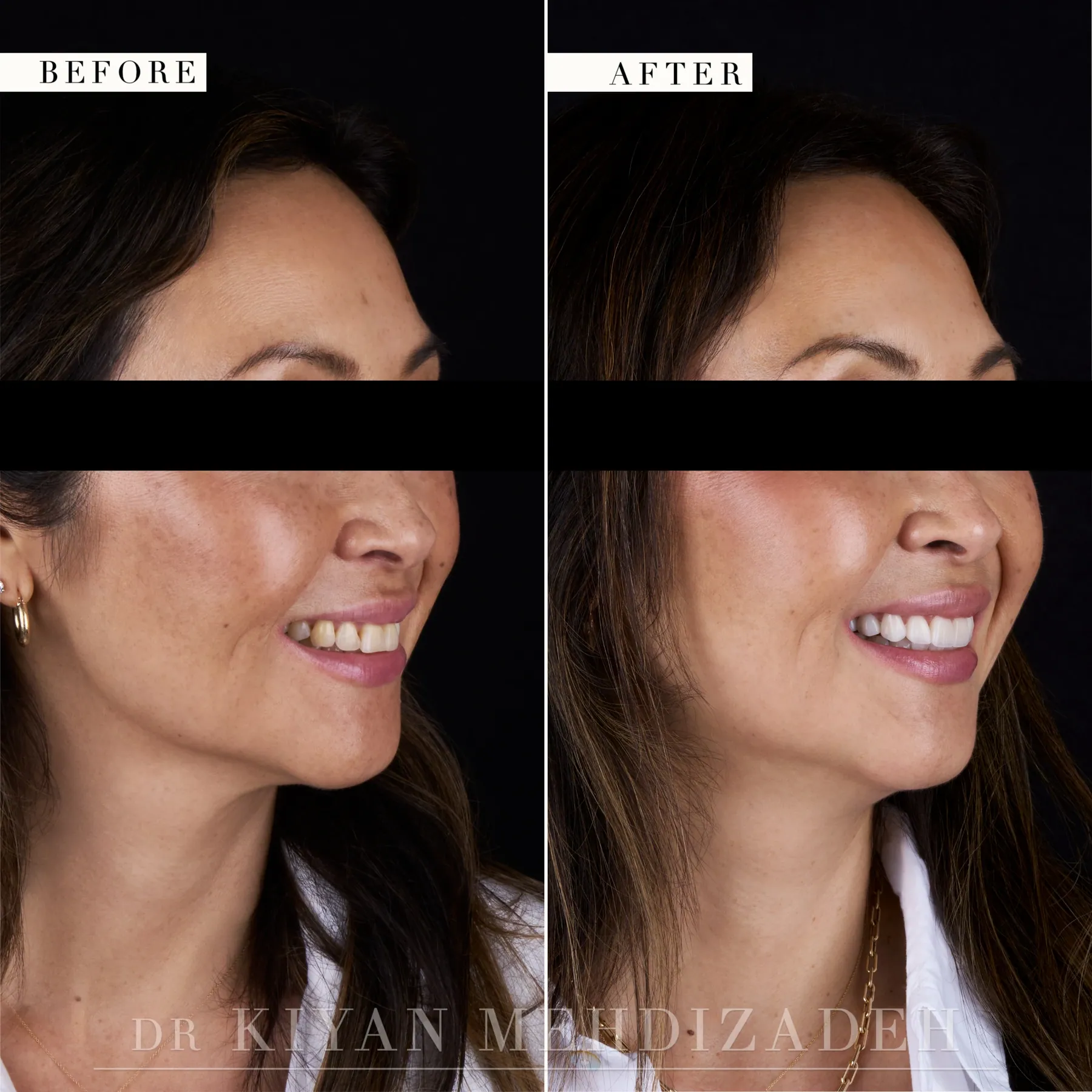
The chipping has been eliminated and the material that was producing it has been replaced with porcelain. This holds its form and color substantially longer than composite under the same conditions. The gum line is even, the proportions follow from it. The whitened lower teeth now match the upper restorations rather than sitting visibly behind them in shade.
The posterior implants now carry the occlusal loading that the anterior teeth had been absorbing, which is what protects the new restorations over time. The overall change is deliberately restrained, as she requested. It is an age-appropriate refresh rather than a conspicuous alteration. That is what she asked for at the outset, and the durability she wanted follows from the material rather than from the design.
Frequently Asked Questions About Replacing Bonding With Veneers
Why replace composite bonding with veneers?
Bonding is softer and more porous, so it chips and stains over time and needs redoing. Porcelain veneers hold their shape and color far longer.
Why do missing back teeth matter for a smile makeover?
Missing molars let the bite drift and overload the remaining teeth. Replacing them with implants stabilizes the bite that the veneers sit within.
Can I just keep re-bonding instead?
You can, but bonding is a repeating fix. For chips that keep recurring, porcelain is usually the more durable - and ultimately more economical - choice.
Why whiten the lower teeth first?
So the natural teeth match the shade chosen for the veneers and crowns.
What does a gum lift add here?
It evens the gum line so the new smile has symmetrical proportions.
Will implants, crowns, and veneers look like one smile?
Yes - they're designed together so function and appearance match across the whole mouth.
Is the result natural-looking?
The design aims for an age-appropriate, understated refresh rather than an obvious change.
What does treatment like this cost?
This case was $38,000, covering twelve upper veneers, two lower ceramic crowns, two implants and two implant crowns. $454/month: 144 payments at 9.99% APR, on approved credit.
Last Updated: October 2026