Last Updated: October 2026
What this case cost
$287/month
144 payments at 9.99% APR, on approved credit.
Total: $24,000 for the extractions, a four-unit zirconia bridge with pink porcelain and six porcelain veneers.
Lost a front tooth to infection?
When an infection takes a front tooth, it often takes bone and gum with it - and that lost tissue is what makes replacing the tooth hard to do naturally. Implants aren't always possible once the bone is gone. There are still ways to rebuild a smile that looks whole. If you're facing an extraction or living with a gap from an old one, send us a photo and we'll walk you through your options.
- A call within two hours during office hours.
- A written cost from us, before you commit to anything.
- No obligation. Many patients take weeks to decide. That is normal.
Ask about your case
Reviewed by our treatment coordination team. Call or text (310) 770-3335 if you would rather speak now.
Request received
A treatment coordinator will call you within two hours during office hours (Monday to Friday, 9 to 4).
To talk now, call (310) 770-3335.
Treatment Plan by Dr. Mehdizadeh
- Surgical and cosmetic smile design
- Fabrication of temporary teeth
- Extraction of two upper front teeth
- Bone grafting and healing assessment
- Whitening to set the base shade
- Gum lift (gingival recontouring)
- Four-unit zirconia bridge with pink (gingival-shade) porcelain
- Six porcelain veneers to harmonize the smile
The Patient's Journey
This patient came to us after two failed root canals on his upper front teeth led to an abscess - a pocket of infection - above them. The infection was severe enough that the two teeth could not be saved and had to be removed. He wanted his smile back, but he also wanted to keep further surgery to a minimum.
When infection takes a front tooth, it usually takes bone and gum with it. Replacing the tooth is the easy part; replacing what was lost around it is the real challenge.
Understanding the Challenge
The textbook replacement for missing teeth is dental implants. But an implant needs a healthy volume of bone to anchor into, and this site didn't have it: the infection and extractions had left a significant defect in the upper jaw. We assessed the ridge and grafting options, and the bone situation would not reliably sustain implants in this position. Forcing implants here would have meant extensive, less predictable grafting - and even then, the missing gum architecture would have shown.
Initial Findings
Two non-restorable upper front teeth following failed endodontic treatment and abscess; a hard- and soft-tissue defect after extraction; insufficient bone to predictably support implants; loss of the natural gum line in a highly visible area.
The Treatment Sequence
We designed the smile first - surgically and cosmetically - and made temporary teeth so he was never without a smile during treatment. After the extractions and healing, the plan shifted to the most predictable path to a natural result: a four-unit fixed bridge rather than implants.
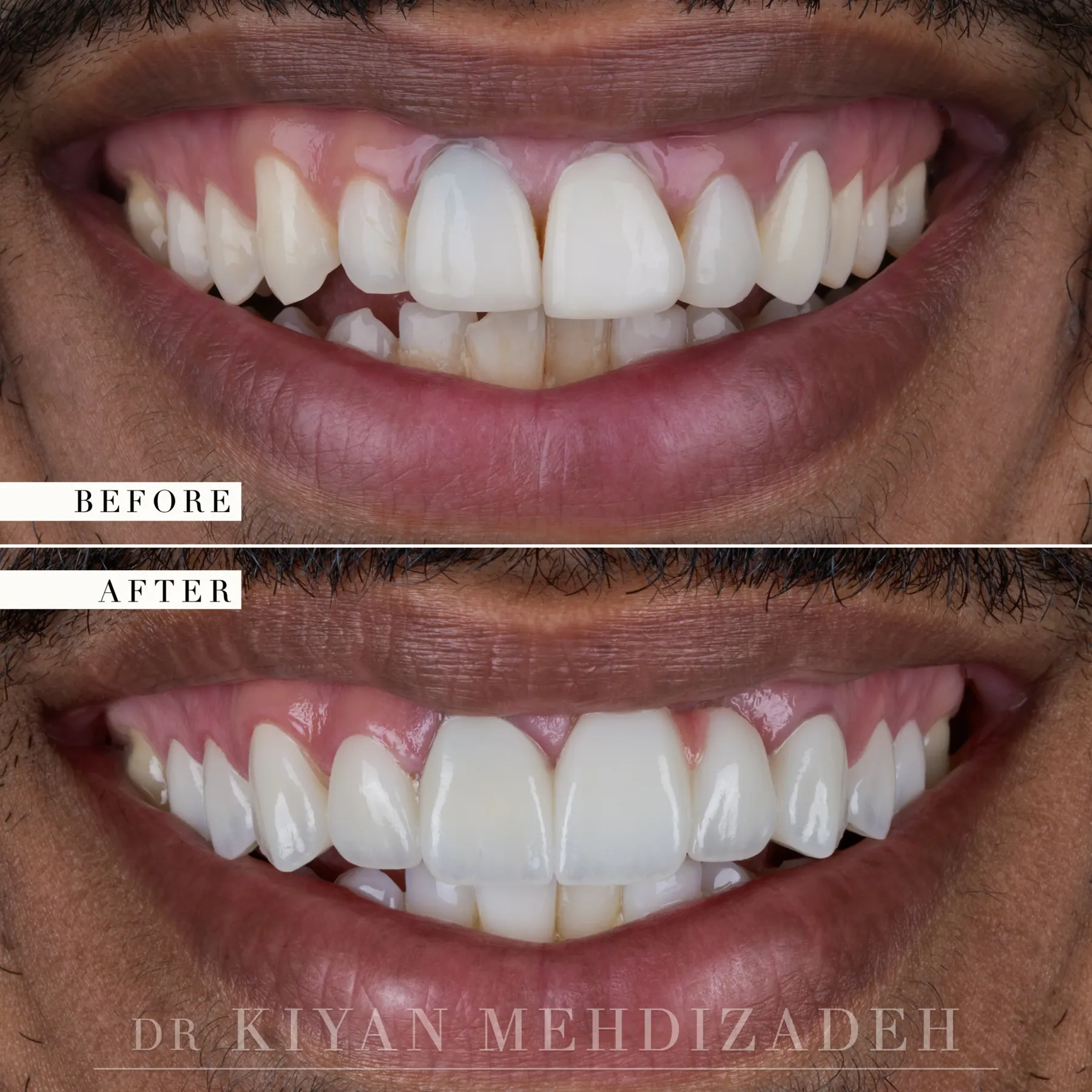
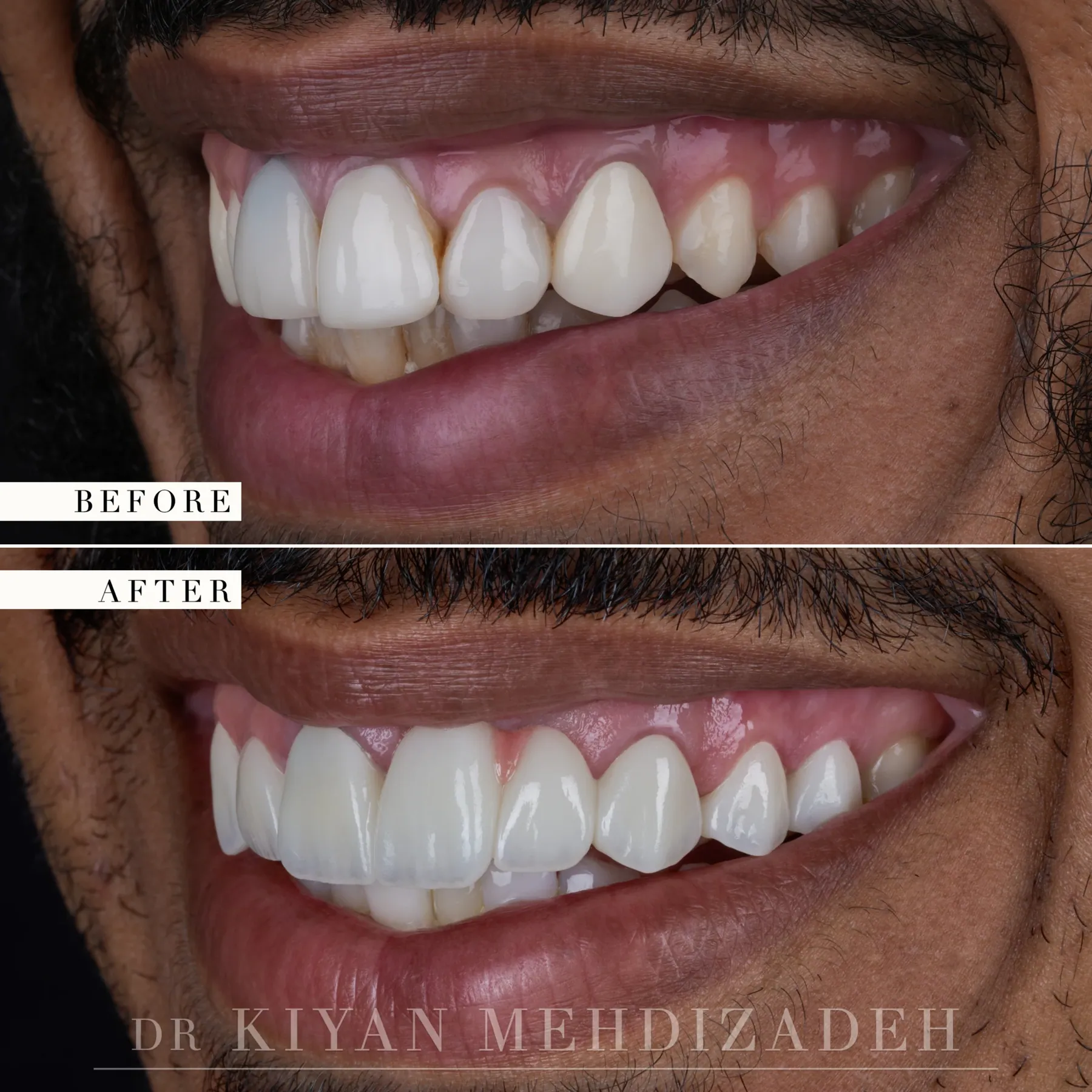
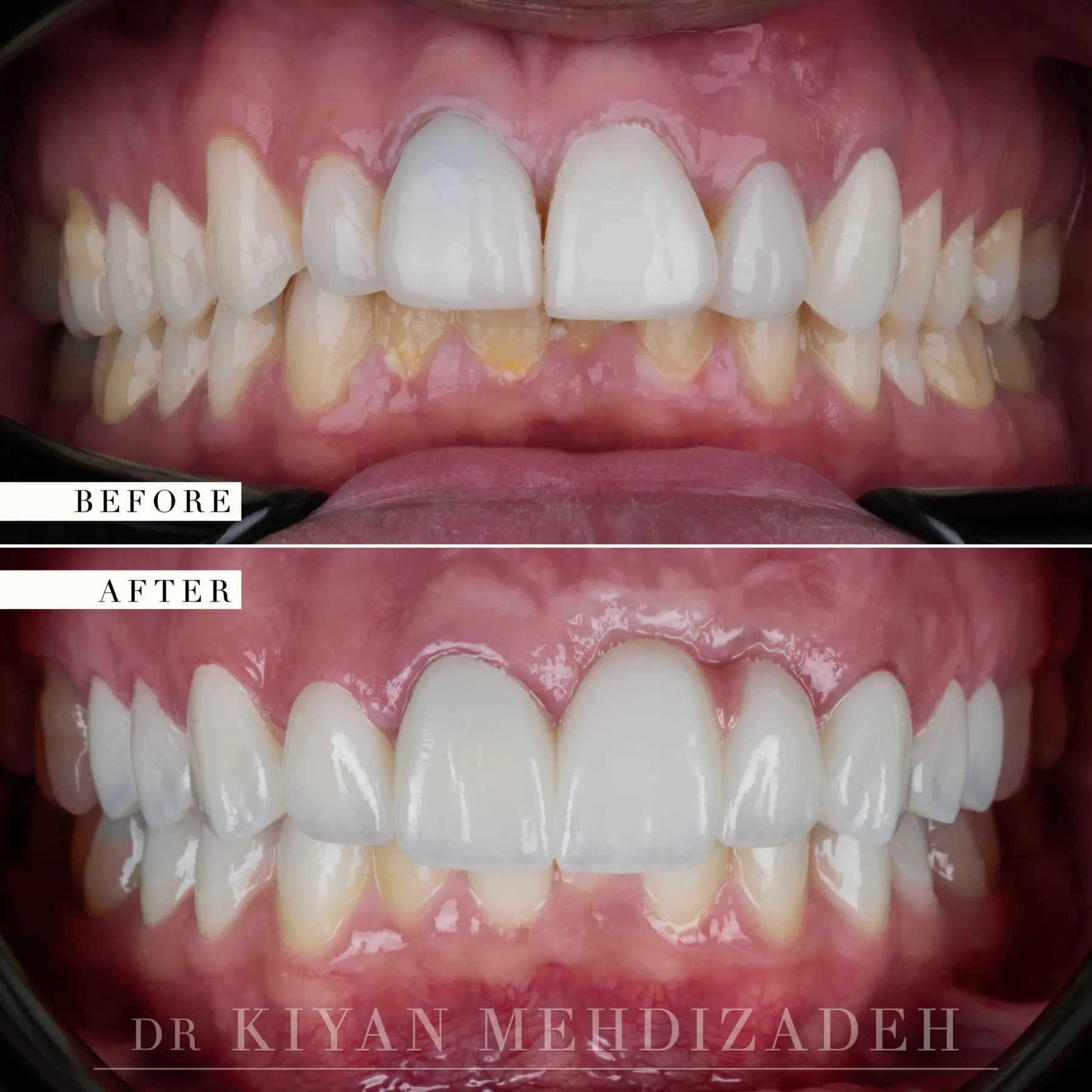
The bridge was made in zirconia, layered with porcelain for a lifelike surface. To rebuild the gum line the infection had destroyed, the laboratory added pink porcelain - a gingival-shade ceramic matched to the color, translucency, and texture of natural gum tissue. This is what keeps the replacement teeth from looking unnaturally long or leaving dark triangles where the gum used to be. Whitening set the base shade and a gum lift refined the surrounding tissue for symmetry, and six porcelain veneers harmonized the rest of the smile in shape and color.
The Result
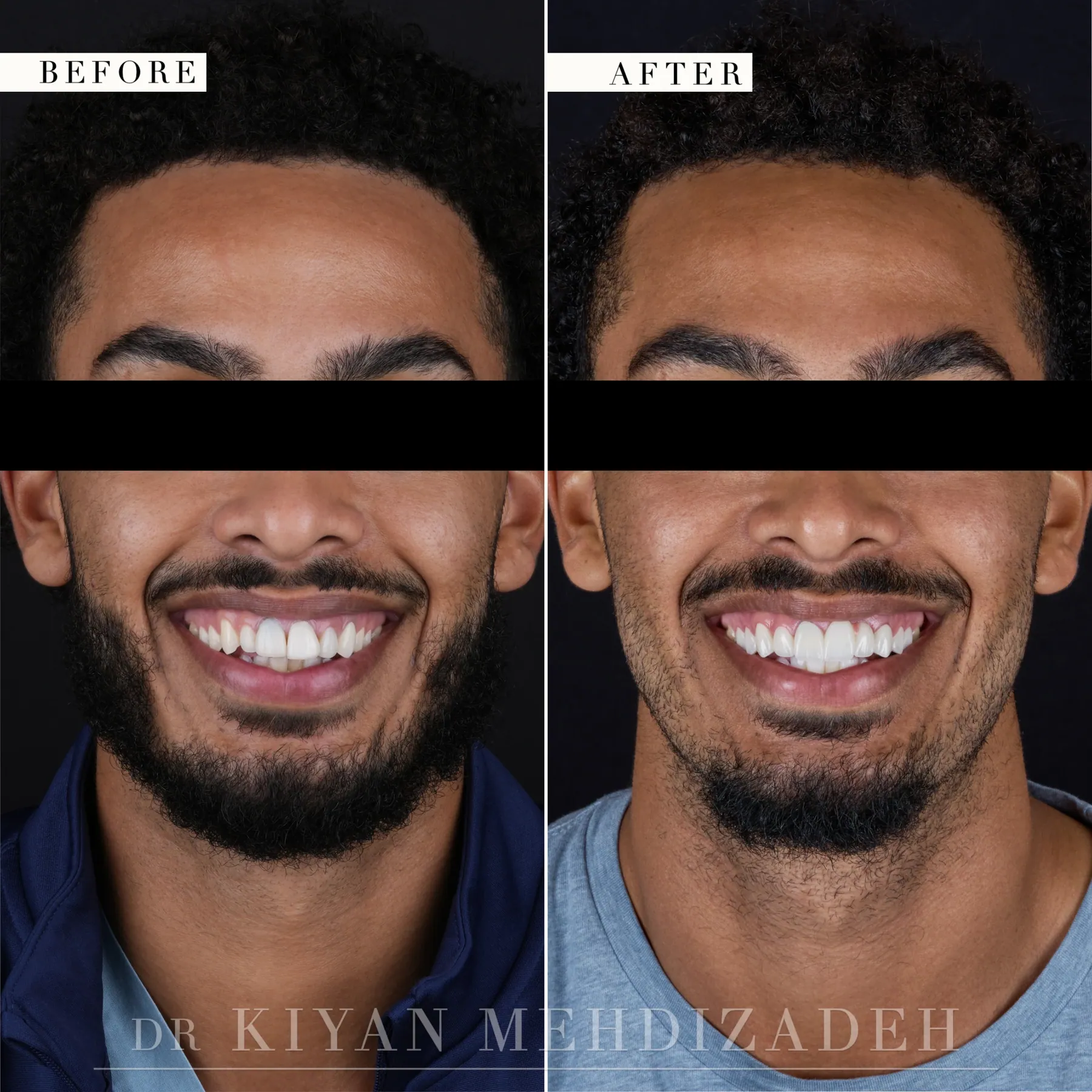
A bright, uniform smile where the gum loss is no longer the center of attention - restored over about eighteen months of staged, deliberate work. Function and appearance were both rebuilt without depending on grafting that the site couldn't reliably support.
Frequently Asked Questions About Pink Porcelain Bridges
What is pink porcelain?
A gingival-shade ceramic layered onto a restoration to recreate the look of natural gum tissue in color and form. It is used when gum and bone loss would otherwise leave teeth looking too long or leave dark gaps at the gum line.
Why a bridge instead of implants here?
After the infection and extractions, this site didn't have enough bone to predictably support implants. A bridge replaced the teeth dependably without relying on extensive, less predictable grafting.
What is a four-unit bridge?
A fixed restoration spanning four connected units, anchored on supporting teeth, that replaces the missing teeth as a single, cemented piece.
Why did the front teeth need to be removed?
Two prior root canals had failed and led to an abscess. The infection was severe enough that the teeth were no longer restorable and had to be extracted to protect his health.
Can a bridge replace lost gum tissue?
The bridge itself replaces the teeth; pink porcelain added to it recreates the appearance of the gum tissue that was lost, so the smile looks whole.
How long does treatment like this take?
This case took roughly eighteen months, because infected sites need time to heal and the reconstruction was staged carefully rather than rushed.
Will it look natural?
That is the purpose of the layered porcelain and the pink gingival ceramic - to match both the teeth and the gum line so the bridge blends into the smile.
How do I care for a bridge like this?
Daily cleaning under the bridge with a floss threader or water flosser, plus regular checkups to keep the supporting teeth and gums healthy.
What does treatment like this cost?
This case was $24,000, covering the extractions, a four-unit zirconia bridge with pink porcelain and six porcelain veneers. $287/month: 144 payments at 9.99% APR, on approved credit.
Last Updated: October 2026