Bonding or Veneers for Small Lateral IncisorsPeg laterals, and what keeps looking right.
Small lateral incisors can be widened in composite bonding or in porcelain. Both can look right on the day they are placed. They differ in how they age: how they take up stain, how they chip, and how long they last.
Two veneers for peg laterals: $12,000
$144/month 144 payments at 9.99% APR, on approved credit.
Your consultation, including a 3D X-ray (CT scan), is free.
Send photos if you have them. Either way, we reply with a cost. No obligation.
Ask about peg laterals
Reviewed by our treatment coordination team. Call or text (310) 770-3335 if you would rather speak now.
Request received
A treatment coordinator will call you within two hours during office hours (Monday to Friday, 9 to 4).
To talk now, call (310) 770-3335.
- A call within two hours during office hours.
- A written cost from us, before you commit to anything.
- No obligation. Many patients take weeks to decide. That is normal.
- Free consultation and 3D X-ray (CT scan)
- Private practice since 2012
- IV sedation in our own office
- In-house dental laboratory
Before, and after.
Every smile on this site was made here: our patients, our laboratory, our work.
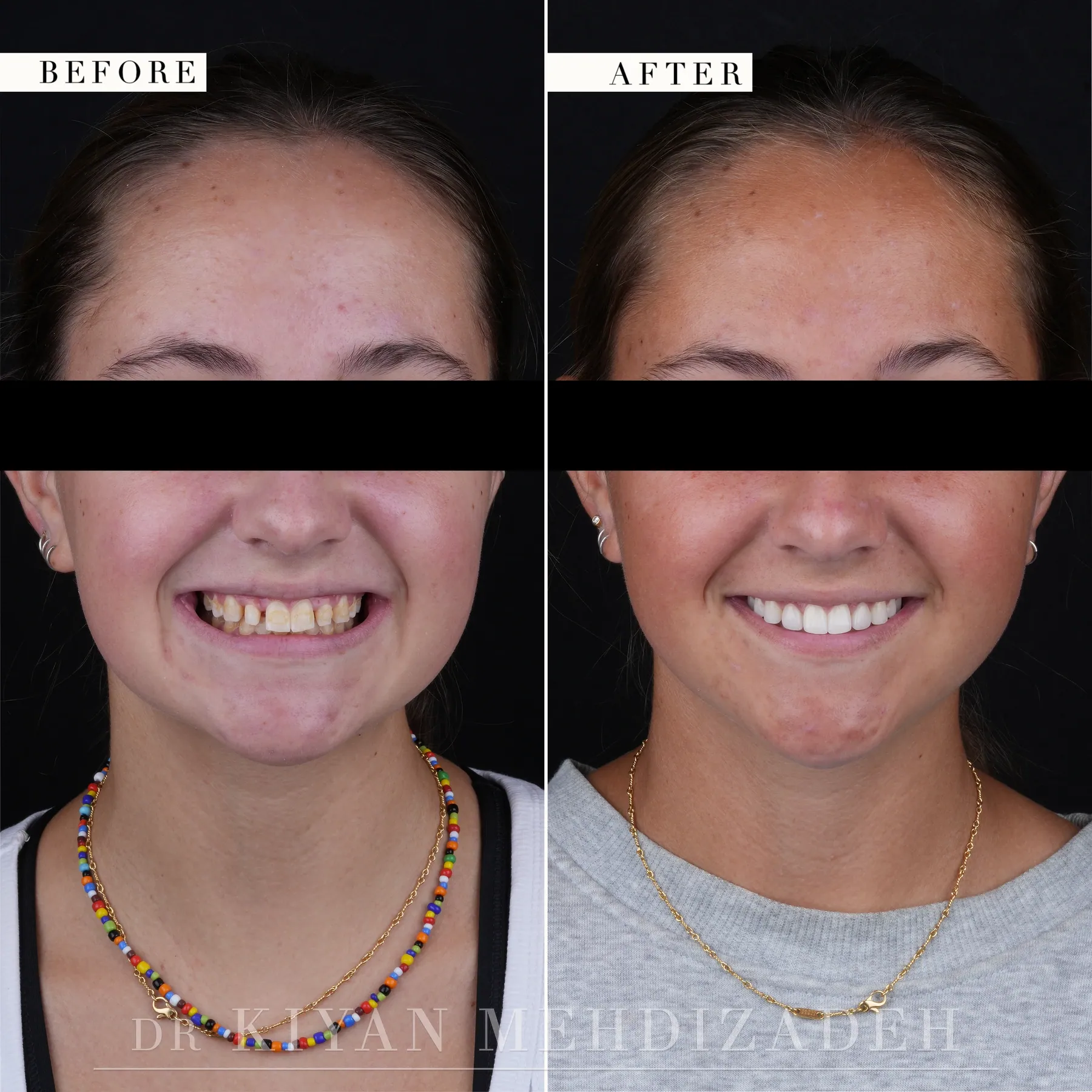
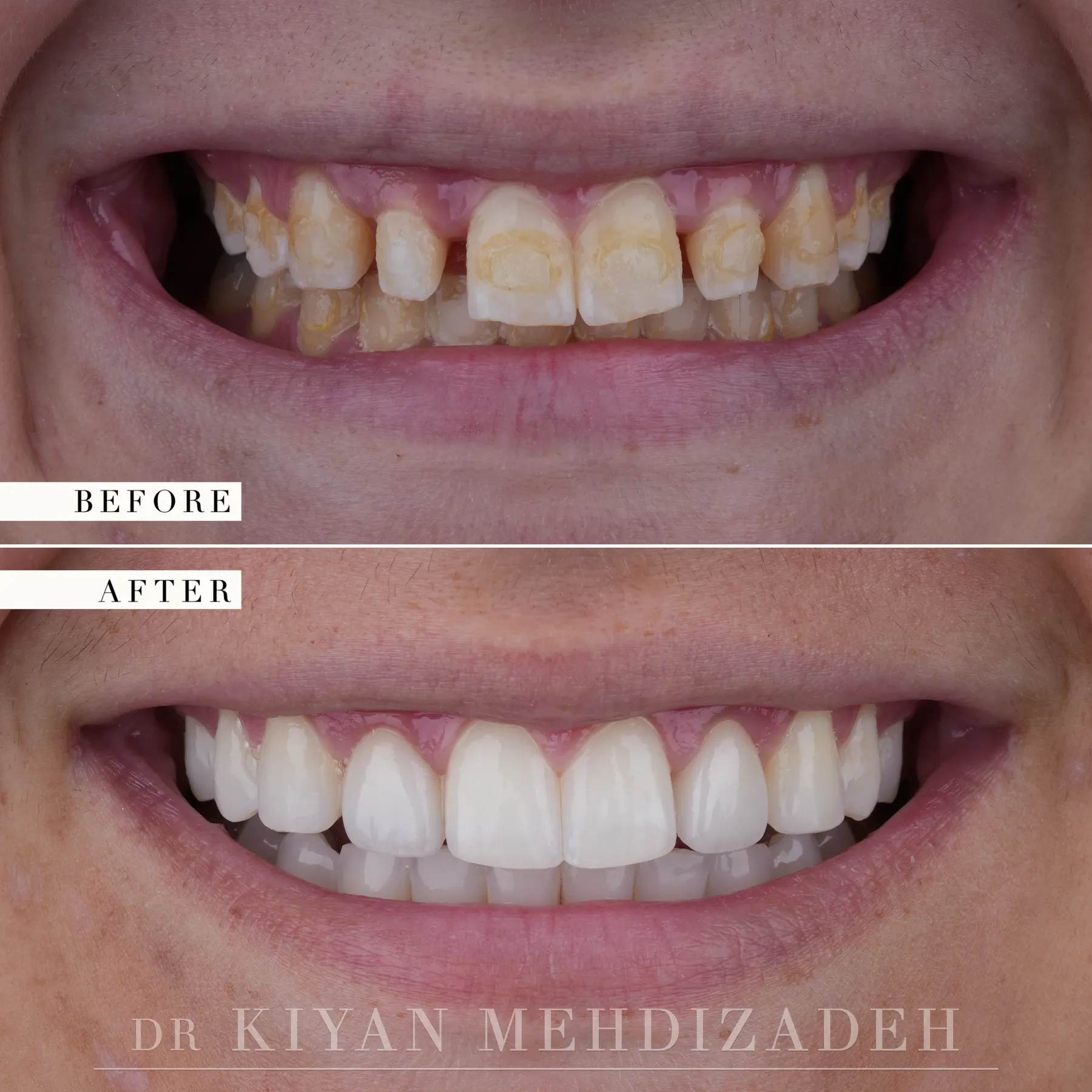 Two peg laterals widened with porcelain veneers, after whitening and a gum lift.See the case →
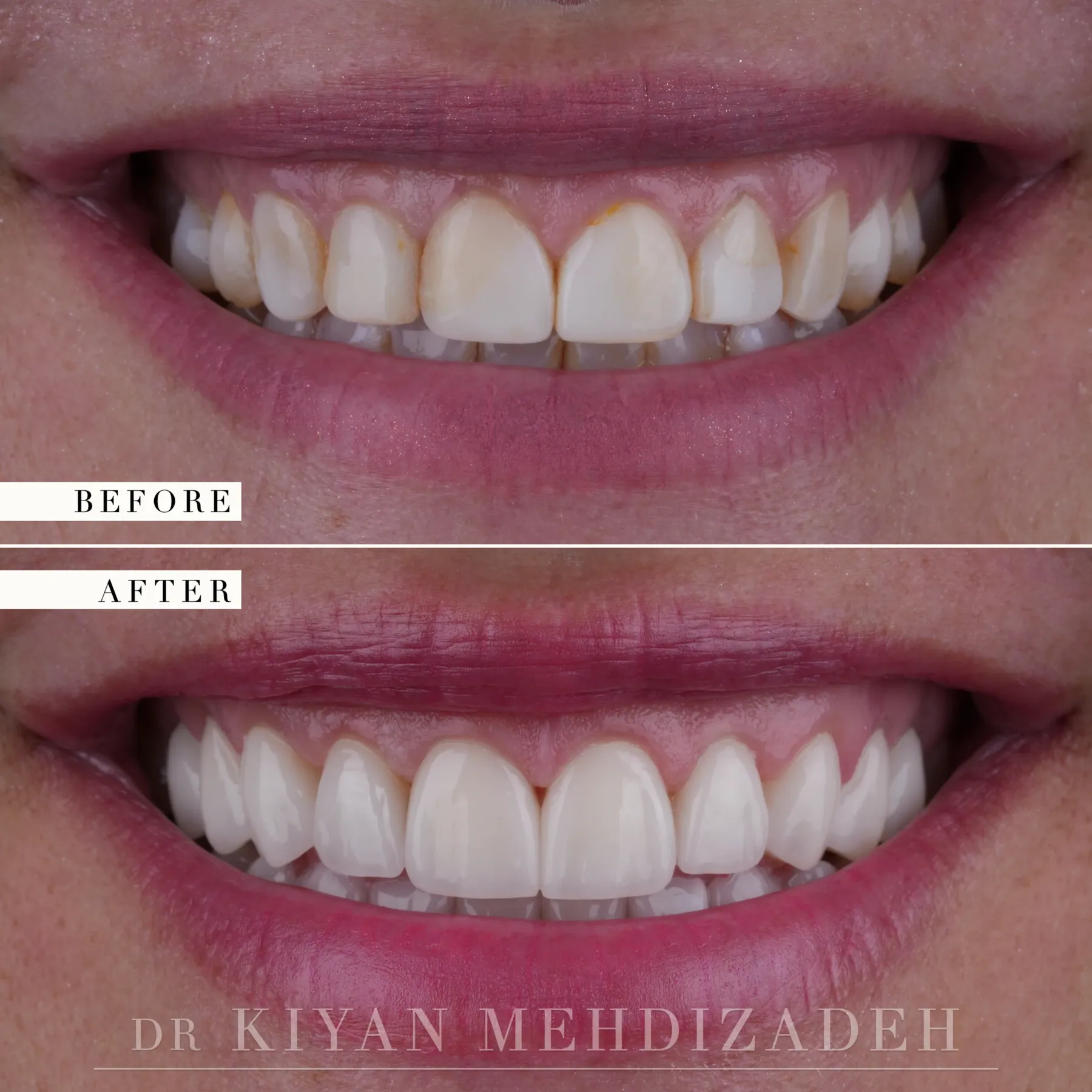
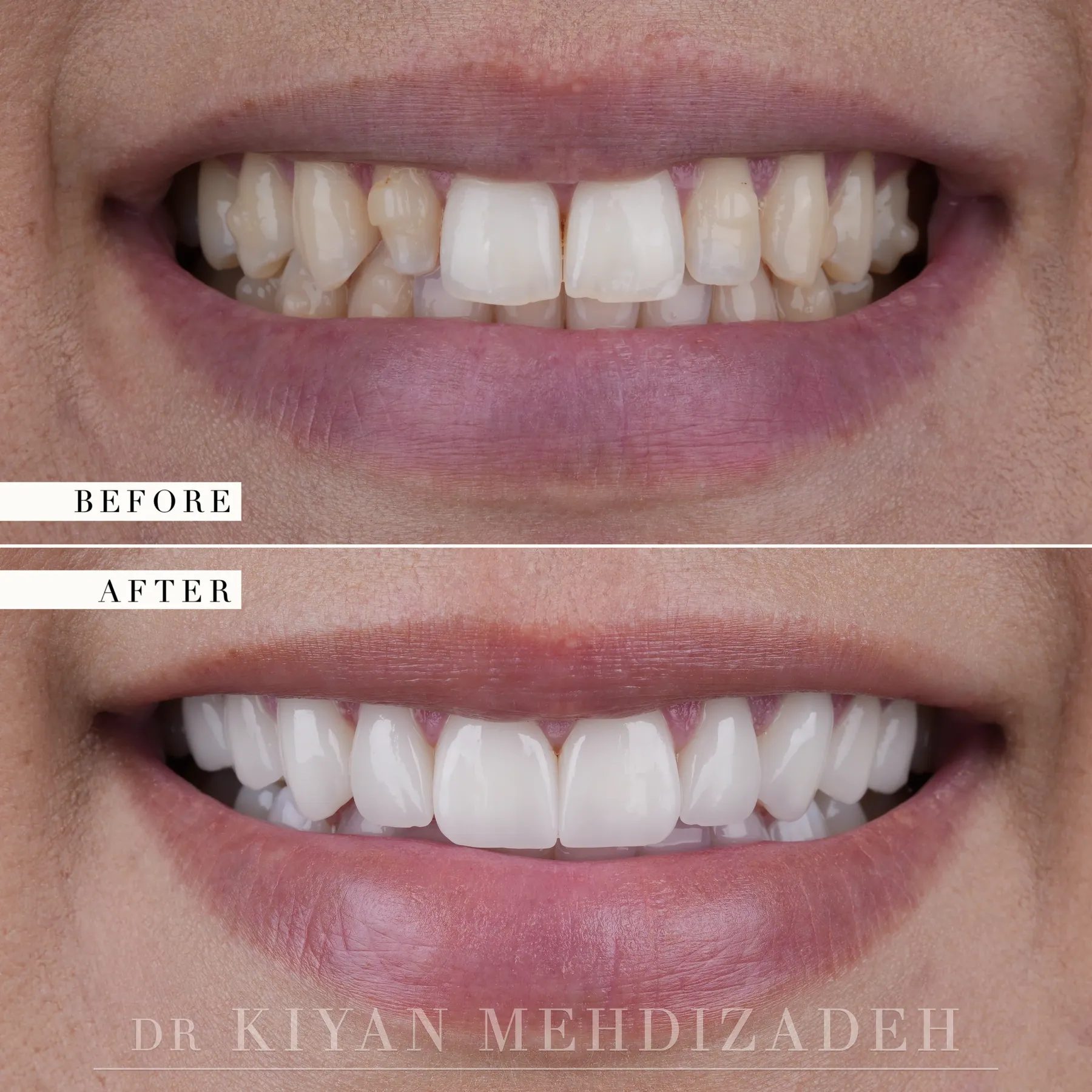 Small lateral incisors that aligners could not change, redesigned with ten veneers.See the case →
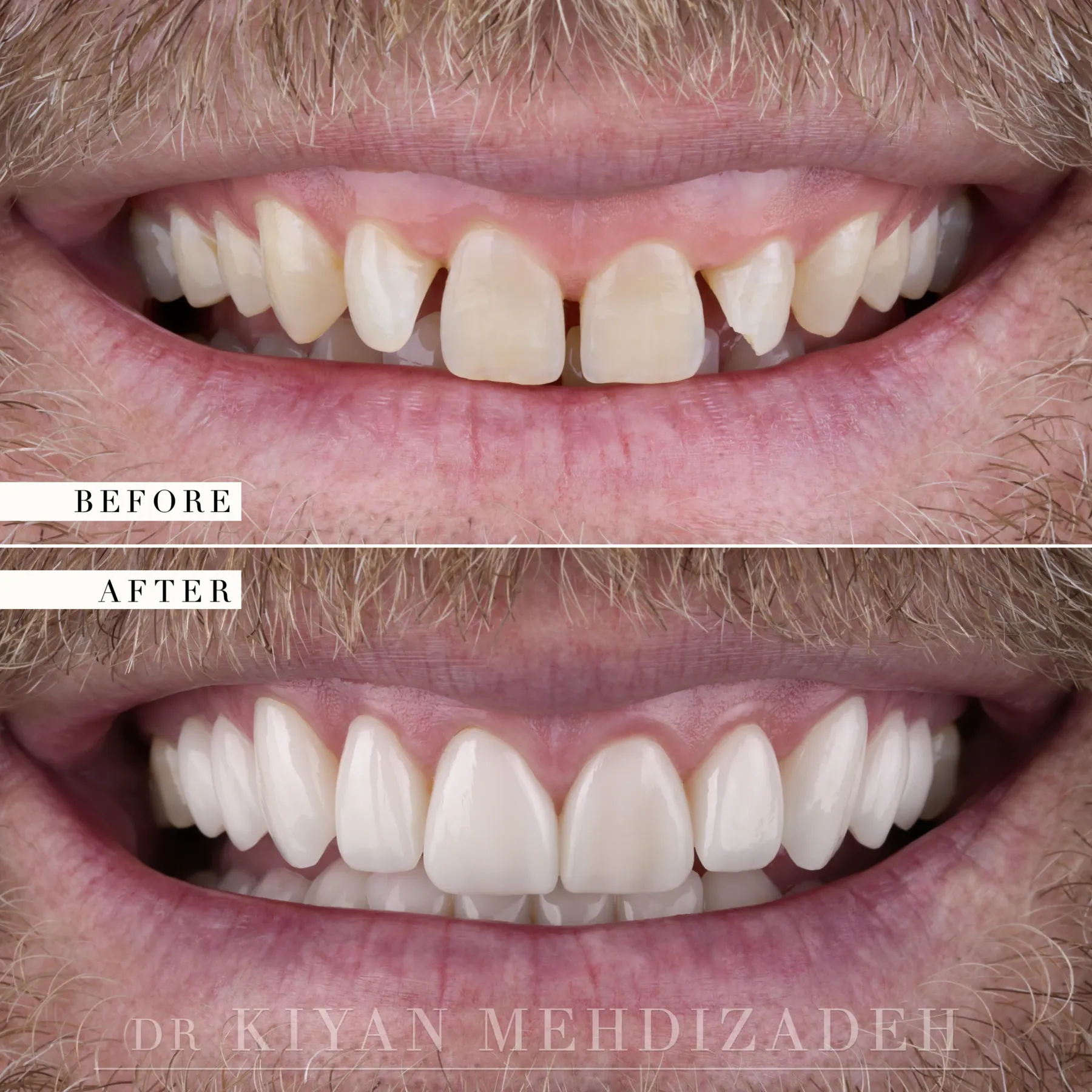 Peg laterals widened without looking bulky, after the gum line was set first.See the case →
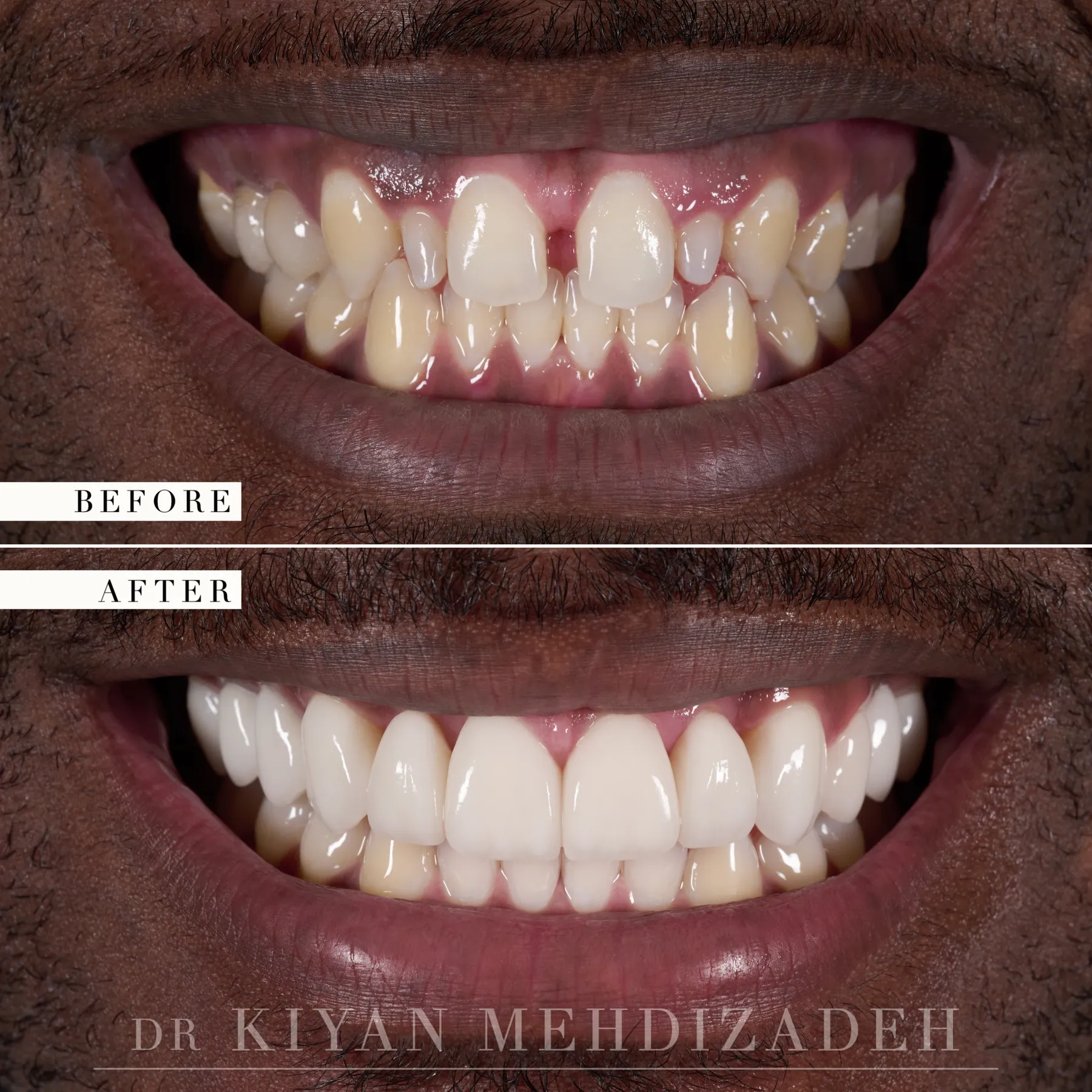 Undersized laterals and a gap between the front teeth, closed with twelve upper veneers.See the case →
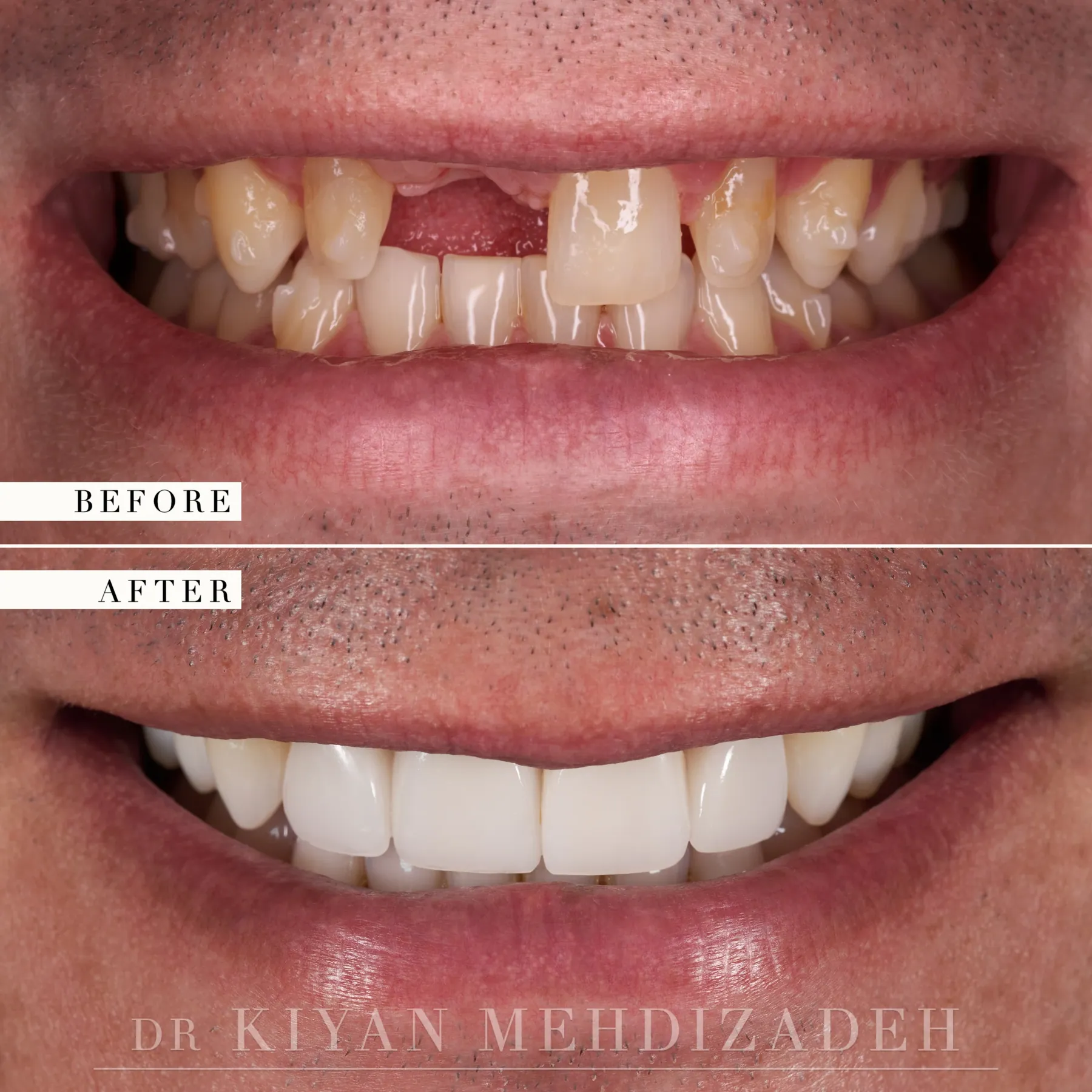 A missing front tooth on an implant, and three veneers to close the gaps braces left.See the case →
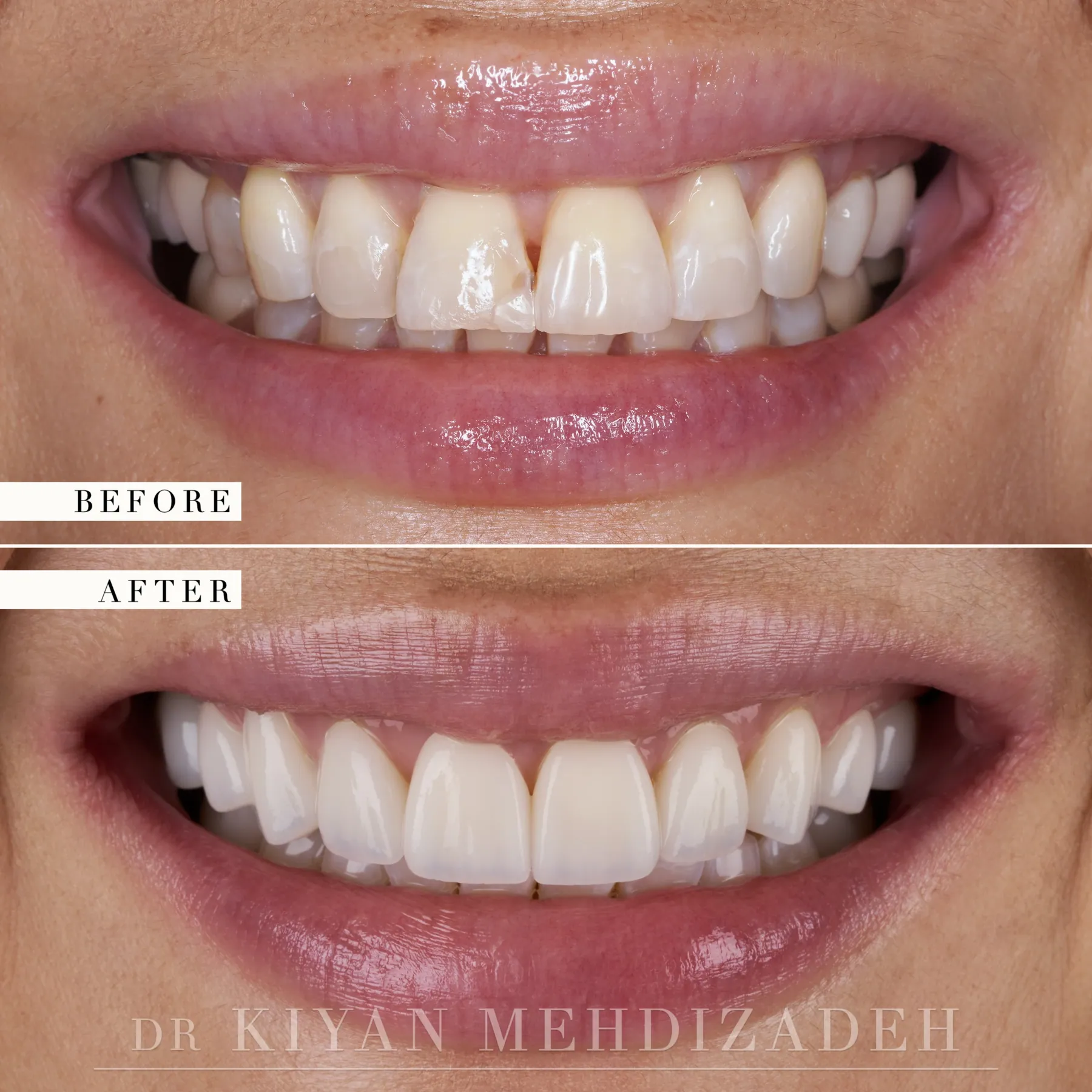 Bonding that kept chipping and staining, replaced with porcelain veneers.See the case →
Why two small teeth change the whole smile.
This page compares bonding and porcelain for undersized lateral incisors: how each is done, how each ages, how long each lasts, what each costs, and what decides the choice.
The lateral incisors sit on either side of the two front teeth. When they develop narrower than normal, sometimes almost conical, they are called peg laterals. A 2013 review of the published studies put their prevalence at about 1.8 percent of people. In this case the laterals measured about 4 to 4.5mm across, where a normal lateral incisor is 6.5 to 7mm.
Because the teeth are undersized, the arch holds more space than teeth, and the surplus shows as gaps. This is a problem of size, not position. Orthodontics changes where a tooth sits; it cannot change how wide it is. Braces or aligners can gather the space where the new width will go, but only a restoration adds the width.
Two ways to add width.
Composite bonding. Composite resin, the tooth-colored material used for fillings, is applied directly to the tooth and shaped by hand, usually at one appointment and with little or no drilling. It is the least invasive and least costly way to widen a tooth, and it can be added to or repaired later.
Porcelain veneers. A thin shell of porcelain, made in our laboratory, is bonded to the front of the tooth. With a peg lateral there is often more space to fill than tooth to cover, so preparation is minimal, and in selected cases veneers can be placed with no reduction at all. You wear the design as temporary veneers before the final porcelain is made, so it takes weeks rather than a day: two veneers, whitening and a gum lift took eight weeks in this case.
How they compare.
| Composite bonding | Porcelain veneers | |
|---|---|---|
| Appointments | Usually one | Several over a few weeks, with temporaries first |
| Tooth reduction | Little or none | Minimal, and sometimes none for a peg lateral |
| Staining | Takes up stain from coffee, tea and wine, most visibly at the edges | Resists stain better than natural enamel |
| Chipping | Softer; edges chip under biting force | Harder; chipping is uncommon |
| Surface | Polish fades over time | Holds its surface and color |
| How long | Typically a few years before it needs redoing | Typically 15 to 20 years or longer with good care |
| Cost | Lower at the start | Two veneers for peg laterals: $12,000 |
Both durability figures are estimates, not promises. How long either lasts depends on the bite, on habits such as biting nails or chewing ice, on a night guard if you grind your teeth, and on cleaning.
The difference shows over the years.
Composite resin is porous. It absorbs pigment from coffee, tea and red wine, its surface polish fades, and its edges chip under the same forces the teeth carry. Stain in composite sits inside the material, so it cannot be whitened out; stained bonding is polished, refreshed or replaced. Even when teeth and bonding start at the same shade, they diverge over the years.
Published figures follow the same pattern. A 2023 review of randomized trials found 88 percent of composite veneers still in service over follow-ups of two to eight years, with rough surfaces, color mismatch and staining at the edges as the usual problems. A 2016 review of ceramic veneers found 89 percent still in place at a median of nine years; chipping or fracture, the most common problem, affected about 4 percent.
In this case, chipped edges had been repaired with bonding, which held for a period and then failed the way composite generally fails: it discolored unevenly against the natural teeth, and fresh chips appeared at the same margins. Bonding placed on a chipping tooth becomes a recurring appointment rather than a conclusion. In another, bonding had yellowed and dulled until it aged the whole smile, and porcelain replaced it.
Adding width is the easy part.
Making the width look natural is a matter of proportion, and it applies to bonding and porcelain alike. A tooth has a characteristic ratio of width to length, and widening a short tooth without lengthening it produces a square tooth. Where the gum line sits low, it is moved first, so the teeth can be lengthened before they are widened, as in this case and this one.
Where gaps remain, the width is distributed across several teeth rather than added to the laterals alone, which would leave two conspicuously large teeth. In this case, ten veneers changed the proportions of every visible upper tooth, and took the laterals from about 4.5mm to 6.5 to 7mm.
Where the other teeth are well shaped and well placed, veneers on the two laterals alone are the most conservative plan. We usually avoid two veneers, because natural teeth change color over time and enamel and ceramic do not handle light the same way. Peg laterals are the exception: there, the need to stay conservative often outweighs everything else, and two veneers can be the right plan, as they were in this case.
What decides which one suits you.
Age. Porcelain veneers are placed once the teeth and jaws have finished developing, usually around 18 to 20. For a younger patient, bonding can serve until then.
How long you want it to last. For someone who will live with the result for decades, porcelain is redone far less often.
The color. Porcelain does not respond to whitening, so natural teeth that stay are whitened first and left to settle, and the shade is chosen against them. Bonding can be shaded at the chair, but it drifts from the teeth beside it as it takes up stain.
The rest of the smile. If the laterals are the only problem, two restorations can be enough. If the shape, color or length of the other front teeth also needs to change, the plan becomes four, eight or ten veneers. How many veneers do you need? explains why.
Cost. Bonding costs less at the start. Porcelain costs more at the outset; bonding that is refreshed or redone every few years narrows the difference over time.
What veneers for peg laterals cost.
Two veneers for peg laterals are $12,000, $144/month: 144 payments at 9.99% APR, on approved credit. This case, two veneers with whitening and a gum lift, was $12,000.
Where more teeth need to change, the price is set by the number of veneers. This case, ten veneers, was $28,000. Every number and its price is set out in the full price table.
The consultation, including a 3D X-ray (CT scan), is complimentary. Most PPO plans contribute toward the cost of treatment. Financing is available.

One doctor, from the design to the final porcelain.
Dr. Mehdizadeh designs every veneer case himself. He trained in fixed prosthodontics under Mauro Fradeani in Italy, and our laboratory, in the same building, makes the veneers.
Tell us what you would like to change.
Tell us what is going on. Add photos if you have them; if not, we will call and talk it through.
Or call (310) 770-3335.
Ask about peg laterals
Reviewed by our treatment coordination team. Call or text (310) 770-3335 if you would rather speak now.
Request received
A treatment coordinator will call you within two hours during office hours (Monday to Friday, 9 to 4).
To talk now, call (310) 770-3335.
Frequently Asked Questions
What are peg laterals?
Lateral incisors, the teeth on either side of the two front teeth, that developed narrower than normal and sometimes almost conical. A 2013 review put their prevalence at about 1.8 percent. The teeth are healthy and simply undersized, which leaves gaps.
Is bonding or porcelain better for peg laterals?
Both can look right on the day. Bonding is quicker, less invasive and costs less at the start, but it takes up stain and chips, and it typically needs redoing within a few years. Porcelain resists stain and holds its surface, and it typically lasts 15 to 20 years or longer with good care.
How long does bonding last on a peg lateral?
Typically a few years before staining or chipping means it needs refreshing or replacing. A 2023 review of randomized trials found 88 percent of composite veneers still in service over two to eight years.
How long do porcelain veneers last?
With good care, porcelain veneers typically last 15 to 20 years or longer. A 2016 review found 89 percent of ceramic veneers still in place at a median of nine years.
Can I have just two veneers?
For peg laterals, yes. Two veneers are usually avoided because natural teeth change color over time, but with peg laterals the need to stay conservative often outweighs that, and two veneers can be the right plan when the other teeth are well shaped and well placed.
Do veneers for peg laterals need much drilling?
No. A peg lateral often has more space to fill than tooth to cover, so preparation is minimal, and in selected cases veneers can be placed with no reduction at all.
Can braces or aligners fix peg laterals?
No. Orthodontics can move the teeth and gather the space where new width will go, but it cannot change the size of a tooth. Only bonding or a veneer adds the width.
How much do veneers for peg laterals cost?
Two veneers for peg laterals are $12,000, $144/month: 144 payments at 9.99% APR, on approved credit. The consultation, including a 3D X-ray (CT scan), is complimentary.
Last Updated: October 2026