Peg Lateral IncisorsWidened in porcelain, in proportion.
Small, pointed lateral incisors leave spaces and make the front teeth look out of proportion. Widened in porcelain to the width the smile needs, they read as the teeth you were meant to have.
Two veneers for peg laterals: $12,000
$144/month 144 payments at 9.99% APR, on approved credit.
Your consultation, including a 3D X-ray (CT scan), is free.
Send photos if you have them. Either way, we reply with a cost. No obligation.
Ask about veneers
Reviewed by our treatment coordination team. Call or text (310) 770-3335 if you would rather speak now.
Request received
A treatment coordinator will call you within two hours during office hours (Monday to Friday, 9 to 4).
To talk now, call (310) 770-3335.
- A call within two hours during office hours.
- A written cost from us, before you commit to anything.
- No obligation. Many patients take weeks to decide. That is normal.
- Free consultation and 3D X-ray (CT scan)
- Private practice since 2012
- IV sedation in our own office
- In-house dental laboratory
Before, and after.
Every smile on this site was made here: our patients, our laboratory, our work.
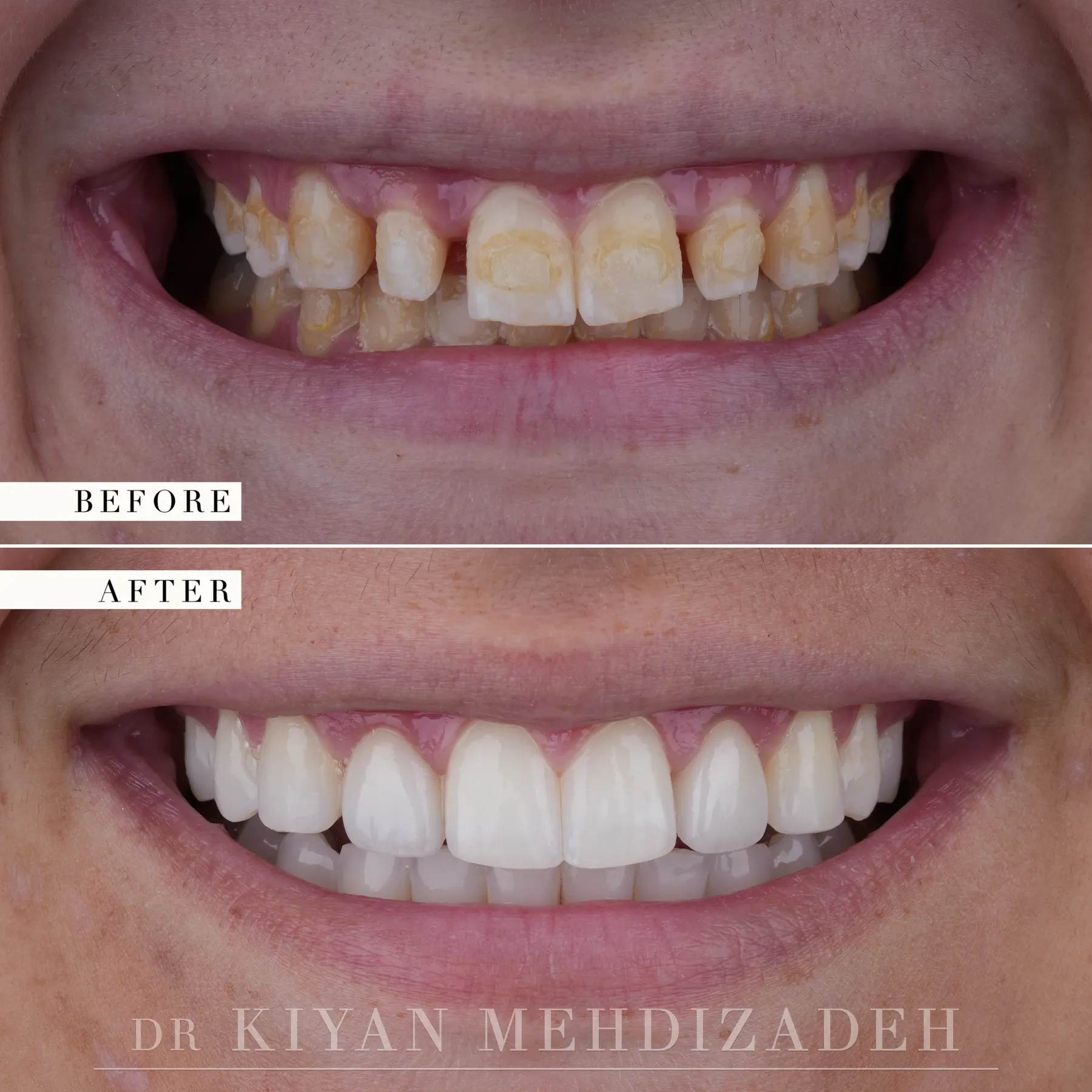 Two veneers for peg lateral incisors.See the case →
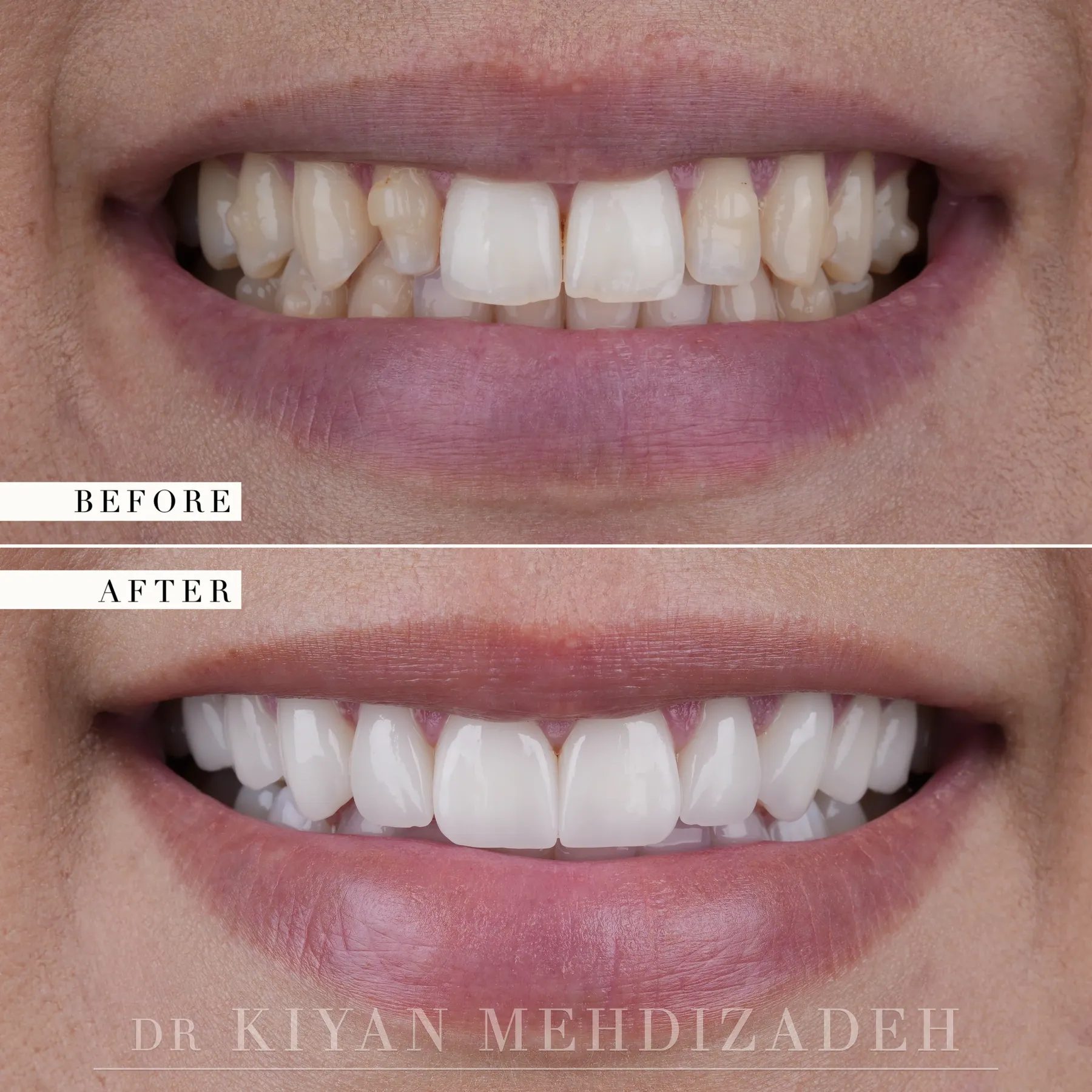 Small lateral incisors that aligners could not change, widened with ten veneers.See the case →
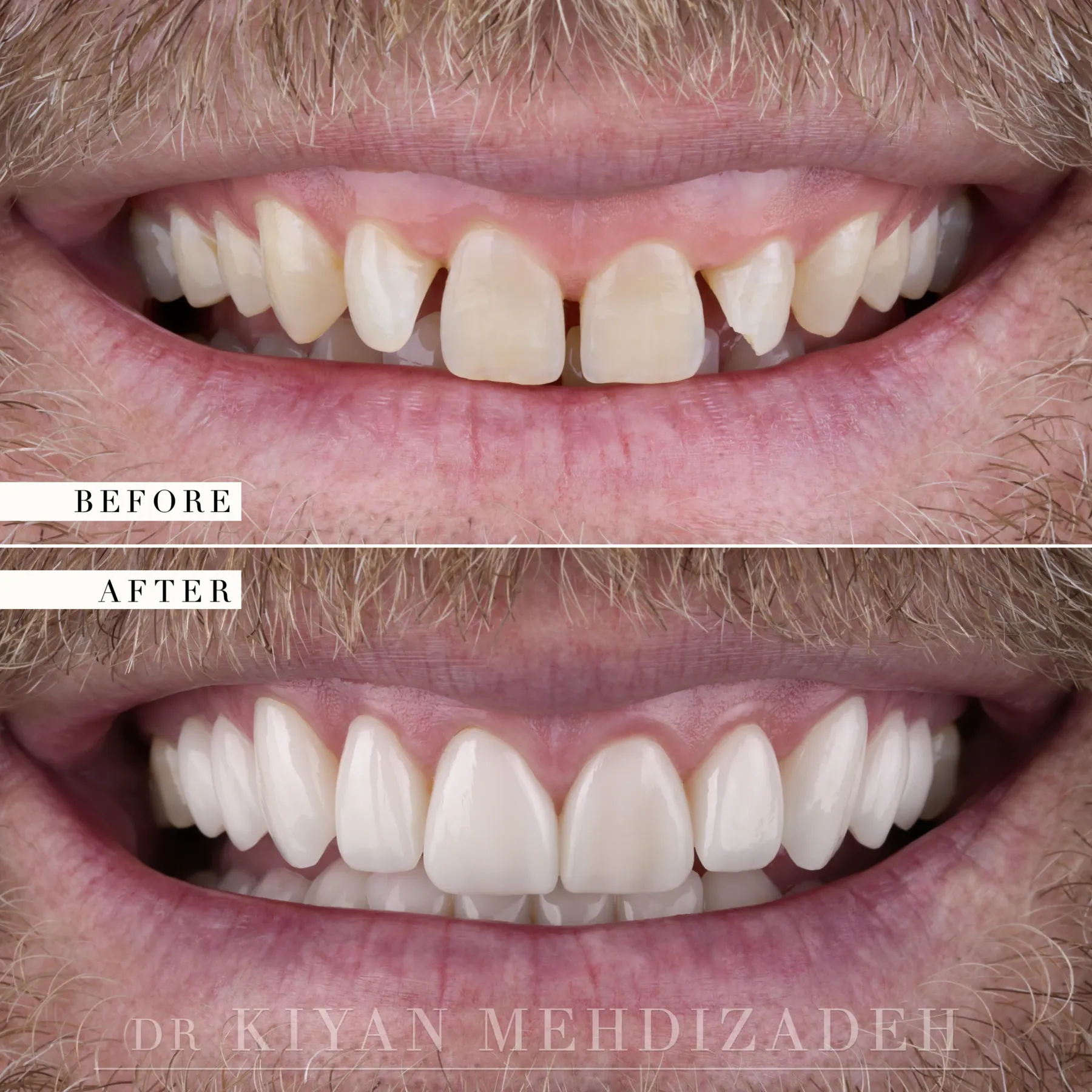 Peg laterals widened without looking bulky, after the gum line was set.See the case →
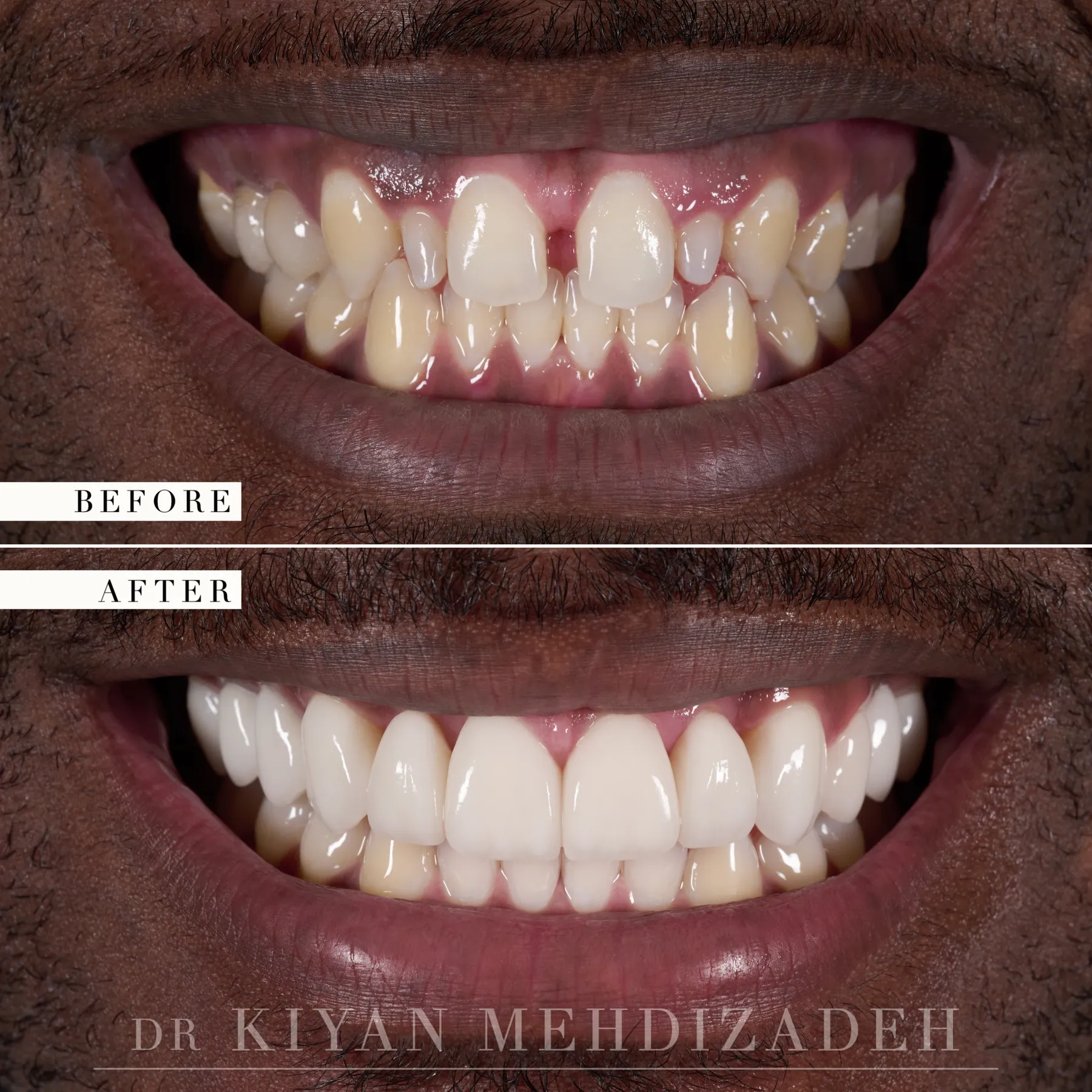 A central gap left by undersized lateral incisors, closed after a gum lift.See the case →
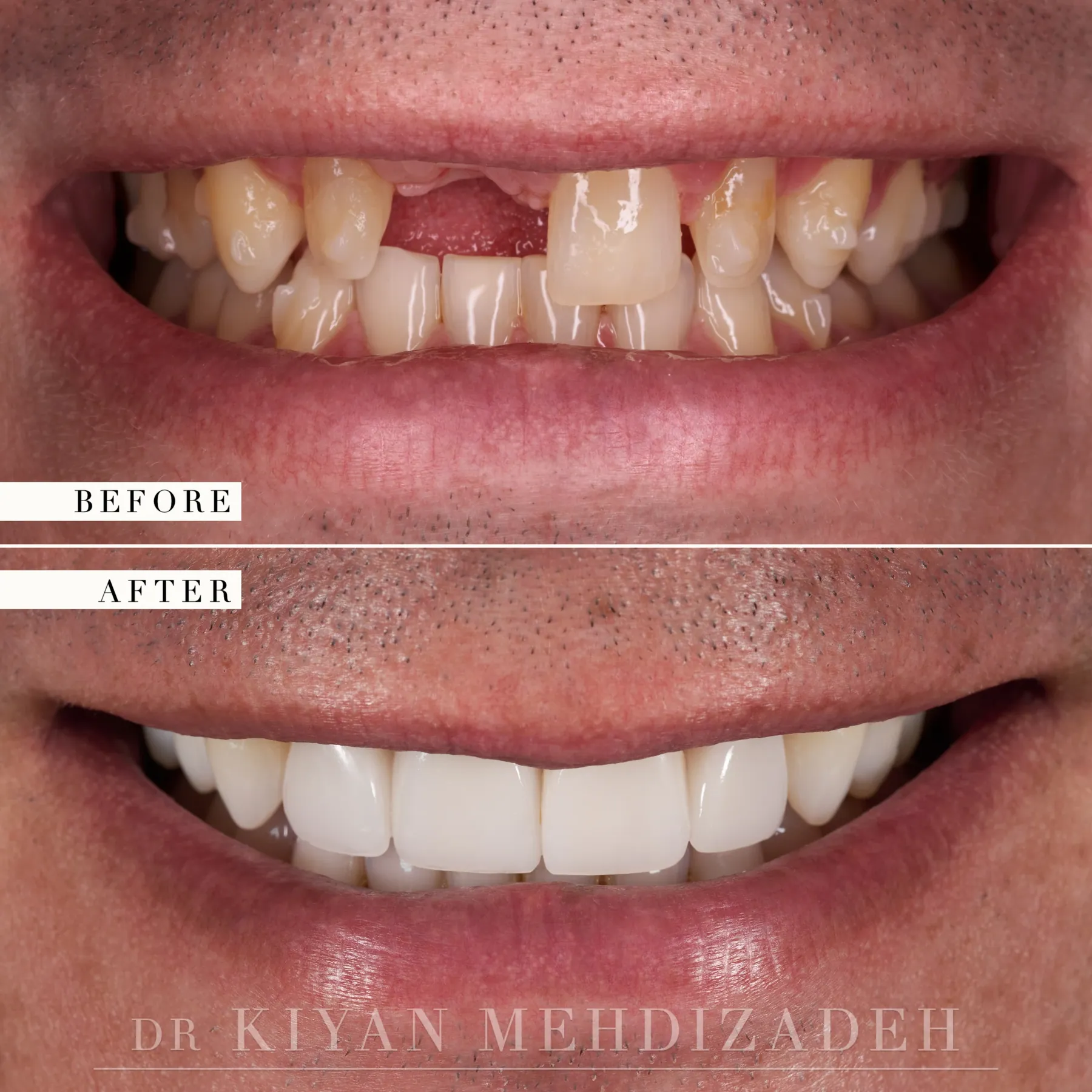 Gaps braces could not close, closed with an implant crown and three veneers.See the case →
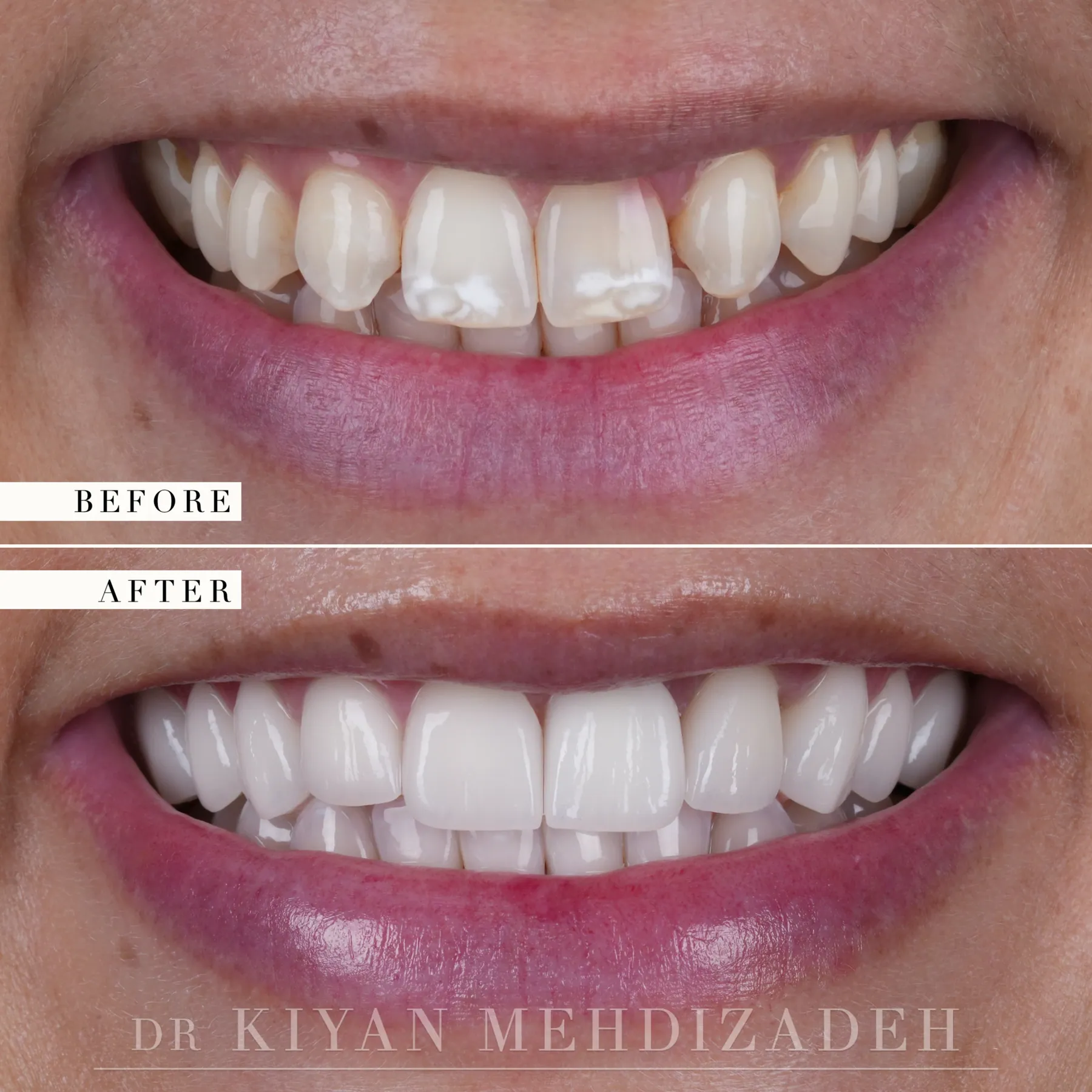 Lateral incisors that never formed, rebuilt in porcelain from the canines.See the case →
Why the teeth beside the front two are small.
This page explains what peg laterals are, why braces do not fix them, when two veneers are the right plan and when more are, what else decides the result, and what treatment costs.
A peg lateral is a lateral incisor, one of the two teeth beside the front teeth, that formed narrower and more tapered than normal, sometimes almost conical. It is a developmental variation, not damage or decay, and the tooth itself is healthy. A 2013 analysis of 30 studies put it at about 1.8% of people, somewhat more often in women, on one side or on both.
The difficulty is arithmetic. An arch with two undersized teeth holds more space than teeth to fill it, and the surplus shows as gaps, spread between the front teeth or gathered in one place. In this case, the two central incisors had drifted apart into the room a full-width lateral would have taken, and the gap between them was what the patient came in about. In another, the laterals measured about 4 to 4.5mm across, against a normal 6.5 to 7mm.
Braces and clear aligners move teeth; they do not change how wide a tooth is. They can gather the spare space or spread it evenly, but they cannot remove it, which is why patients often finish orthodontics with straight teeth and the same small laterals, as in this case and another.
When two veneers are the right plan.
We avoid two veneers almost everywhere else, because natural teeth change color over the years and enamel and ceramic do not handle light the same way. Peg laterals are the exception. When the problem is confined to the two small teeth and the rest of the smile is well shaped, the need to stay conservative outweighs the risk of a mismatch, and two veneers can be the right plan. How many veneers do you need? explains the rule and the exception.
In this case, a young patient had already finished orthodontics. Her teeth were whitened first, a gum lift evened the gum line between the two sides, and two veneers brought the laterals to about 6.5mm wide, with the remaining space spread evenly. Treatment took eight weeks.
More veneers are needed when the small laterals are only part of the problem. When the other teeth are also discolored, worn or out of proportion, widening the laterals alone leaves them looking out of place against the rest. In this case, ten upper veneers adjusted every visible proportion, the laterals most of all, from about 4.5mm to 6.5 to 7mm. In another, the gum line also sat low, and twenty veneers, ten upper and ten lower, followed a gum lift.
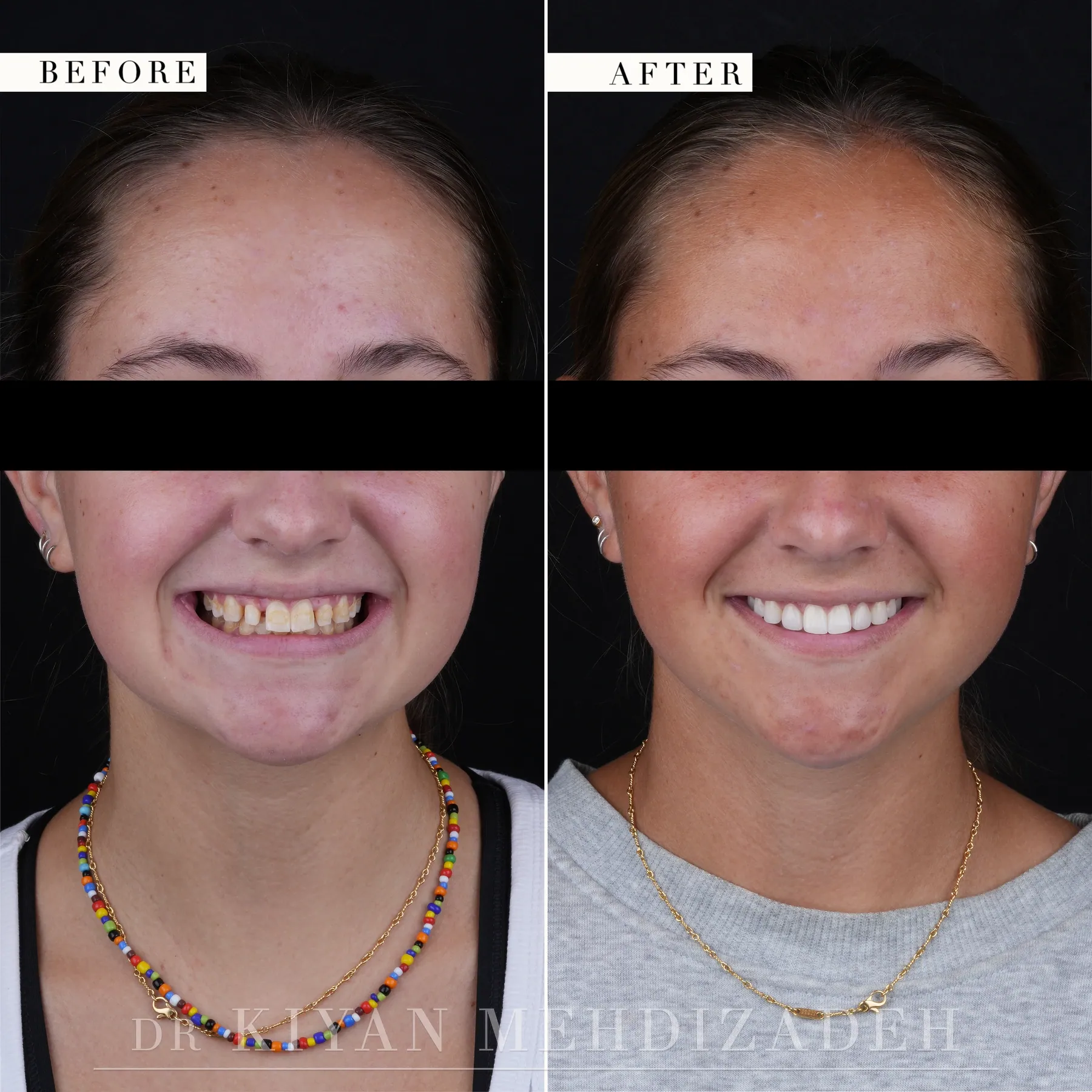
Width, length, and where the space goes.
Width needs length. A tooth looks natural at a certain ratio of width to length. Widening a short tooth without lengthening it produces a square tooth, which most people register as dental work without knowing why. Where the gum line sits low, a gum lift comes first and provides the length; in this case, it is what allowed the laterals and the central incisors to be widened in proportion.
The space is shared out, not added to two teeth. Adding all of the missing width to the two laterals produces two conspicuously large teeth. The design divides it across several teeth, so every tooth keeps a believable size. In this case, a missing central incisor was replaced with an implant, and the implant crown and three veneers were designed as one set so the spare width fell where it belonged.
The shade is set against whitened teeth. Porcelain does not respond to whitening, so natural teeth that stay are whitened first and left to settle, and the veneers are matched to them.
You see it before it is final. The new shapes are worn as temporary veneers and adjusted in the mouth before the final porcelain is made. Because a peg lateral is undersized, porcelain is added where the tooth is short of width rather than over its whole surface, and the tooth often needs less preparation than a full-sized one would.
Bonding, crowns, aligners, and timing.
Composite bonding. Tooth-colored resin is built onto the tooth. It is the least invasive option and costs less at the start, but composite stains and chips more readily than porcelain and typically needs replacing within a few years.
Crowns. A crown covers the whole tooth and needs much more preparation. For a healthy peg lateral, it removes structure the tooth does not need to lose.
Orthodontics. Braces or clear aligners can move the teeth so the space sits where the design needs it, and in some cases that comes first. They cannot add width; that is what the porcelain is for.
Timing. Veneers are placed once the teeth and jaws have finished developing. For a younger patient, bonding can serve until then.
What veneers will not do. They will not move a tooth that sits in the wrong place, and they cannot fill space that is too large without making teeth too wide. When the space is in the wrong place, or there is too much of it, orthodontics comes first. Where a lateral incisor never formed at all, the plan is different again: in this case, the canines had drifted into the empty spaces, and porcelain rebuilt them as lateral incisors.
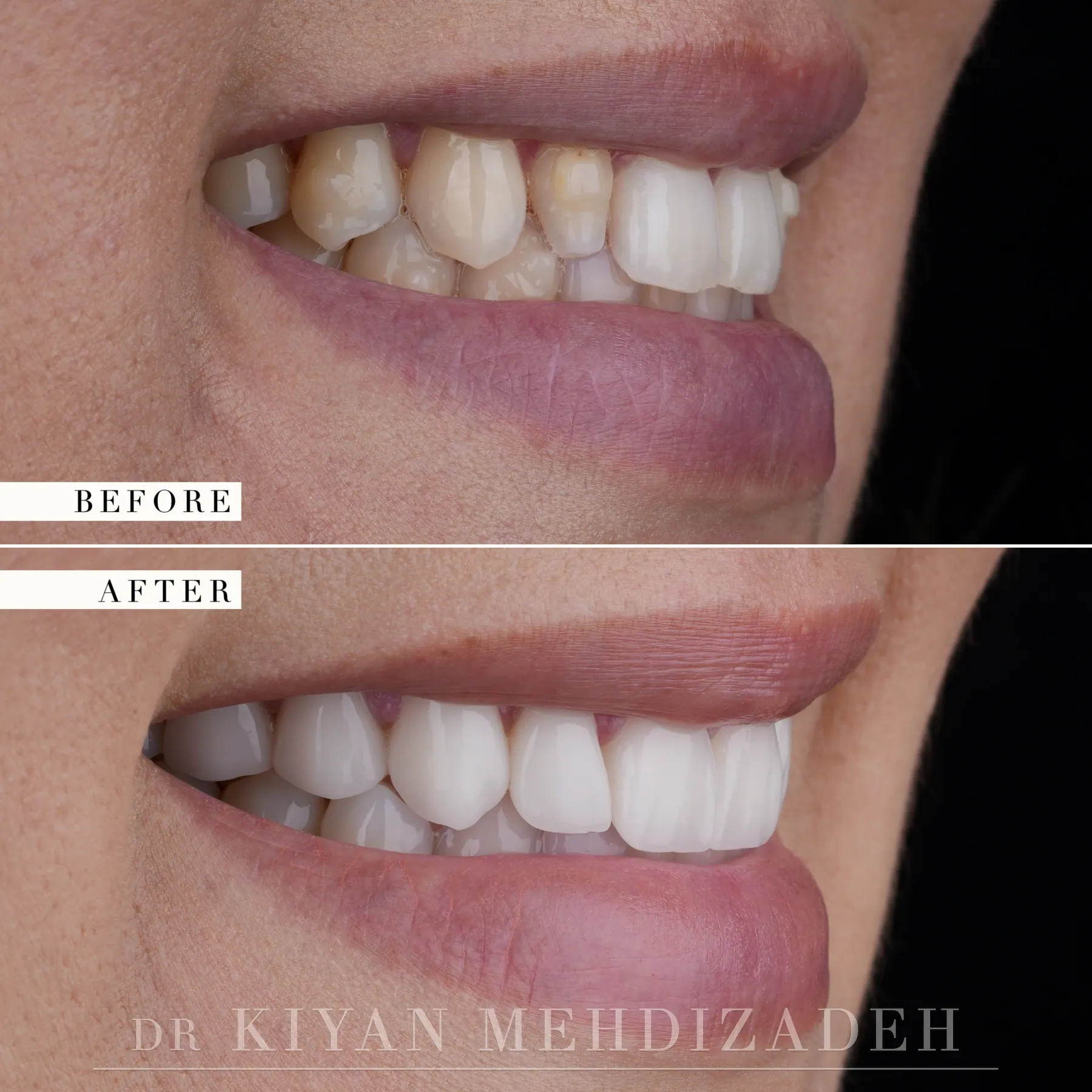
What treatment costs.
We quote each case as a whole, by the number of veneers it needs, never per tooth. Two veneers for peg laterals are $12,000, $144/month: 144 payments at 9.99% APR, on approved credit. Where the design needs more teeth, four veneers start at $16,000 and ten at $24,000. Most cases also include a gum lift or whitening. Every number and its price is set out in the full price table.
As examples, this case was $12,000, covering two veneers and a gum lift, and another was $28,000, covering ten veneers and whitening.
The consultation, including a 3D X-ray (CT scan), is complimentary. Most PPO plans contribute toward the cost of treatment. Financing is available. Porcelain veneers covers the treatment itself.

One doctor, from the design to the final porcelain.
Dr. Mehdizadeh designs every veneer case himself, and our laboratory, in the same building, makes the veneers.
Tell us about your lateral incisors.
Tell us what is going on. Add photos if you have them; if not, we will call and talk it through.
Or call (310) 770-3335.
Ask about veneers
Reviewed by our treatment coordination team. Call or text (310) 770-3335 if you would rather speak now.
Request received
A treatment coordinator will call you within two hours during office hours (Monday to Friday, 9 to 4).
To talk now, call (310) 770-3335.
Frequently Asked Questions
What are peg lateral incisors?
Lateral incisors, the teeth beside the two front teeth, that formed narrower and more tapered than normal, sometimes almost conical. It is a developmental variation affecting about 2% of people; the teeth are healthy, simply undersized.
Why did braces not fix my peg laterals?
Braces and clear aligners move teeth but do not change their width. They can gather or spread the spare space, but only adding width to the teeth closes it.
Are two veneers enough for peg laterals?
When only the laterals are small and the rest of the smile is well shaped, yes. Peg laterals are the one situation in which we recommend two veneers. When the other teeth also need a change in color or shape, the design includes them.
Is bonding or porcelain better for peg laterals?
Bonding is less invasive and costs less at first, but it stains and chips more readily and typically needs replacing within a few years. Well-made porcelain veneers typically last 15 to 20 years or longer and hold their color.
Do peg laterals need a gum lift?
Not always. A gum lift is added when the tooth is too short for the width the design needs, because widening a short tooth produces a square one.
How long does treatment take?
One of the cases on this page took eight weeks, including whitening and a gum lift. Without a gum lift, treatment can often be completed in four to five weeks.
How much do veneers for peg laterals cost?
Two veneers for peg laterals are $12,000, $144/month: 144 payments at 9.99% APR, on approved credit. Most cases also include a gum lift or whitening.
Last Updated: October 2026