Veneers for FluorosisCovering what whitening cannot lift.
White flecks, chalky patches or brown mottling from fluorosis sit inside the enamel, not on it. Porcelain covers them with a new surface that holds its color and still passes light the way enamel does.
Four veneers from $16,000
$192/month 144 payments at 9.99% APR, on approved credit.
Your consultation, including a 3D X-ray (CT scan), is free.
Send photos if you have them. Either way, we reply with a cost. No obligation.
Ask about veneers
Reviewed by our treatment coordination team. Call or text (310) 770-3335 if you would rather speak now.
Request received
A treatment coordinator will call you within two hours during office hours (Monday to Friday, 9 to 4).
To talk now, call (310) 770-3335.
- A call within two hours during office hours.
- A written cost from us, before you commit to anything.
- No obligation. Many patients take weeks to decide. That is normal.
- Free consultation and 3D X-ray (CT scan)
- Private practice since 2012
- IV sedation in our own office
- In-house dental laboratory
Before, and after.
Every smile on this site was made here: our patients, our laboratory, our work.
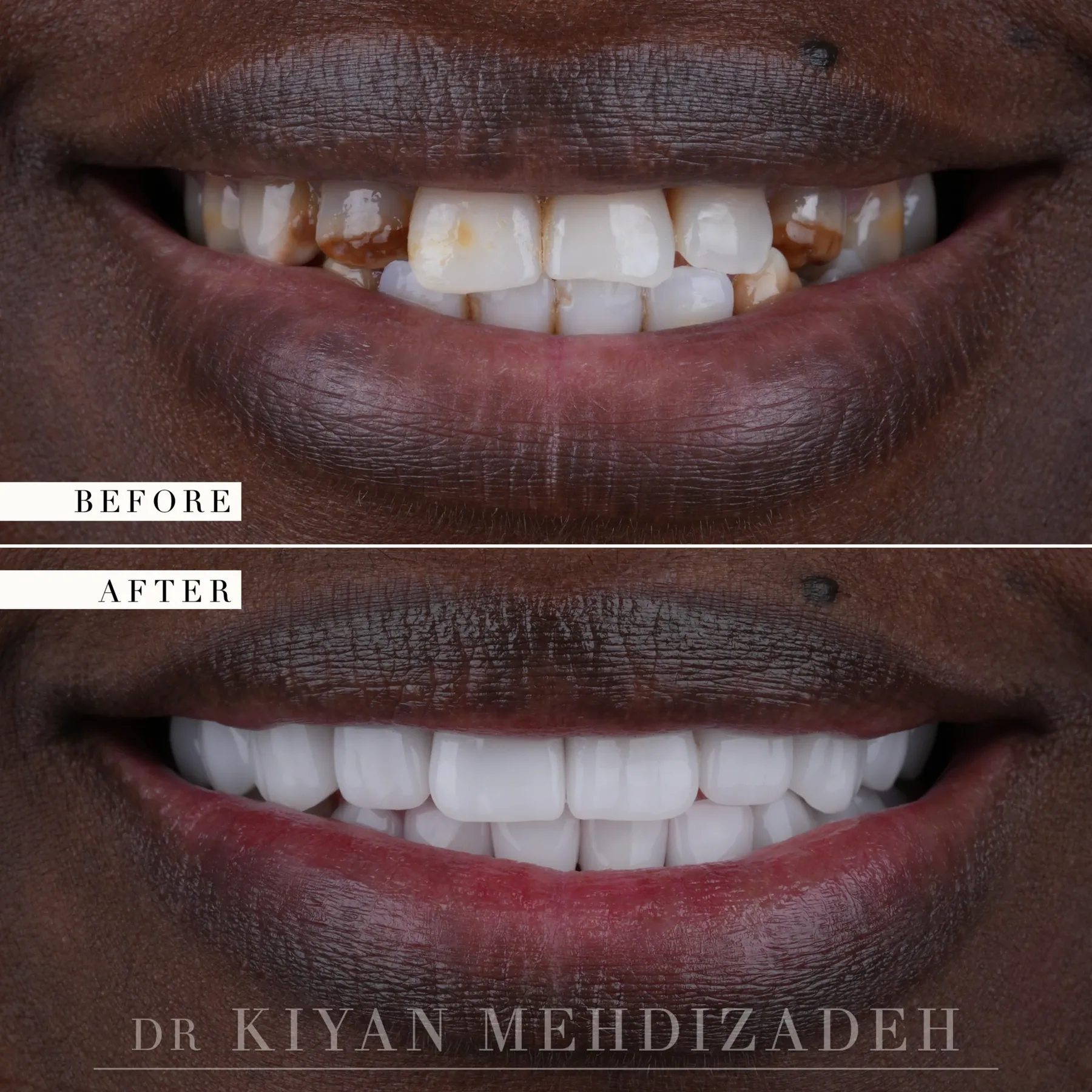 Fluorosis staining and flared teeth, covered with twenty veneers after an implant restored the bite.See the case →
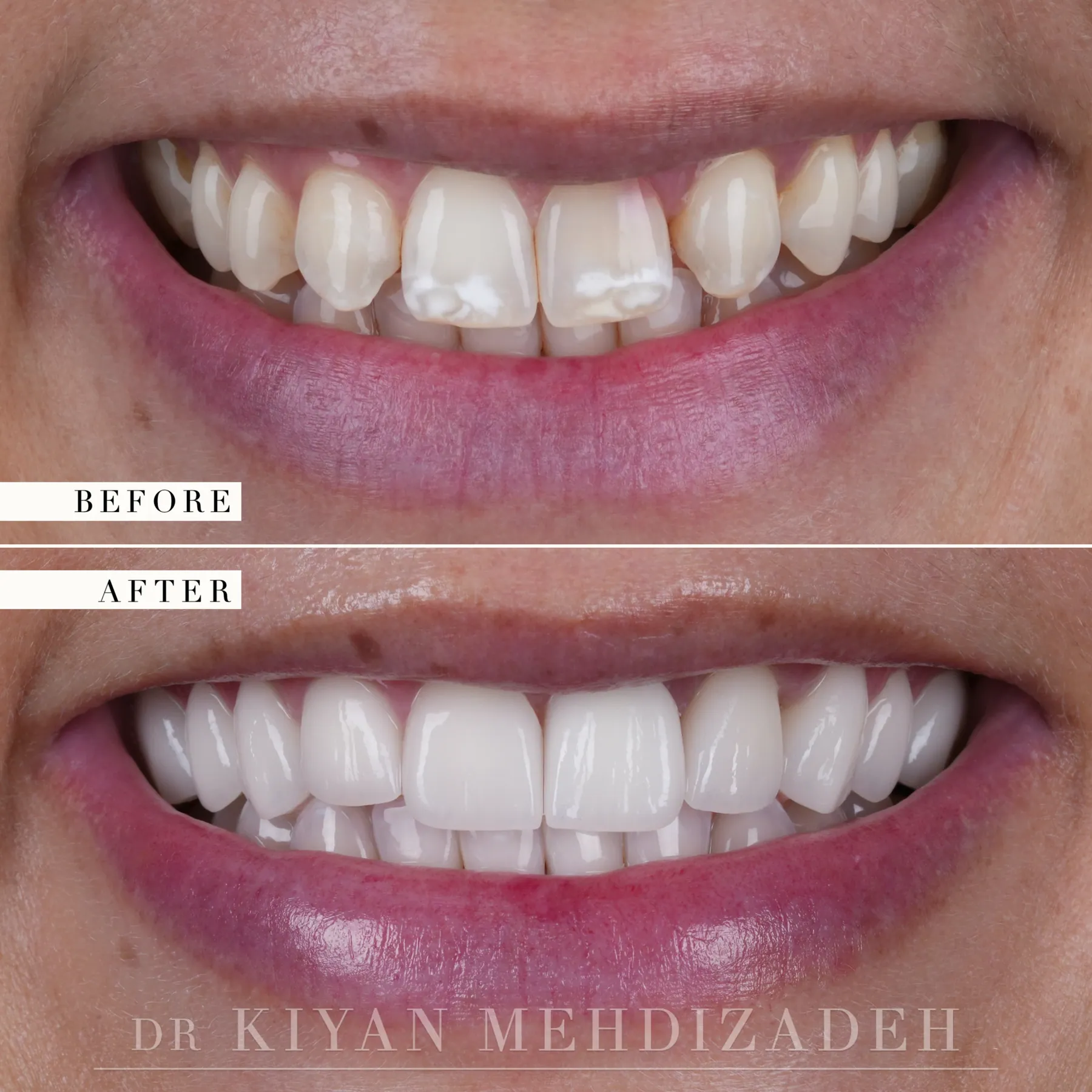 Fluorosis staining, a failing front tooth and two lateral incisors that never formed, restored in one design.See the case →
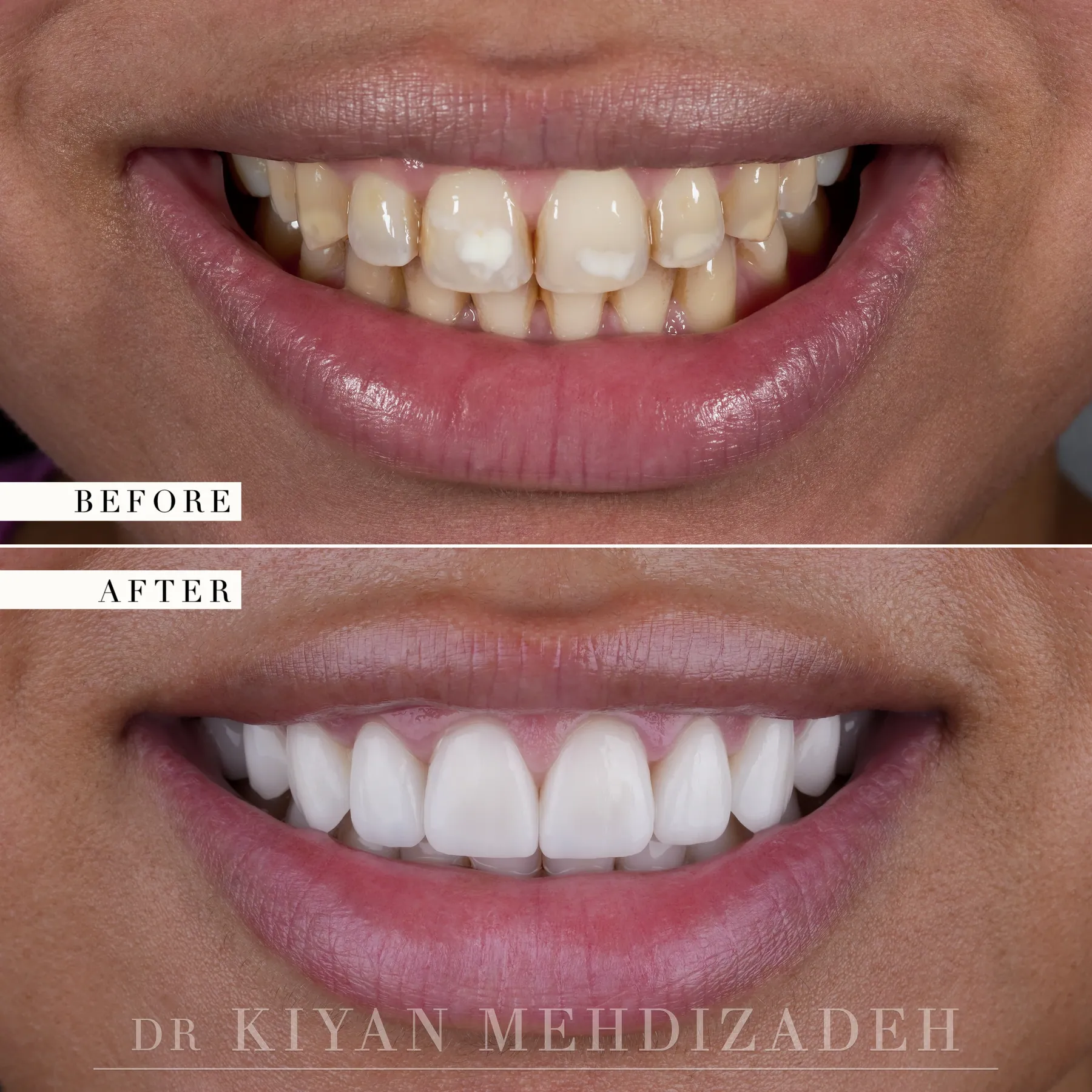 Two congenital white spots whitening could not lift, covered with veneers.See the case →
Marks that formed with the teeth.
This page explains what fluorosis is, why whitening does not remove it, how treatment depends on severity, how veneers cover it, and what treatment costs.
Dental fluorosis is a change in the enamel caused by too much fluoride while the teeth were forming. Only young children can develop it: the enamel of the adult teeth is largely complete by about age eight, and older children and adults cannot get it. The marks are there when the teeth come in.
Most fluorosis is mild: white flecks, spots or lines in the enamel. In the moderate and severe forms the enamel can be mottled brown, chalky or pitted, and weakened areas can chip. A national survey of American adolescents between 1999 and 2004 found some fluorosis in about 41%, nearly all of it very mild or mild; the moderate and severe forms together affected about 3.6%.
Fluorosis does not affect how the teeth work and is not painful. Treating it is a question of appearance and, in the severe forms, of protecting enamel that has begun to break down.
Why whitening does not remove it.
Whitening breaks down pigment inside the tooth. Fluorosis is not pigment sitting on or in the enamel; it is enamel that formed with a different structure, and it holds light differently from the enamel around it.
Whitening lightens the background around a white patch faster than it lightens the patch itself, so mottling often looks more obvious in the first days before it evens out. Where it does not even out, resin infiltration or microabrasion is the answer rather than more gel.
Pitting and lost enamel do not respond to whitening at all, because the problem is the surface itself. For those, the surface has to be replaced.
Treatment depends on how deep it goes.
Very mild and mild. White flecks and lines in the outer enamel. Whitening evens the background, and resin infiltration or microabrasion treats the white patches themselves, with little or no enamel removed. Many patients need nothing more.
Moderate. Larger white areas or brown staining. Microabrasion and whitening can reduce it; where they leave visible marks, composite bonding or veneers cover what remains.
Severe. Brown mottling, pitting or loss of surface enamel. The surface itself has to be replaced, and veneers or crowns are the predictable answer; which of the two depends on how much enamel is lost.
The examination tells these apart, and where a lighter treatment will do, that is the one we recommend. Fluorosis is also not the only cause of white marks. Spots that formed with the tooth for other reasons, and marks left around braces, can look similar. In this case, two congenital spots that no bleaching would lift were covered with veneers.
How veneers cover it.
A veneer gives the tooth a new front surface. The difficulty with fluorosis is that the porcelain has to hide what is underneath without turning the tooth opaque. Standard veneers let some of the tooth's color through; over fluorosis, that color is what has to be hidden.
The ceramist in our laboratory builds the porcelain in layers: a more opaque layer against the tooth to block the marks, and more translucent layers over it to reproduce the way enamel passes light. In this case, e.max veneers were chosen for enough opacity to stop the discoloration showing through and enough translucency to look like enamel.
Fluorotic enamel has a different mineral structure from normal enamel, and the bonding protocol is adjusted for it.
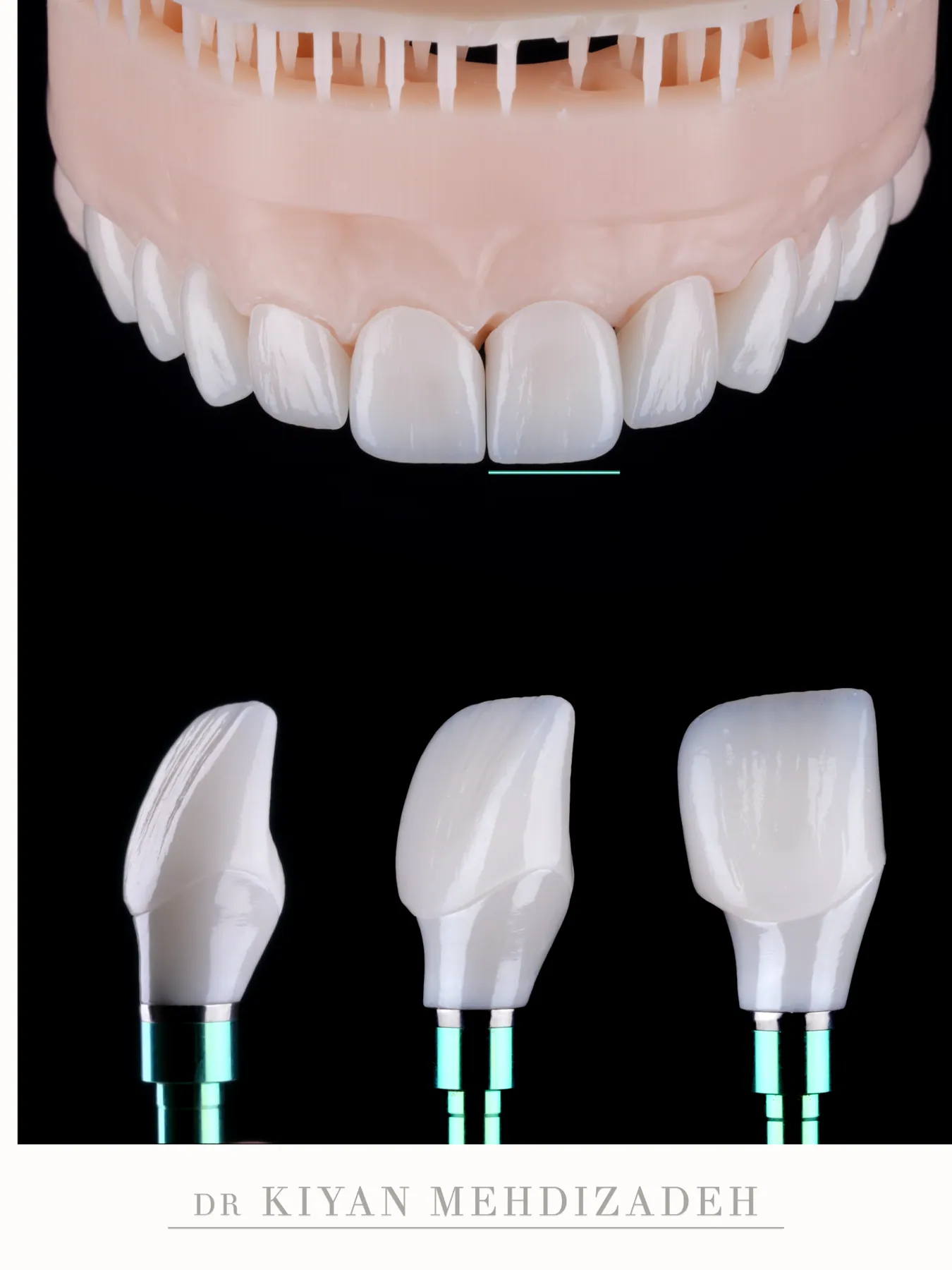
How many teeth, which shade, and the bite.
How many teeth. Fluorosis affects every tooth that was forming during the exposure, so it is rarely confined to two or three. Covering only the most visible teeth leaves the ones beside them, and the lower teeth, a different color. In this case, twenty veneers covered both arches. We plan four, eight, ten or twenty; How many veneers do you need? explains why.
The shade is a choice. Natural teeth have some translucency at the edges, and keeping it gives the most lifelike result. Some patients prefer a brighter, more opaque look; in this case, the patient chose very white teeth with little translucency, and the proportions were kept natural.
The bite comes first. In this case, a missing back tooth had let the front teeth flare. An implant restored the back support before the veneers, so the new porcelain was not built onto a bite that was still shifting.
One design. In this case, fluorosis staining was resolved in the same porcelain that rebuilt two lateral incisors that had never formed, matched to an implant crown, rather than as separate treatment.
What veneers will not do. They do not change the enamel beneath them, and teeth left untreated keep their marks. Porcelain also needs enamel reduced to bond to, so mild fluorosis that resin infiltration would settle is not a reason for veneers.
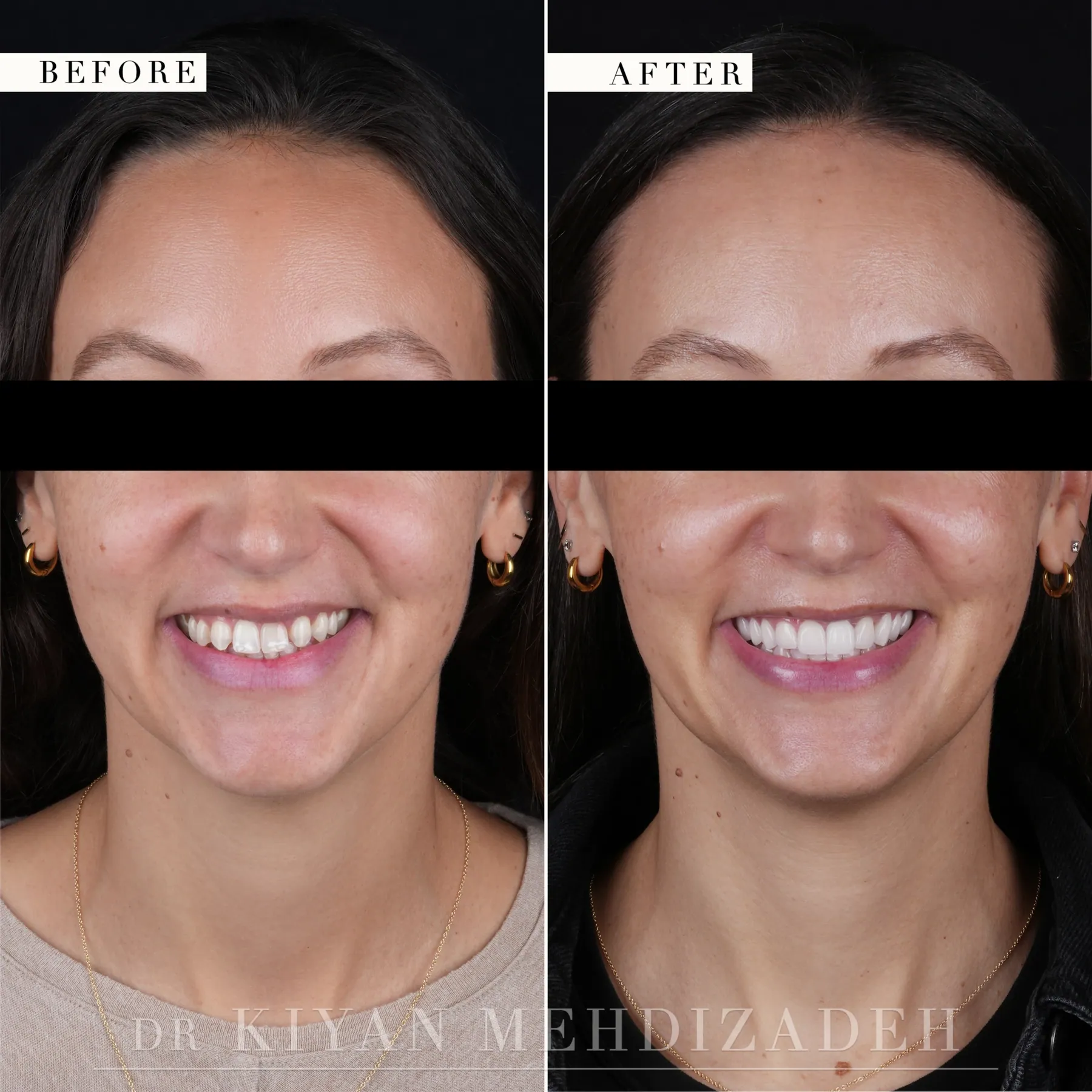
What veneers for fluorosis cost.
We quote each case as a whole, by the number of veneers it needs, never per tooth. Four veneers start at $16,000. $192/month: 144 payments at 9.99% APR, on approved credit. Ten start at $24,000 and twenty at $38,000. Most cases also include a gum lift or whitening. Every number and its price is set out in the full price table.
As examples, the total for this case was $48,000, covering twenty veneers and a dental implant, and the total for another was $38,000, covering veneers on both arches and a gum lift.
The consultation, including a 3D X-ray (CT scan), is complimentary. Most PPO plans contribute toward the cost of treatment. Financing is available. Porcelain veneers covers the treatment itself.

One doctor, from the design to the final porcelain.
Dr. Mehdizadeh designs every veneer case himself, and our laboratory, in the same building, makes the veneers.
Tell us about your teeth.
Tell us what is going on. Add photos if you have them; if not, we will call and talk it through.
Or call (310) 770-3335.
Ask about veneers
Reviewed by our treatment coordination team. Call or text (310) 770-3335 if you would rather speak now.
Request received
A treatment coordinator will call you within two hours during office hours (Monday to Friday, 9 to 4).
To talk now, call (310) 770-3335.
Frequently Asked Questions
What causes fluorosis?
Too much fluoride while the teeth were forming, in early childhood. The enamel of the adult teeth is largely complete by about age eight, so adults cannot develop it.
Can whitening remove fluorosis?
No. Whitening can even the background color, but it does not change enamel that formed differently, and white patches can look more obvious in the first days after whitening. Mild white patches respond to resin infiltration or microabrasion.
Do I need veneers for fluorosis?
Not always. Mild fluorosis can often be treated with whitening, resin infiltration or microabrasion. Veneers are for moderate to severe fluorosis, with brown staining, pitting or loss of enamel, or where lighter treatment has not been enough.
Will fluorosis show through veneers?
Not where the porcelain is layered for it. A more opaque layer against the tooth blocks the marks, and translucent layers over it keep the tooth looking like enamel.
How many veneers does fluorosis need?
It is rarely confined to a few teeth, because it affects every tooth that was forming at the time. Plans cover the teeth that show when you smile, often ten or twenty veneers, so that untreated teeth beside them do not show a different color.
How long do veneers last on teeth with fluorosis?
Well-made porcelain veneers typically last 15 to 20 years or longer with good care. The bonding protocol is adjusted for fluorotic enamel.
How much do veneers for fluorosis cost?
Four veneers start at $16,000. $192/month: 144 payments at 9.99% APR, on approved credit. Ten start at $24,000 and twenty at $38,000. Most cases also include a gum lift or whitening.
Last Updated: October 2026