Last Updated: October 2026
What this case cost
$311/month
144 payments at 9.99% APR, on approved credit.
Total: $26,000 for internal bleaching, a gum lift and ten porcelain veneers.
A gap and uneven color you're ready to change?
A gap (diastema) can be closed with veneers - but only if the design changes tooth proportions the right way, or the result looks wide and bulky. And a single darker tooth is often best treated at its source before any veneers go on. If you want a brighter, even, gap-free smile that still looks like you, send us a photo.
- A call within two hours during office hours.
- A written cost from us, before you commit to anything.
- No obligation. Many patients take weeks to decide. That is normal.
Ask about your case
Reviewed by our treatment coordination team. Call or text (310) 770-3335 if you would rather speak now.
Request received
A treatment coordinator will call you within two hours during office hours (Monday to Friday, 9 to 4).
To talk now, call (310) 770-3335.
Treatment Plan by Dr. Mehdizadeh
- Internal bleaching of the discolored tooth (#9)
- Smile design
- Gum lift to refine the gum line and papillae
- Whitening of the lower teeth for color matching
- Ten upper porcelain veneers to close the gap
The Patient's Journey
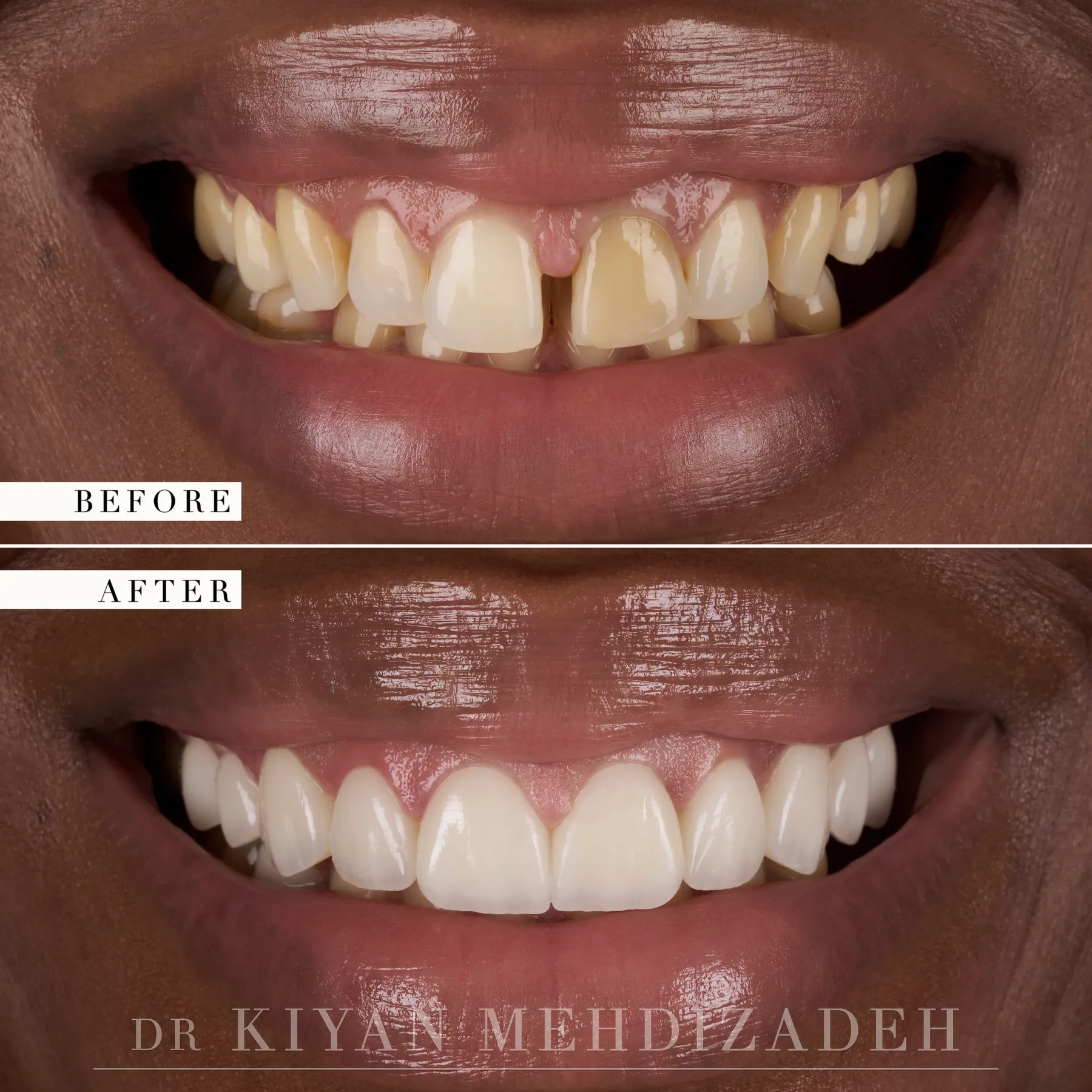
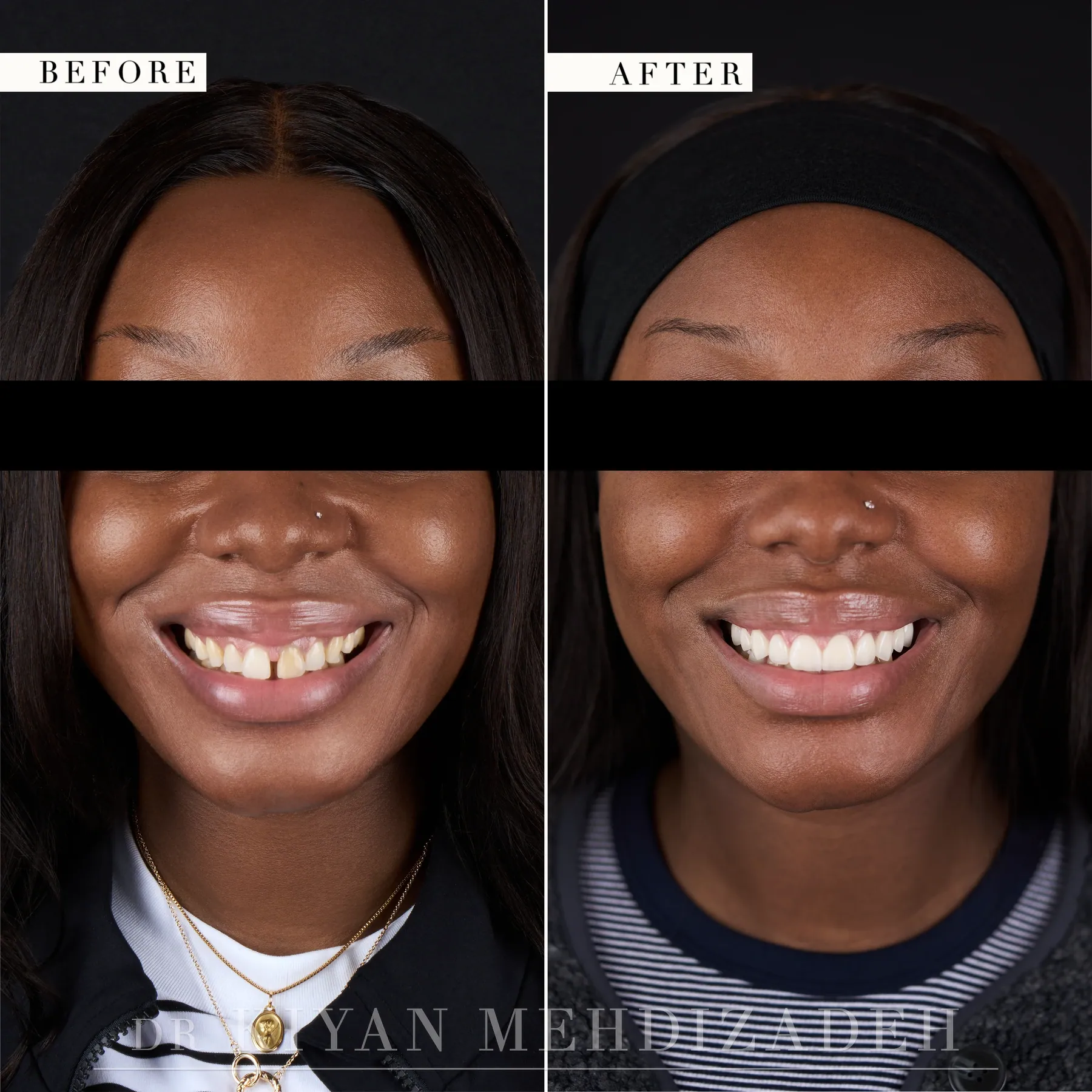
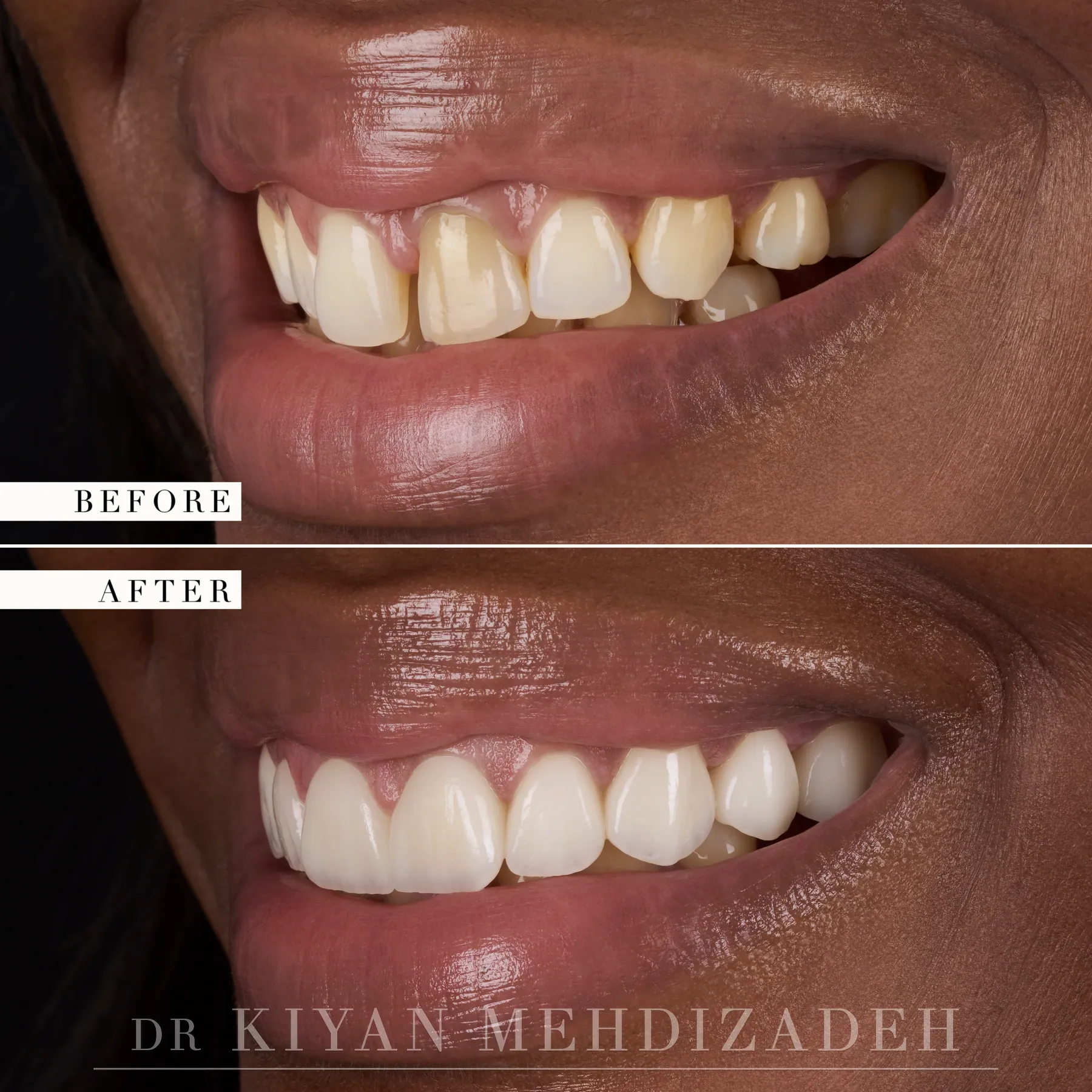
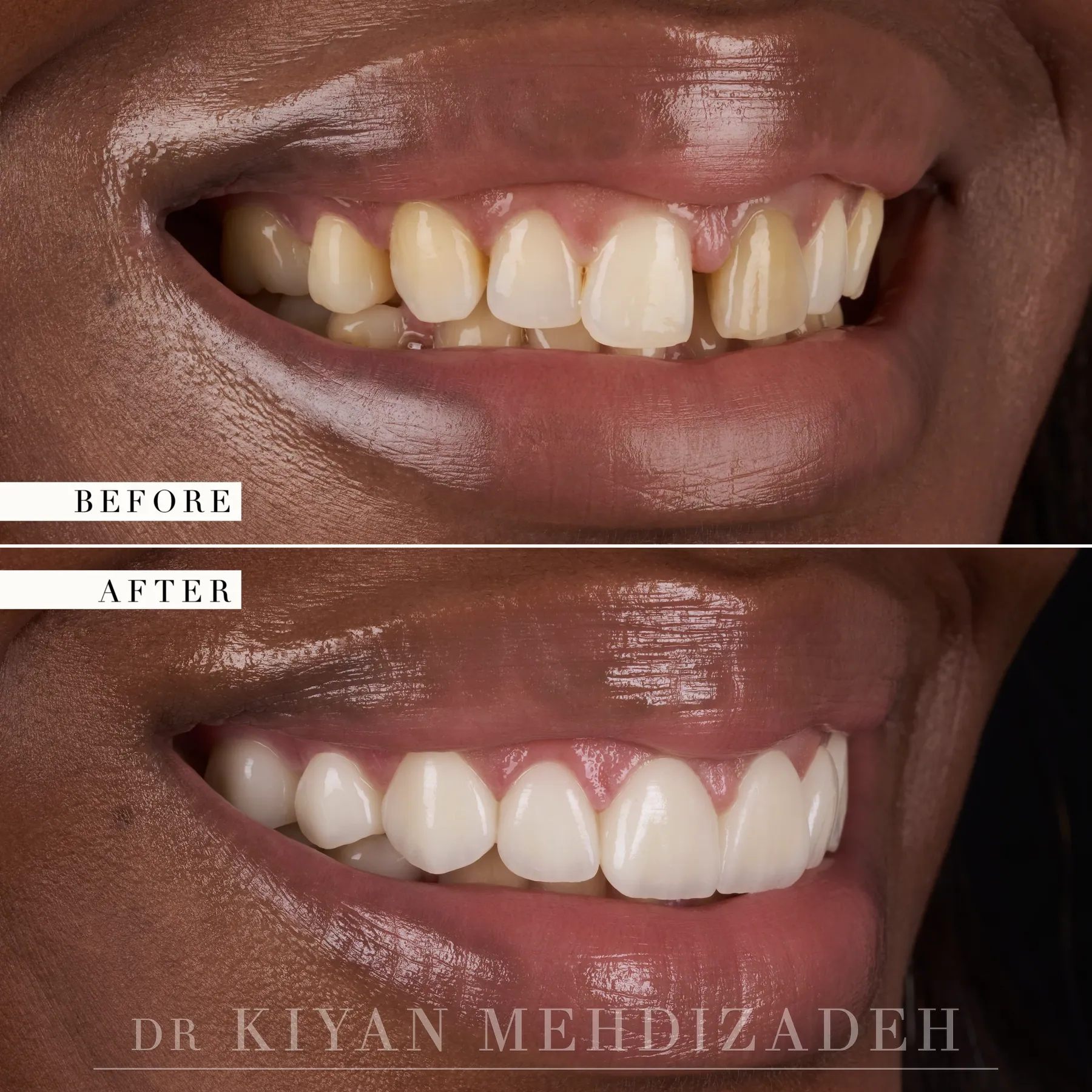
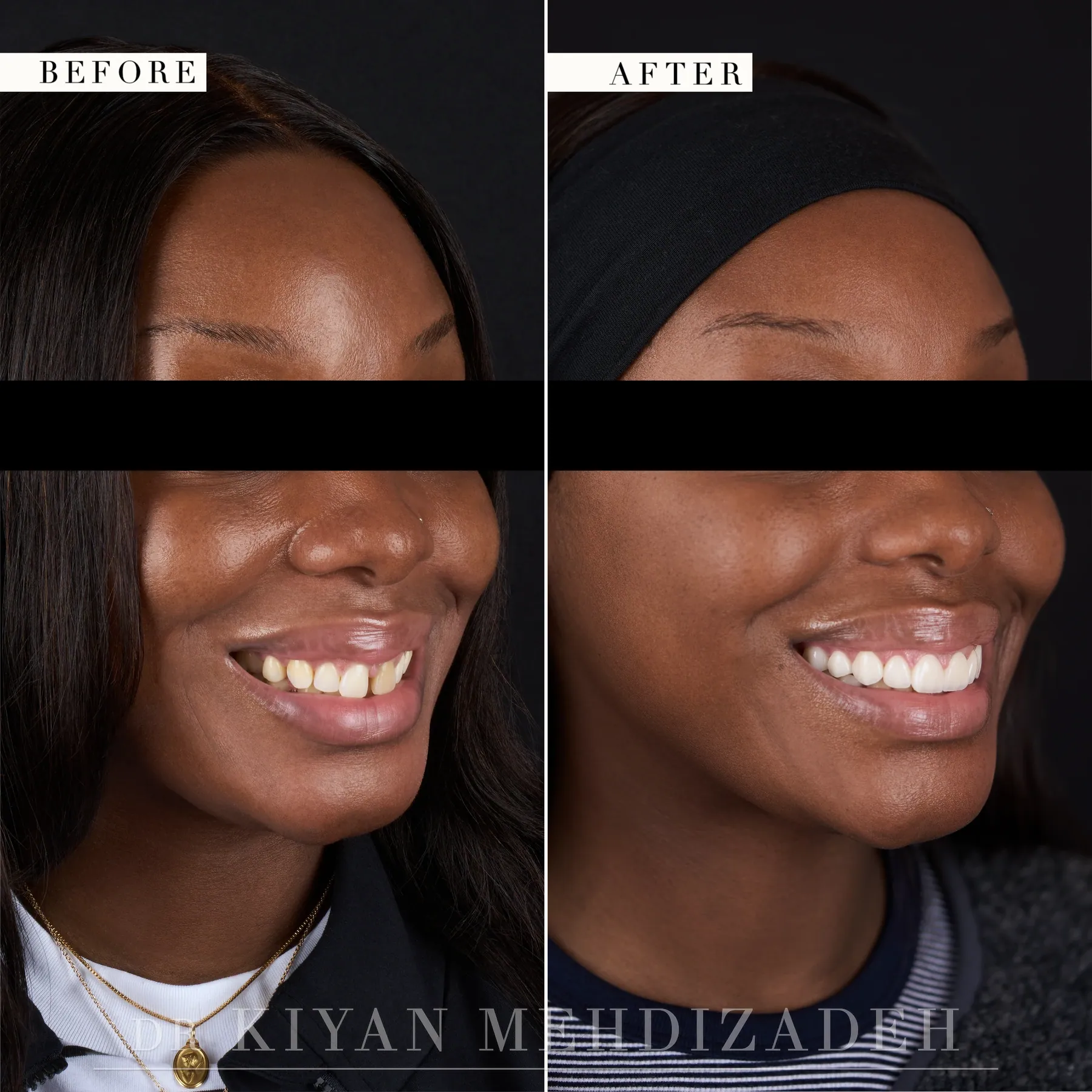
This patient wanted a total smile refresh - specifically to close the gap between her front teeth and to even out her color. One tooth (an upper central, #9) was noticeably darker than the rest. Some people love their gap; she wanted hers closed, and she wanted the result to look natural, not oversized.
A gap isn't closed by making two teeth wider. It's closed by redesigning the proportions of several teeth so nothing looks stretched.
Understanding the Challenge
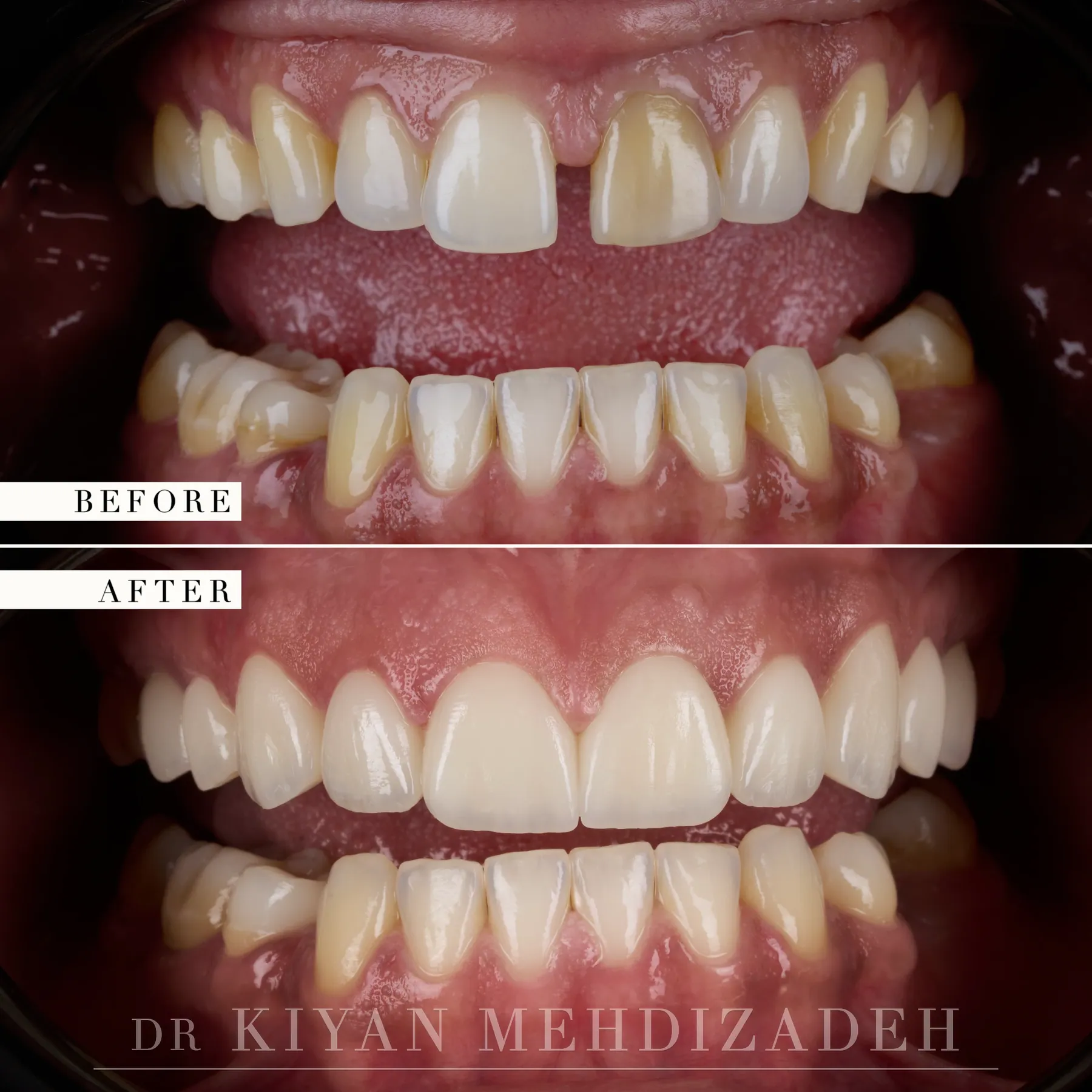
Two problems had to be solved in the right order. First, the dark tooth: a single tooth that has darkened from within is best treated at the source with internal bleaching before veneers, so the shade underneath is even. Second, the gap: closing a diastema by simply widening the two front teeth makes them look too big. The space has to be distributed across the design by adjusting the length and width of several teeth together.
Initial Findings
A midline diastema; uneven tooth color with one darker upper central; a request for a natural, understated result.
The Treatment Sequence
We started by internally bleaching the dark tooth to bring it back in line with the others. Then we designed the upper smile and performed a gum lift based on that design, refining the gum line and sharpening the papillae (the little peaks of gum between the teeth) for symmetry. We whitened the lower teeth so the shade would match the planned upper veneers, then placed ten upper porcelain veneers - closing the gap by proportionally adjusting each tooth's length and width rather than just widening the front two.
The Result
An evenly shaped, uniformly colored smile with no trace of the gap - and, most importantly to her, one she loves.
Frequently Asked Questions About Gap Closure and Veneers
What is a diastema?
A gap or space between teeth, most commonly between the two upper front teeth.
Can you close a gap with veneers?
Yes - but the design has to distribute the space across several teeth by adjusting proportions, so the result doesn't look wide or bulky.
Why treat the dark tooth separately first?
A tooth that has darkened from the inside is best lightened at its source with internal bleaching, so the foundation shade is even before veneers go on.
Why whiten the lower teeth?
So the natural lower teeth match the shade chosen for the upper veneers - the veneers are matched to whitened teeth, not the other way around.
What is a gum lift here for?
To even the gum line and sharpen the papillae between the teeth, so the finished smile looks symmetrical.
Will the veneers look natural?
Yes - proportionate design and shade matching are what keep closed-gap veneers from looking oversized.
How long did it take?
About ten weeks, allowing for the bleaching and gum healing before the final veneers.
What does treatment like this cost?
This case was $26,000, covering internal bleaching, a gum lift and ten porcelain veneers. $311/month: 144 payments at 9.99% APR, on approved credit.
Last Updated: October 2026