Can Veneers Fix a Crossbite or Underbite?The teeth, sometimes. The jaws, never.
Veneers change the teeth, not the jaws. In suitable cases they can rebuild how the front teeth meet and how the smile looks, within the bite you have. Whether yours is one of them depends on where the problem comes from.
Ten veneers from $24,000
$287/month 144 payments at 9.99% APR, on approved credit.
Your consultation, including a 3D X-ray (CT scan), is free.
Send photos if you have them. Either way, we reply with a cost. No obligation.
Ask about veneers
Reviewed by our treatment coordination team. Call or text (310) 770-3335 if you would rather speak now.
Request received
A treatment coordinator will call you within two hours during office hours (Monday to Friday, 9 to 4).
To talk now, call (310) 770-3335.
- A call within two hours during office hours.
- A written cost from us, before you commit to anything.
- No obligation. Many patients take weeks to decide. That is normal.
- Free consultation and 3D X-ray (CT scan)
- Private practice since 2012
- IV sedation in our own office
- In-house dental laboratory
Before, and after.
Every smile on this site was made here: our patients, our laboratory, our work.
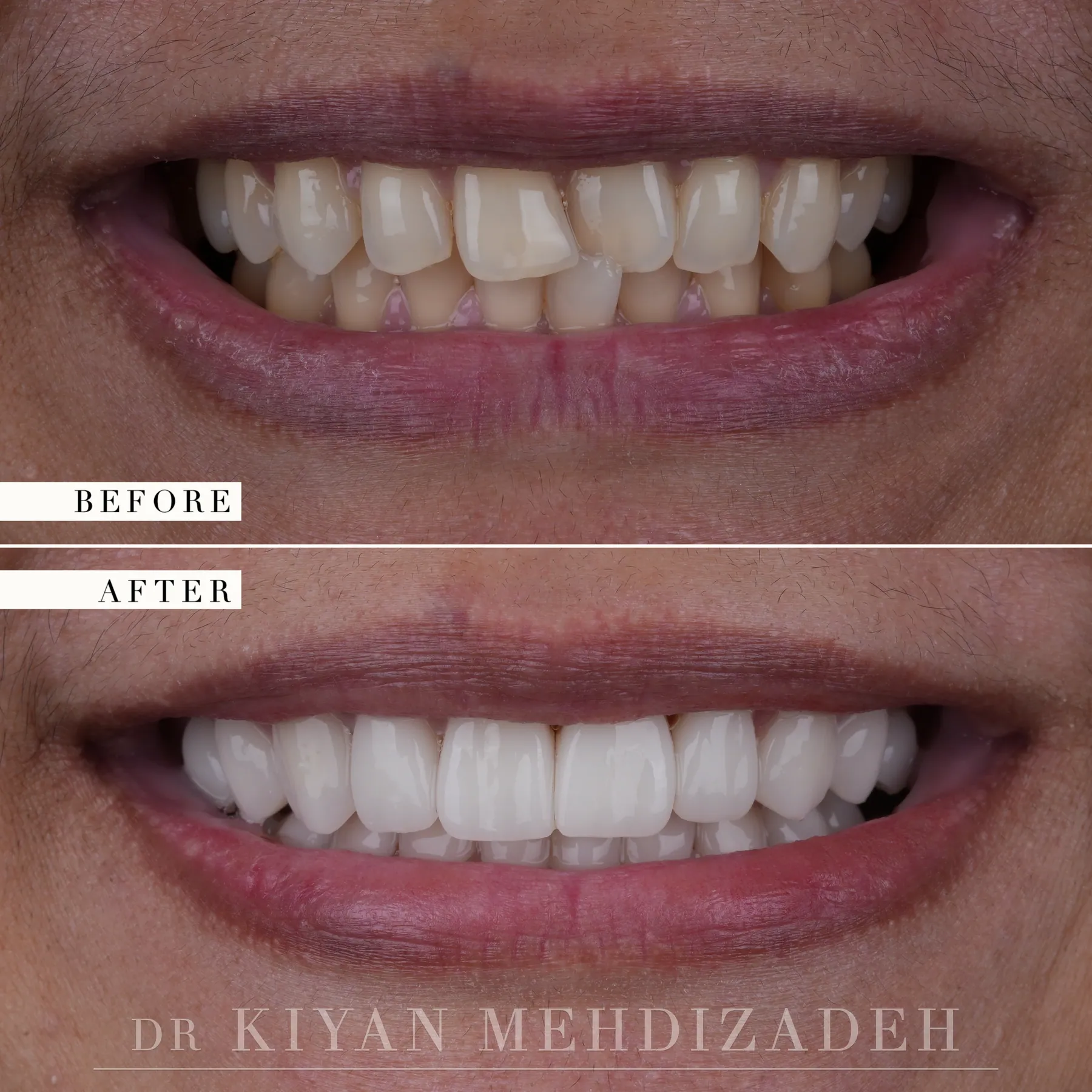 Front teeth that sat behind the lower teeth, rebuilt with upper and lower veneers and two implants.See the case →
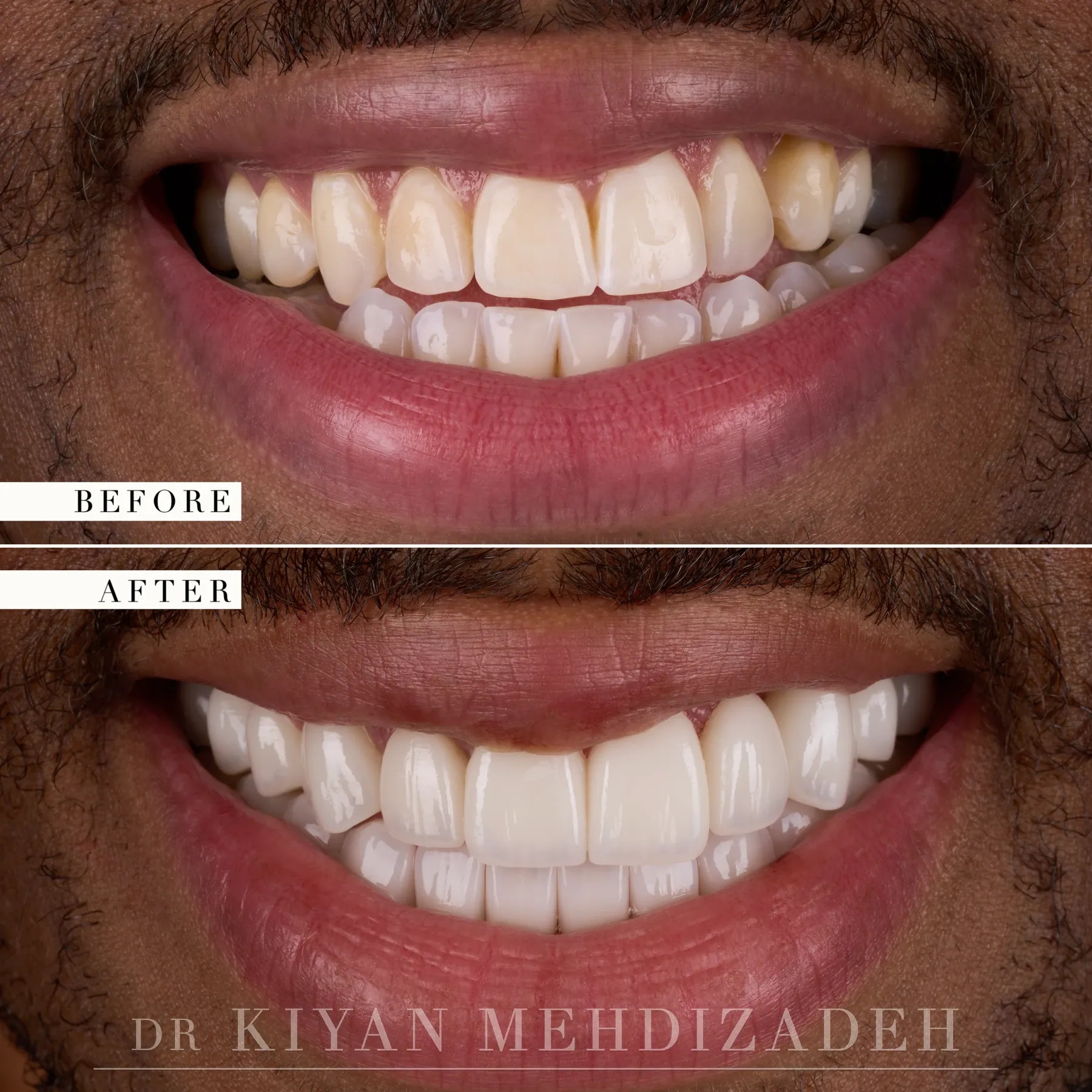 An underbite, a missing canine and a tilted midline, rebuilt in ceramic without surgery.See the case →
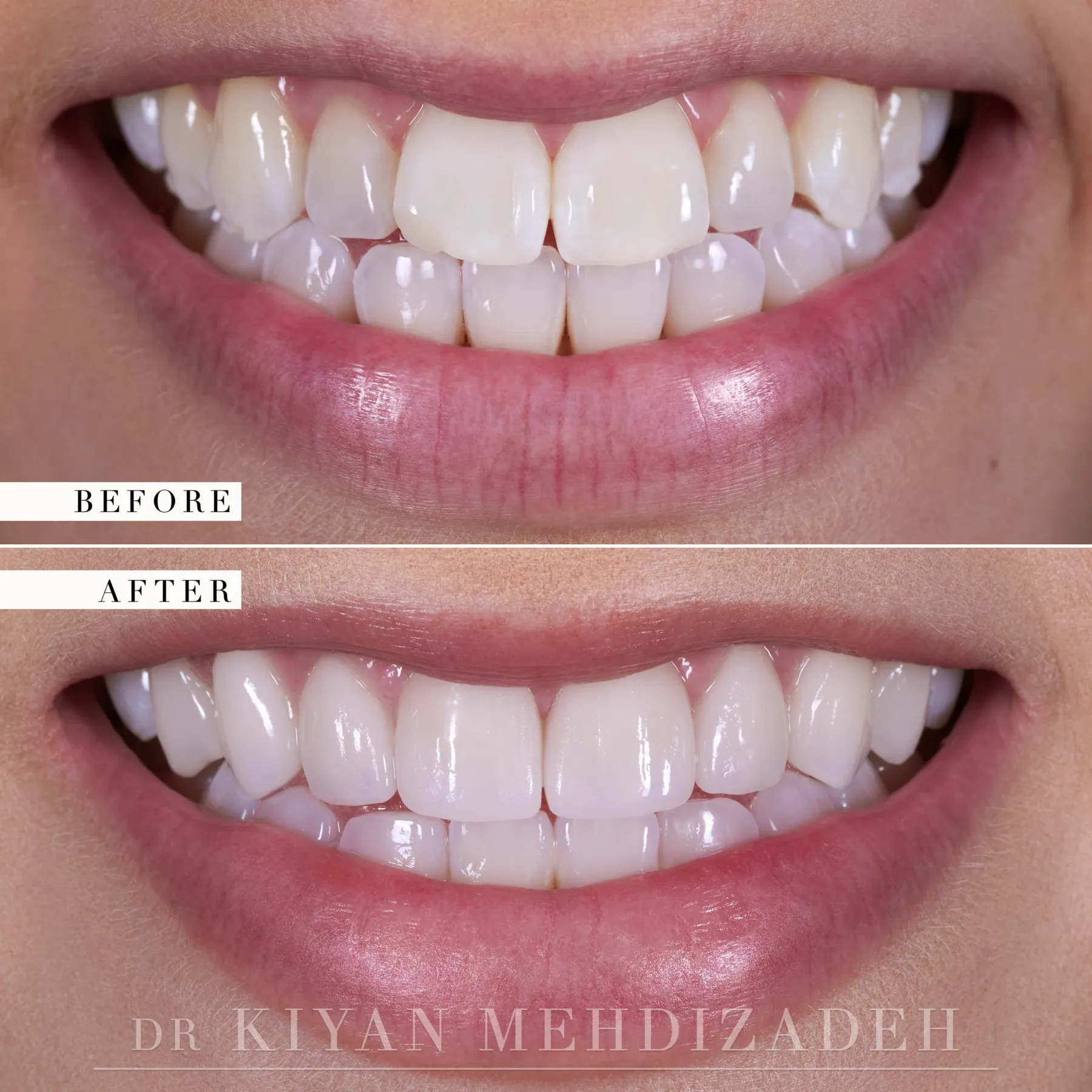 Chipped, flared teeth from an underbite, restored with veneers designed to work inside the bite.See the case →
Crossbite, underbite, and where each comes from.
This page explains what crossbites and underbites are, what veneers can and cannot correct, how the bite is designed, the other routes, and what treatment costs.
Anterior crossbite. One or more upper front teeth close behind the lower front teeth instead of in front of them.
Underbite. The lower front teeth close ahead of the upper front teeth across the whole front of the mouth. Dentists call it a Class III relationship.
Posterior crossbite. The back teeth meet the wrong way round: the lower back teeth close outside the upper ones, often because the upper jaw is narrow.
Each of these can come from the teeth, from the jaws, or from a lower jaw that slides forward to find a comfortable bite. When it is the teeth, they are tipped or placed wrongly over jaws that meet normally. When it is the jaws, the lower jaw sits too far forward, the upper jaw too far back or too narrow, or both, and the face often shows it in a prominent chin. Which one you have is the first question, and it is answered by examination, an analysis of the bite and a 3D X-ray (CT scan), not by photographs.
What veneers can change.
A veneer sets the shape, length and angle of the part of the tooth you see. Within limits, that lets a design change how the front teeth meet without moving a root.
In this case, several upper front teeth sat behind the lower ones. The upper veneers were built out to bring the upper teeth over the lower, and the lower veneers were shaped to meet them; both arches were designed together, after two implants had replaced missing back teeth. In another, a patient who did not want jaw surgery had his underbite rebuilt tooth by tooth in ceramic veneers and inlays, with two rounds of temporaries before the final restorations.
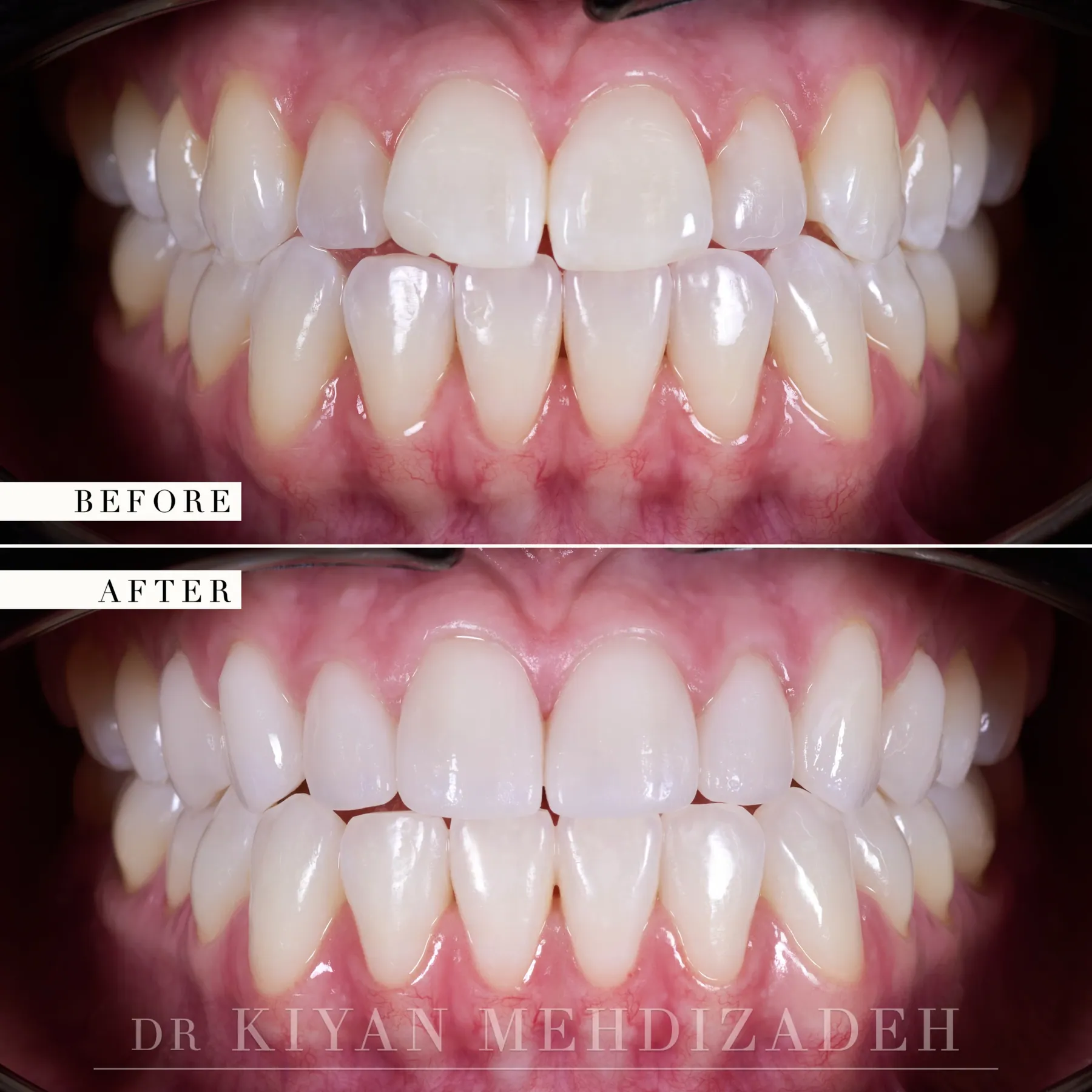
Veneers can also repair what a bite has done. In this case, an underbite had chipped the edges of the upper front teeth and pushed them forward over the years. The veneers restored the lost length and the line of the smile while staying clear of the contact that had caused the damage.
What veneers cannot correct.
Veneers do not move teeth and they do not move jaws. Everything below the visible surface stays where it was: the roots, the jawbones, and the relationship between them.
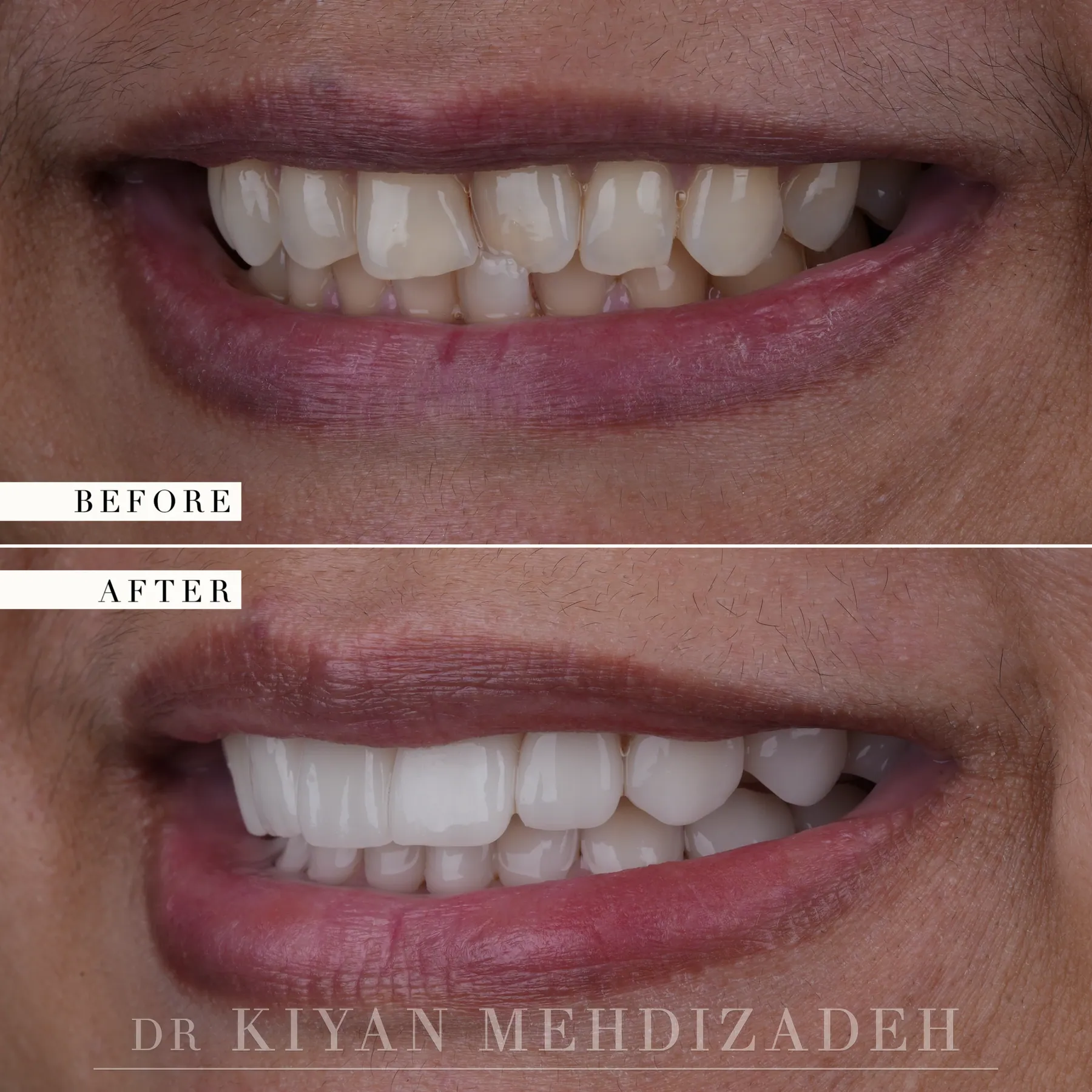
The jaw relationship. Where an underbite comes from the jaws, veneers leave it in place. The profile, the chin and the way the jaws meet are unchanged. In this case, the underbite remains an underbite, which was never the objective; it no longer damages the teeth in front of it. Correcting the jaw relationship itself takes orthodontics, jaw surgery, or both.
Severe cases. Porcelain can only be built out so far before the teeth look bulky or the edges sit in a heavy contact and chip. Where the front teeth are far apart, or do not meet at all, restorations are the wrong recommendation.
Posterior crossbites. A narrow upper jaw is a problem of width across the whole arch. Veneers on the front teeth do not change it; it is corrected by widening the upper jaw with orthodontics, in adults sometimes with surgery.
A jaw that slides forward. When the lower jaw shifts forward to bite, a contact between teeth is pushing it there. That is diagnosed before anything is designed, because it changes the plan.
How a bite is designed in porcelain.
Occlusal analysis comes first: mapping where the upper and lower teeth actually meet, and which contacts are doing the damage. The smile is then designed inside what that mapping allows, rather than drawn first and checked afterwards. Reversing that order produces a design that photographs well and fails within a year.
Both arches are considered together. Building out the upper teeth alone can put them into heavy contact with untreated lower teeth; in this case, the upper and lower veneers were designed as one system. Where the lower teeth are sound, they are whitened instead, as in this case, and the upper veneers are matched to them.
The design is tested before it is final. You wear it as temporary veneers, and the bite and the look are adjusted in the mouth. In this case, the temporaries were revised and replaced once before the final ceramic was made.
Aligners, braces and jaw surgery.
Where the teeth are the problem, orthodontics moves them into the right relationship, and nothing is added to them. Clear aligners (Invisalign or ClearCorrect) can treat many mild crossbites; braces treat a wider range. Treatment is measured in months rather than weeks.
Where the jaws are the problem, correcting the relationship takes orthodontics, jaw surgery, or both, over a period measured in years rather than weeks.
The routes also combine: orthodontics can bring the teeth most of the way, and veneers can finish the shape and the color. Which route is right depends on what you want changed. If it is the jaw relationship, the answer is orthodontics or surgery. If it is the damage and the look of the smile, porcelain may do it in weeks. The bite analysis at the consultation tells us which applies to you, and we say so either way.
What treatment costs.
We quote each case as a whole, by the number of veneers it needs, never per tooth. Ten veneers start at $24,000. $287/month: 144 payments at 9.99% APR, on approved credit. Twenty start at $38,000. Most cases also include a gum lift or whitening. Every number and its price is set out in the full price table.
As examples, the total for this case was $22,000, covering the upper veneers and whitening of the lower teeth; the total for another was $52,000, covering twenty veneers, ten upper and ten lower, plus two implants and their crowns.
The consultation, including a 3D X-ray (CT scan), is complimentary. Most PPO plans contribute toward the cost of treatment. Financing is available. Porcelain veneers covers the treatment itself.

One doctor, from the design to the final porcelain.
Dr. Mehdizadeh designs every veneer case himself, and our laboratory, in the same building, makes the veneers.
Tell us about your bite.
Tell us what is going on. Add photos if you have them; if not, we will call and talk it through.
Or call (310) 770-3335.
Ask about veneers
Reviewed by our treatment coordination team. Call or text (310) 770-3335 if you would rather speak now.
Request received
A treatment coordinator will call you within two hours during office hours (Monday to Friday, 9 to 4).
To talk now, call (310) 770-3335.
Frequently Asked Questions
Can veneers fix a crossbite?
In suitable cases, they can correct how the front teeth meet and how they look, by building out the upper teeth over the lower. They do not move the teeth or the jaws, so a crossbite that comes from the jaws, or a severe one, needs orthodontics, surgery or both.
Can veneers fix an underbite?
Veneers do not correct the underlying jaw relationship. What they can do, in suitable cases, is restore the damage the bite has caused and improve the appearance of the smile while working inside that bite.
How do I know whether my bite comes from the teeth or the jaws?
By examination, an analysis of how the teeth meet and a 3D X-ray (CT scan). Photographs alone cannot tell them apart.
Will veneers chip in a crossbite or underbite?
That risk is what the bite design addresses. Porcelain placed into a heavy contact behaves much as enamel does, so the edges are positioned clear of the contact that caused the damage, and the design is tested in temporaries first.
Why are the lower teeth treated too?
Building out the upper teeth changes how they meet the lower ones. The lower teeth are either shaped to meet them or, where they are sound, whitened so the upper veneers can be matched to them.
How long does treatment take?
Between five and twelve weeks in the cases on this page. Orthodontic correction is measured in months, and correction of the jaws in years.
How much does treatment cost?
Ten veneers start at $24,000. $287/month: 144 payments at 9.99% APR, on approved credit. Twenty start at $38,000. Most cases also include a gum lift or whitening.
Last Updated: October 2026