Last Updated: October 2026
What this case cost
$622/month
144 payments at 9.99% APR, on approved credit.
Total: $52,000 for twenty-four ceramic veneers and inlays across both arches.
How full-mouth reconstruction works, and what it costs today →
Told an underbite means jaw surgery?
A significant underbite sometimes does call for orthodontics or jaw surgery. But when surgery isn't the right path for you, a carefully engineered restorative plan can rebuild how your front teeth meet and how your smile looks - within your existing jaw structure. If you're weighing your options, send us a photo and we'll be honest about what restorative work can and can't do for your case.
- A call within two hours during office hours.
- A written cost from us, before you commit to anything.
- No obligation. Many patients take weeks to decide. That is normal.
Ask about your case
Reviewed by our treatment coordination team. Call or text (310) 770-3335 if you would rather speak now.
Request received
A treatment coordinator will call you within two hours during office hours (Monday to Friday, 9 to 4).
To talk now, call (310) 770-3335.
Treatment Plan by Dr. Mehdizadeh
- Smile and bite design
- First try-in of the smile and bite (temporaries)
- Adjustment and revision to an updated design
- Second temporaries
- Refinement of bite and smile
- Fabrication of permanent ceramic veneers and inlays
- Final bite balancing
The Patient's Journey
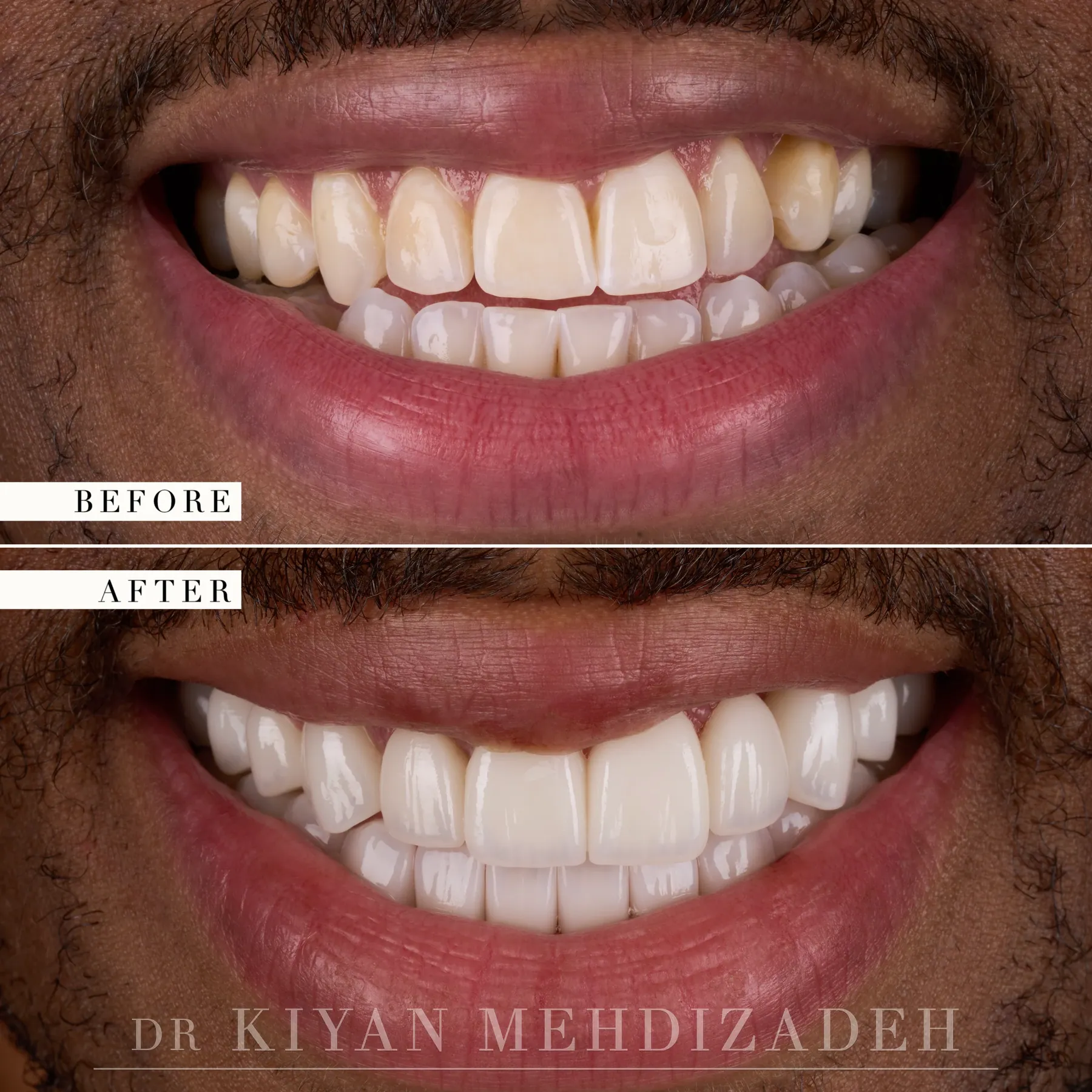
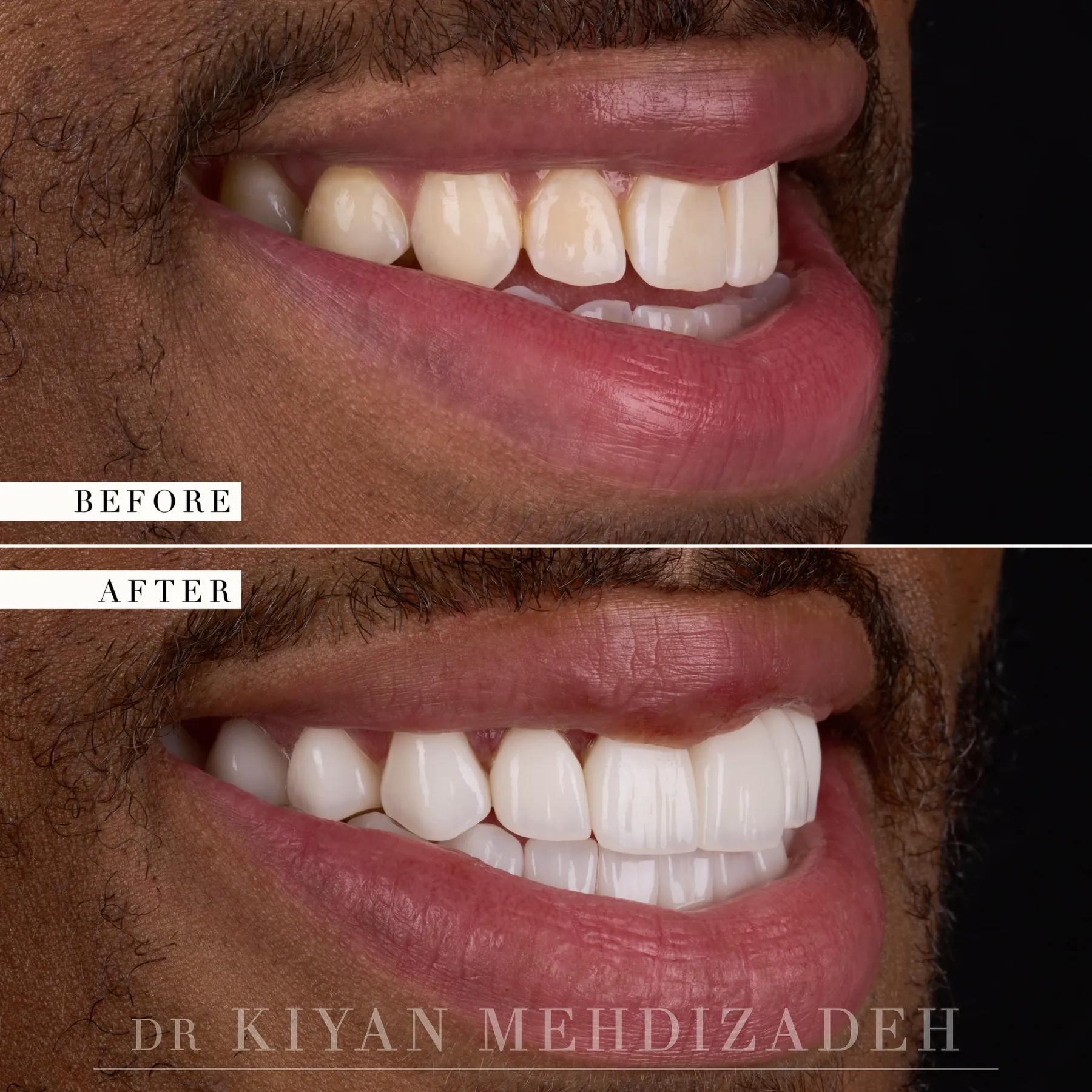
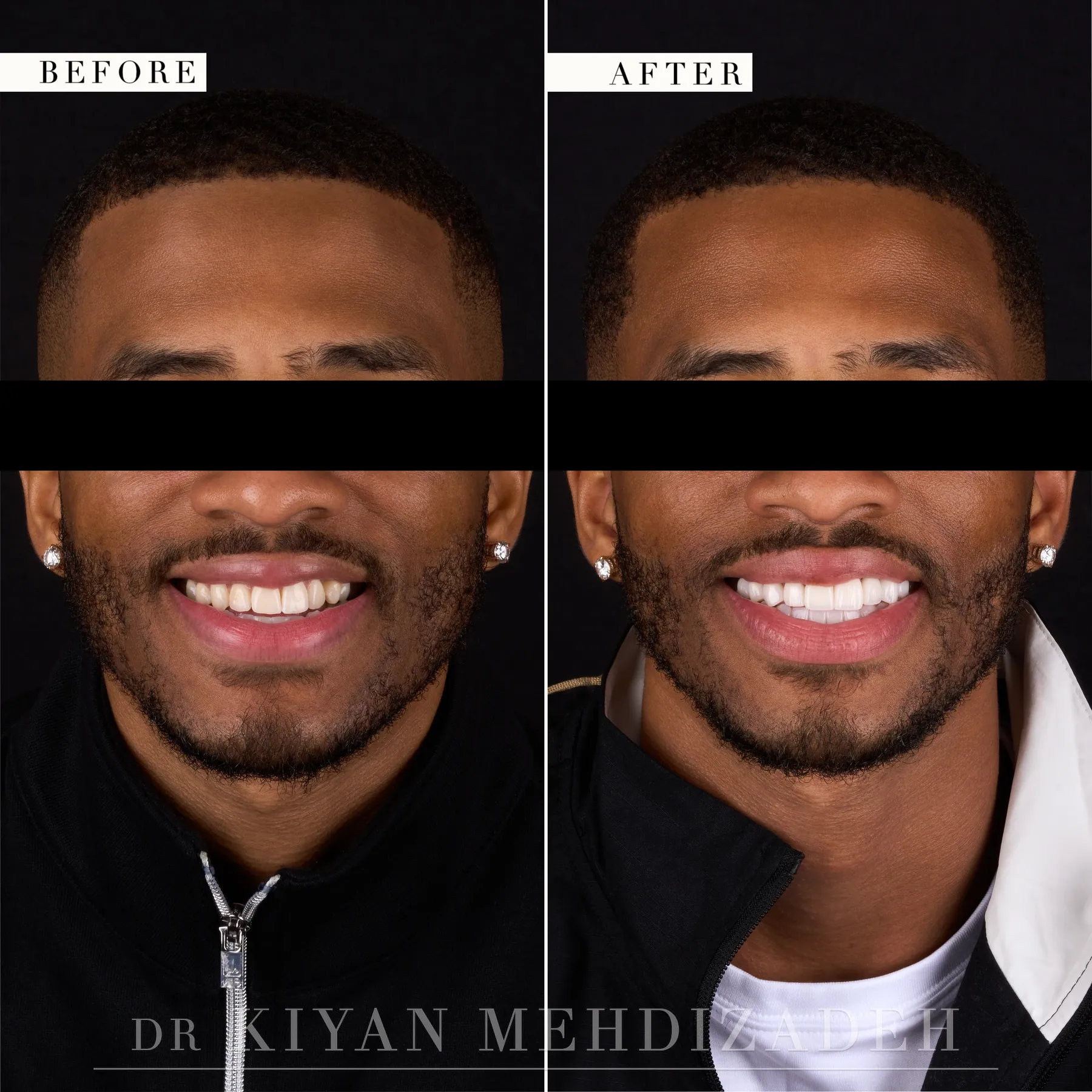
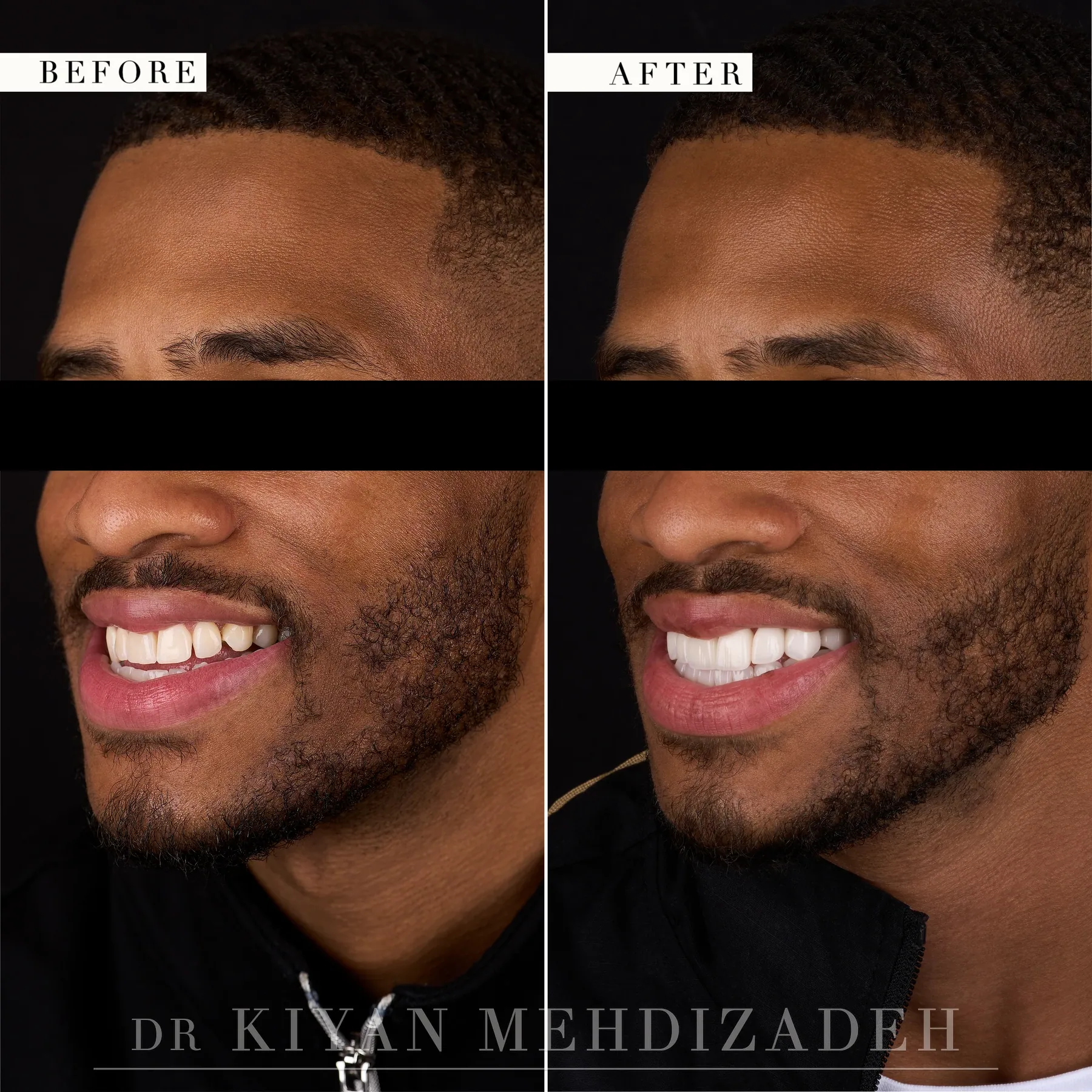
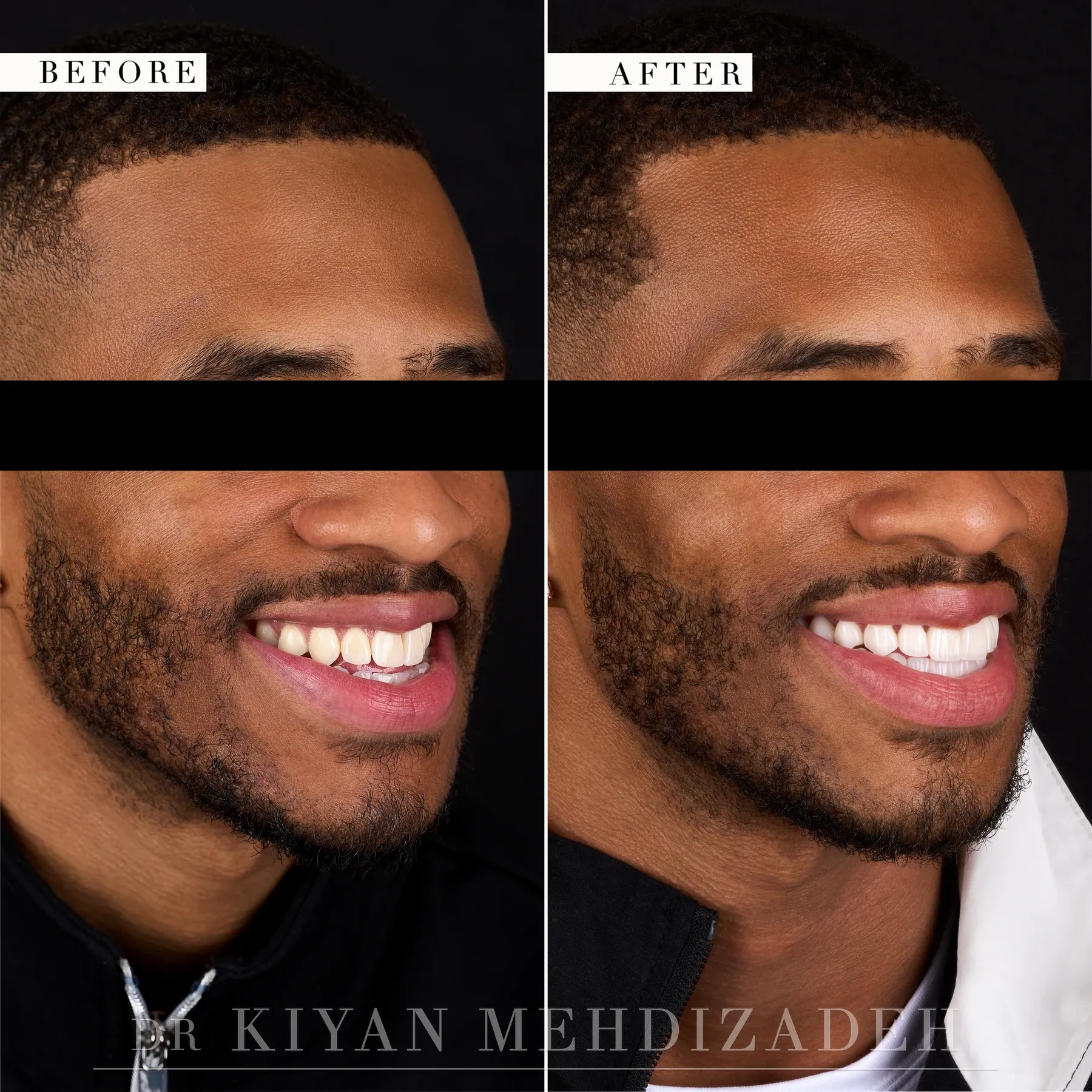
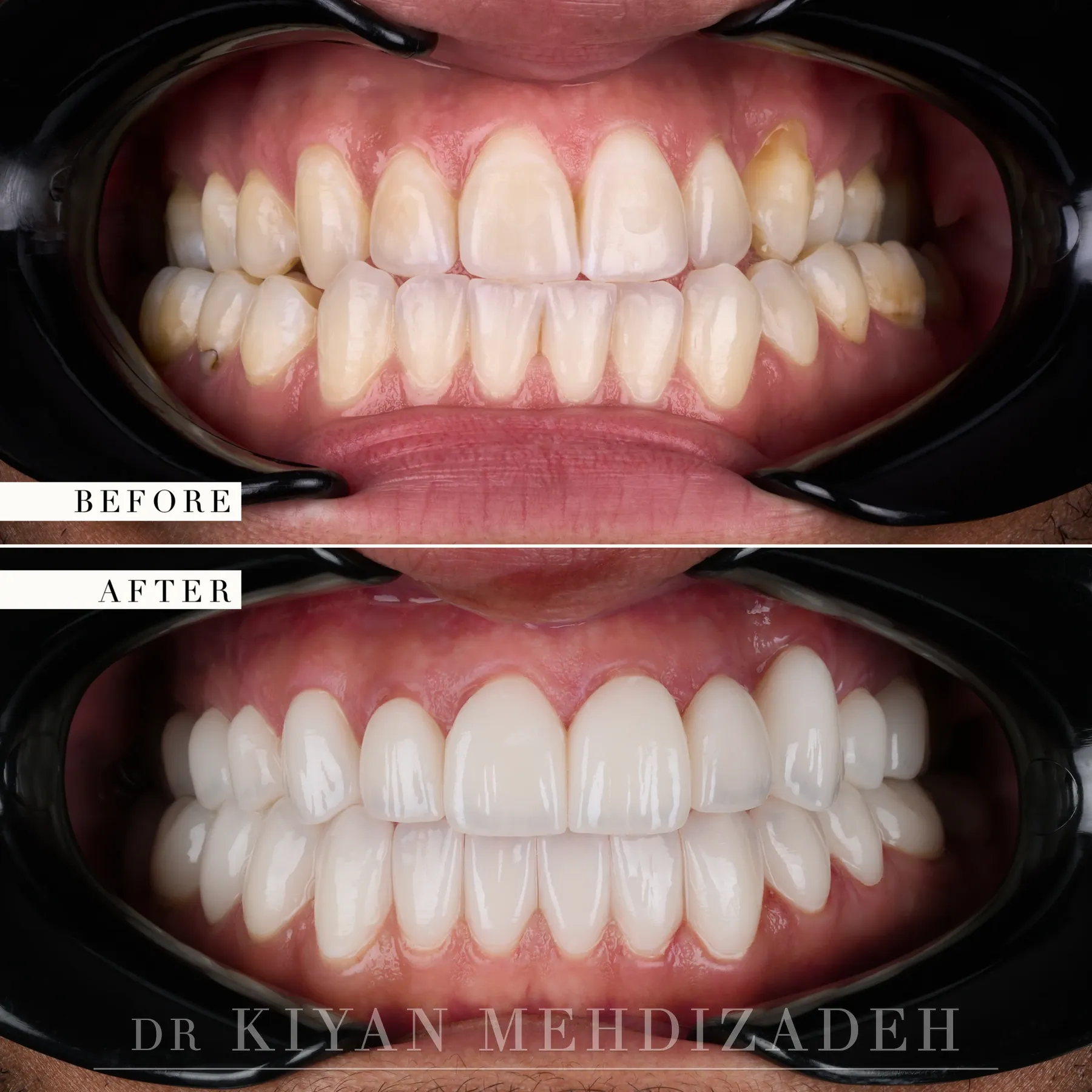
This patient traveled from Chicago to rebuild his smile. His main concern was his underbite - his lower teeth sat in front of his uppers - and his smile was also asymmetric, partly because a canine was missing on one side and his midline was tilted. The usual route for a pronounced underbite is jaw surgery with a long recovery, and that wasn't an option he wanted.
Not every bite problem has to be solved at the bone. Sometimes it can be re-engineered tooth by tooth - as long as you're honest about the limits.
Understanding the Challenge
An underbite (a Class III relationship) means the lower front teeth close ahead of the uppers instead of behind them. Severe, skeletal cases are driven by jaw position and are best addressed with orthodontics and/or surgery; more moderate cases can be handled restoratively. When surgery is declined, restorative dentistry can re-establish proper front-tooth overlap and function within the patient's existing jaw framework. His also had two visible problems on top of the bite: a missing canine that left the smile heavier on one side (the canine is the longest tooth in the arch), and a tilted midline.
Initial Findings
An anterior underbite with the lower teeth overlapping the uppers; an asymmetric smile from a missing canine on one side; a tilted midline; a patient for whom jaw surgery was not an option.
The Treatment Sequence
Because he was traveling, the work was compressed. We designed the smile and bite, then did the try-in, adjustment, and cosmetic revision across four appointments in a single week - each tooth engineered to build a new, properly coupled bite within his existing jaw structure. We restored the appearance of the missing canine to balance the smile and straightened the tilted midline. He returned about four weeks later to receive the permanent ceramic veneers and inlays and to have his bite balanced.
The Result
He went back to Chicago with a smile that reads as even and a bite that functions comfortably - the underbite no longer the first thing you notice. The symmetry complements his features rather than competing with them.
Frequently Asked Questions About Underbite Correction
Can an underbite be fixed without surgery?
Sometimes. Mild-to-moderate cases can be addressed restoratively by redesigning how the teeth meet; more severe, skeletal underbites generally need orthodontics and/or jaw surgery. It depends on the individual bite.
What is an underbite?
A bite where the lower front teeth close in front of the upper front teeth instead of behind them - also called a Class III relationship.
How can veneers change a bite?
By precisely redesigning the shape, length, and contact of each tooth, the way the upper and lower teeth meet can be re-established within the existing jaw structure.
Why replace the canine's appearance?
The canine is the longest tooth in the arch and anchors the corner of the smile. With one missing, the smile looked heavier on one side; restoring its appearance rebalanced it.
What are dental inlays?
Custom ceramic restorations that fit into a tooth to rebuild its biting surface - used here alongside the veneers to rebuild function.
Why did treatment happen so fast?
Because he traveled in, the design, try-ins, and revisions were staged into concentrated visits - about five weeks start to finish, including a return trip for the final teeth.
Will the result last?
Well-made ceramic restorations are durable with good care; because the bite was rebuilt within the existing jaw, keeping regular checkups helps protect it long-term.
What does treatment like this cost?
This case was $52,000, covering twenty-four ceramic veneers and inlays across both arches. $622/month: 144 payments at 9.99% APR, on approved credit.
Last Updated: October 2026