Treating the Teeth Without Fighting the Bite
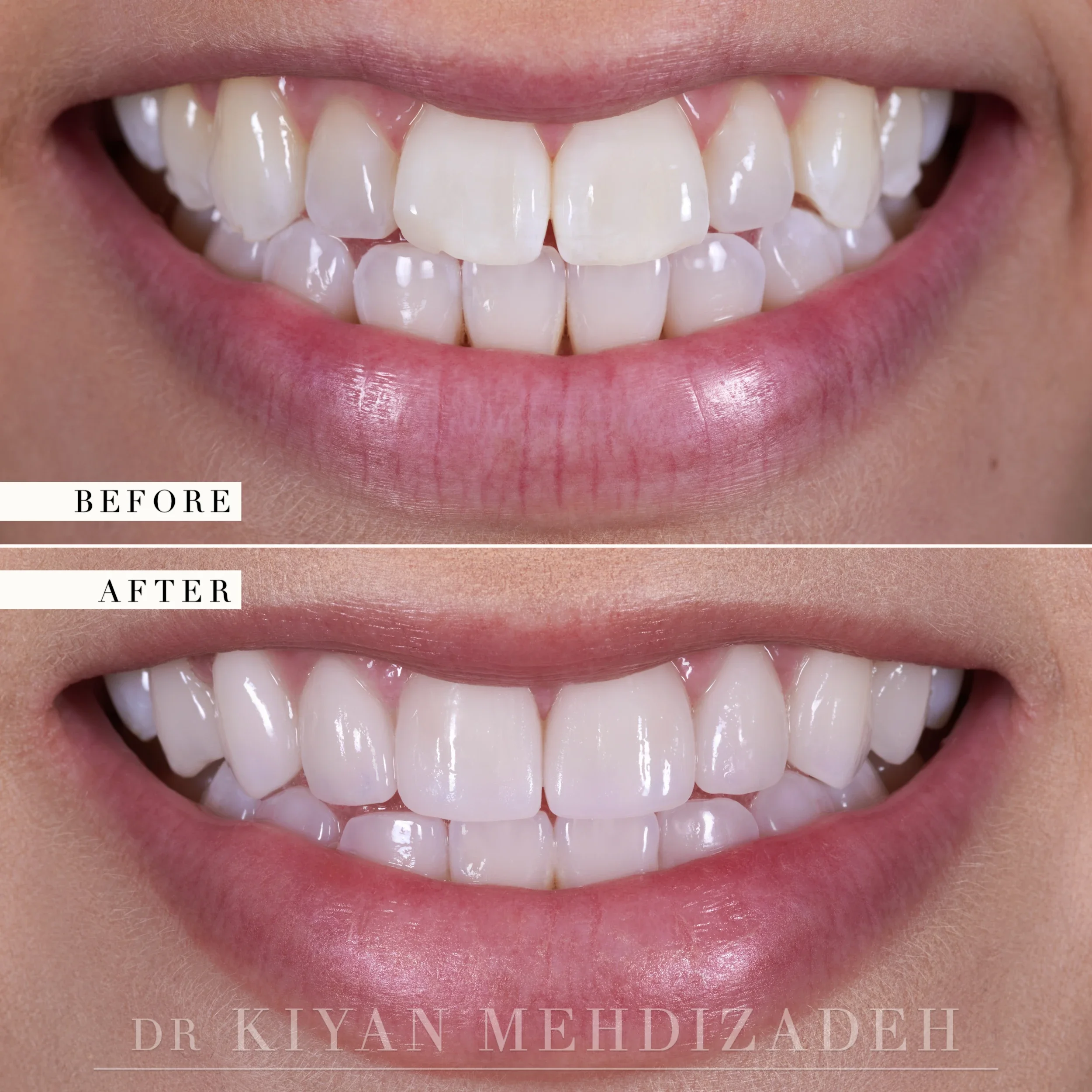
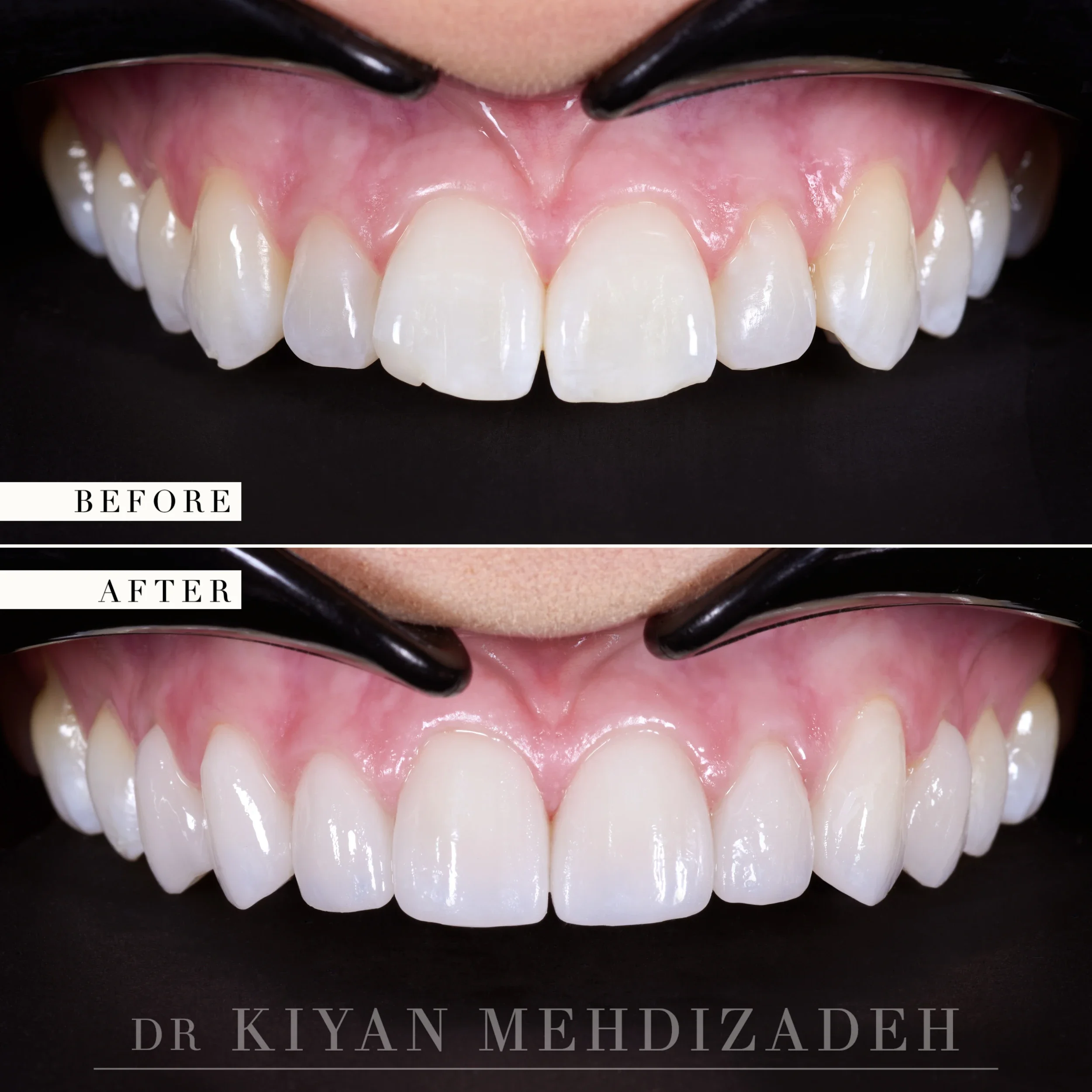
An underbite had chipped and flared the front teeth. Correcting the bite was not the goal; designing restorations that survive within it was.
By Dr. Kiyan Mehdizadeh, DMD · 9460 Wilshire Blvd, Suite 850, Beverly Hills, CA 90212 · (310) 770-3335
Last Updated: August 2026
Is your underbite chipping your front teeth?
An underbite meets the upper teeth at an angle their edges were never shaped for, and the chipping that follows tends to return after every repair. Restoring the damage without correcting the jaw is possible, but only if the new edges are designed around where your teeth actually make contact. Send us a photo and we will tell you whether your bite allows it, and what it would cost.
- A response within one business day. Usually much sooner.
- A real cost estimate, not a range designed to get you in the door.
- No obligation. Many patients take months to decide. That is normal.
Ask about your case
Reviewed by our treatment coordination team. Call or text (310) 770-3335 if you would rather speak now.
Request received
Our treatment coordination team will review what you sent and call you
within one business day.
If you would like to hold a consultation time now, you can do that below.
Treatment Plan by Dr. Kiyan Mehdizadeh
- Bite analysis, to establish where the upper and lower teeth actually make contact and where the chipping was originating.
- Smile design drawn against that analysis, setting edge positions that restore the lost tooth structure without placing porcelain into the path of the opposing teeth.
- Whitening of the natural lower teeth, so the shade for the veneers could be selected to match them rather than the reverse.
- Ten upper porcelain veneers.
The Patient's Journey
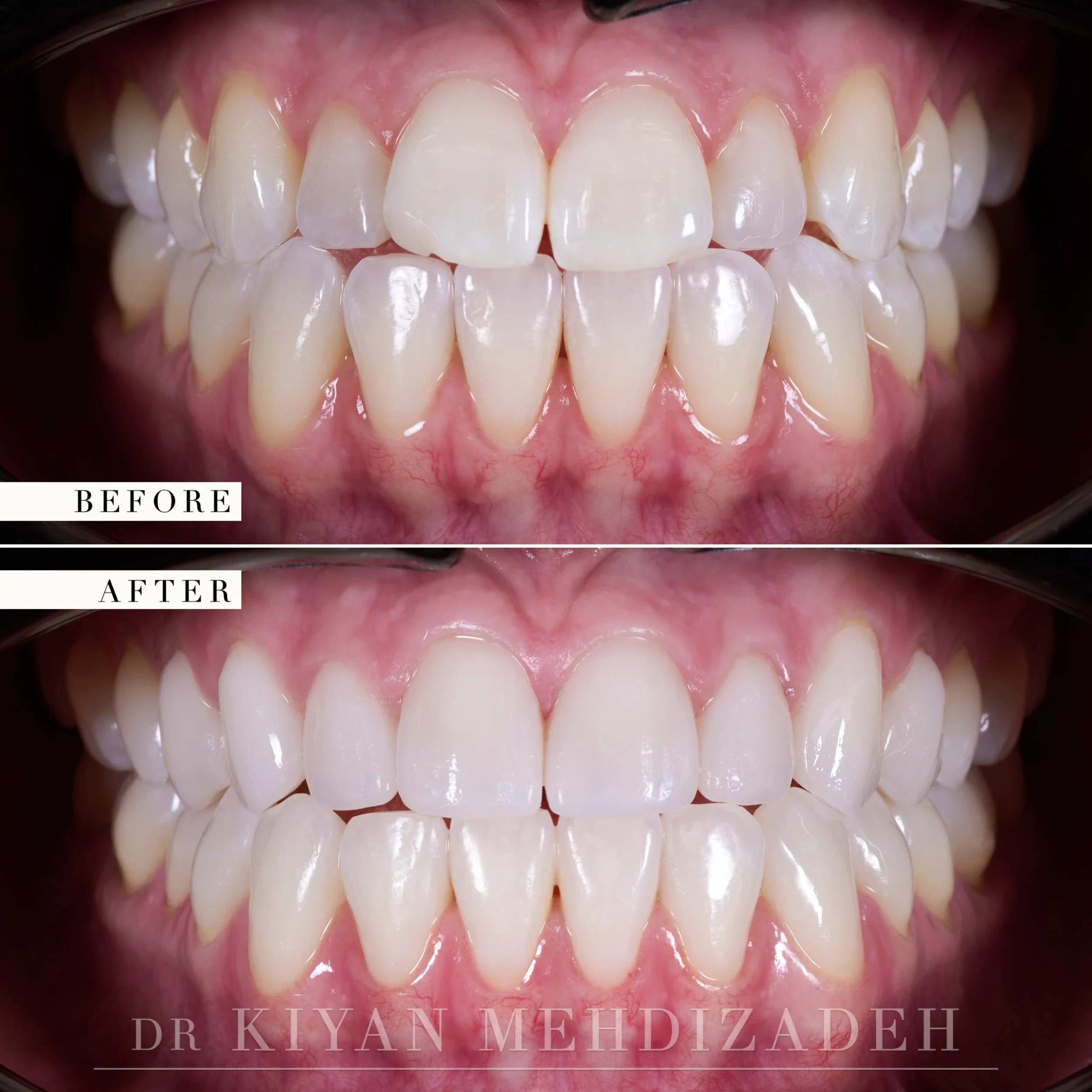
This patient presented with chipping along the edges of his upper front teeth and a noticeable forward flare to those teeth. Both were consequences of an underbite. In an underbite the lower anterior teeth close in front of the upper anterior teeth rather than behind them, a relationship described as a Class III occlusion. It changes how the upper teeth are loaded whenever the jaws come together.
The upper incisal edges were meeting the lower teeth at an angle they had never been shaped for. Over a period of years that produced two visible effects. The incisal edges chipped where the contact was heaviest. The upper teeth were also pushed forward over time, by forces arriving from behind them.
Understanding the Challenge
The obvious-sounding objective, correcting the underbite, belongs to a different category of treatment. A skeletal Class III relationship is addressed with orthodontics, orthognathic surgery, or both, over a period measured in years rather than weeks. This patient wanted the damage repaired and the appearance improved, which is a restorative objective rather than an orthodontic one.
That reframed the clinical question considerably. The teeth had to be rebuilt to appear straight and undamaged while continuing to function inside an unchanged occlusion. This meant designing for the relationship that existed rather than an idealized one. In a Class III bite the envelope in which an incisal edge can sit without being struck is narrower than usual and differently shaped. It is not apparent from looking at the teeth.
Treatment Goals
Restore the tooth structure lost to chipping. Correct the visual flare without moving the teeth. Design incisal edges that stay clear of the damaging contact. Match the upper restorations to the natural lower teeth. Avoid orthodontics and surgery, which the patient declined. Complete treatment within six weeks.
How Dr. Mehdizadeh Approached Treatment
Occlusal analysis came first, mapping where the upper and lower teeth actually made contact and identifying which contacts had produced the chipping. The smile design was then drawn inside what that mapping permitted, rather than drawn first and checked afterwards. Reversing that order produces a design that photographs well and fails within a year.
The temptation with flared teeth is to bring the incisal edges back and down, that is what makes a smile look straight in a photograph. In a Class III occlusion that places new porcelain directly into the excursive path of the lower teeth, and porcelain in a heavy contact behaves much as the natural enamel did. The incisal edges were instead positioned to restore the lost length and rebalance the visual line, while remaining clear of the excursive contact that had caused the original damage.
The natural lower teeth were sound and required no restoration, they were whitened first and allowed to stabilize in shade before the veneer selection was made. Porcelain does not respond to whitening, and a natural tooth not brought to its final color beforehand remains darker than the restorations permanently. Ten upper porcelain veneers were then delivered.
The Result After Six Weeks
The chipping has been restored and the flare is visually corrected, with the incisal edges positioned where they can achieve both without being struck by the opposing teeth. The upper shade meets the whitened lower teeth rather than outrunning them.
There was no surgical healing period in this case, which is why treatment moved considerably faster than cases involving gum surgery. The underbite remains an underbite, which was never the objective, but it is no longer damaging the teeth in front of it and it is no longer the first thing his smile communicates.
Frequently Asked Questions About Veneers and Underbites
What is an underbite?
A bite in which the lower front teeth close in front of the upper front teeth rather than behind them. It is also described as a Class III relationship.
Why does an underbite chip the front teeth?
The upper teeth meet the lower teeth at an angle their edges were not shaped for. Repeated contact at that angle chips the edges and, over time, pushes the upper teeth forward into a flared position.
Can veneers fix an underbite?
Veneers do not correct the underlying jaw relationship. What they can do, in suitable cases, is restore the damage the bite has caused and improve the appearance of the smile while working inside that bite. Correcting a skeletal underbite itself requires orthodontics, jaw surgery, or both.
Why not straighten the teeth instead?
That is a legitimate route and for some patients it is the right one. It is measured in years rather than weeks, and in a skeletal case it may involve surgery. This patient wanted the damage repaired and the appearance improved, which is a restorative goal rather than an orthodontic one.
Will the new veneers chip like the natural teeth did?
That risk is exactly what the design addresses. The edges were positioned to restore length while staying clear of the contact that caused the original chipping. Porcelain placed into a heavy contact behaves much as enamel does, which is why mapping the bite came before drawing the shape.
Why were the lower teeth whitened rather than veneered?
The lower teeth were sound and did not need restoring. Whitening them first meant the veneer shade could be selected to match them. Porcelain does not respond to whitening, so the natural teeth have to be brought to their final color before the shade is chosen.
Why only ten veneers?
Ten covers the teeth visible in a full smile on the upper arch. Treating teeth that do not show and do not need restoring adds cost and removes healthy tooth structure for no benefit.
How long did treatment take?
About six weeks. There was no surgical healing period in this case, which is why it moved considerably faster than cases involving gum surgery.
What does treatment like this cost?
This case was $22,000, covering ten porcelain veneers and whitening of the lower teeth. Porcelain veneers range from $1,800 to $3,500 per tooth depending on complexity. We accept PPO insurance and offer financing through Proceed Finance, PatientFi, Happen Bank, CareCredit, and Cherry.
Is this approach right for every underbite?
No. It suits cases where the bite relationship is stable and there is room to restore the edges without placing porcelain into a damaging contact. Where the underbite is severe, where the front teeth do not meet at all, or where the patient wants the jaw relationship itself corrected, orthodontics or surgery is the appropriate route and a restorative solution would be the wrong recommendation. That assessment is made from the bite analysis, not from photographs.
Last Updated: August 2026
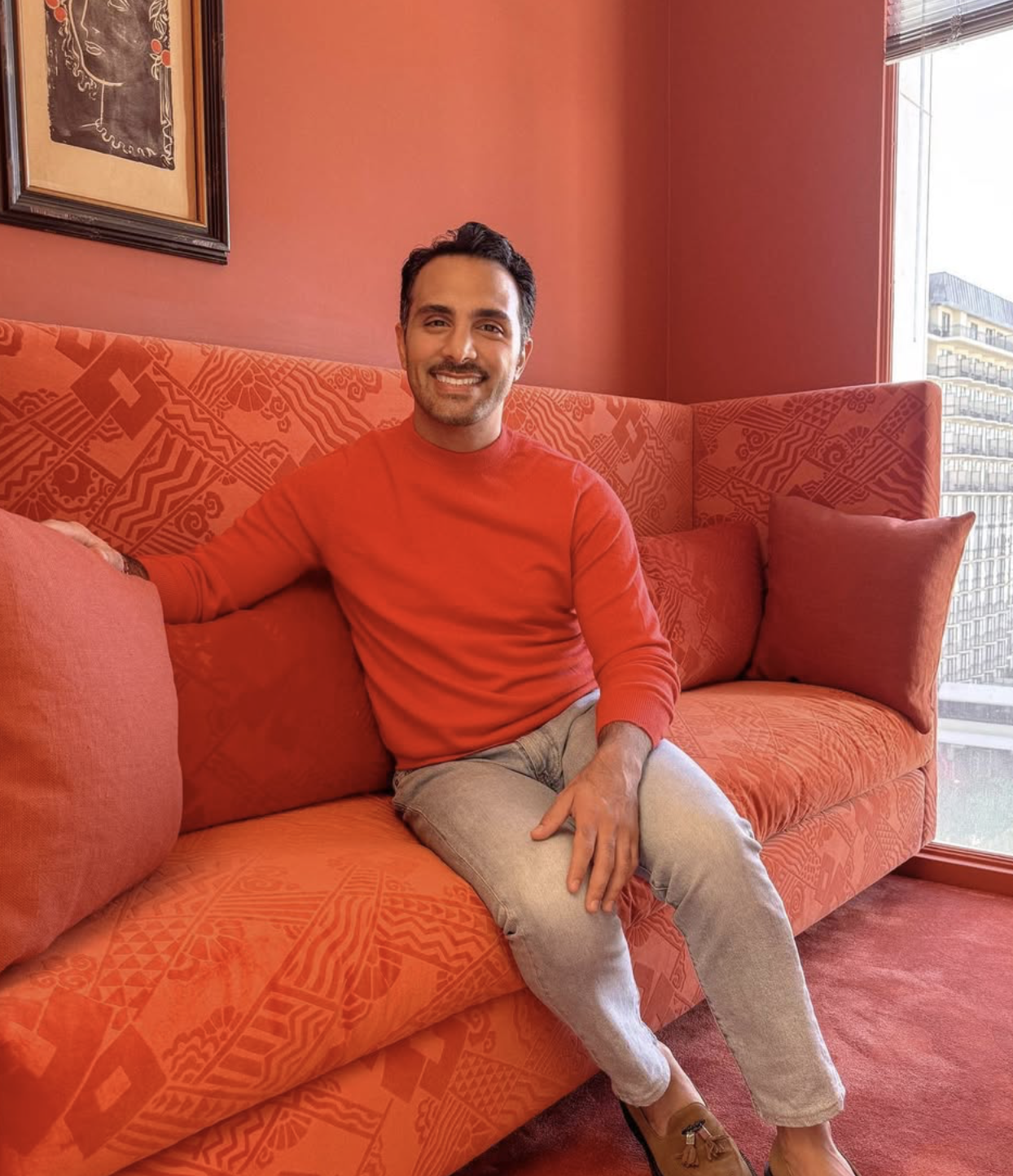
Dr. Kiyan Mehdizadeh, DMD
Doctor of Dental Medicine
Most cosmetic dentists refer out for surgery. Most surgeons don't do cosmetic work. Dr. Mehdizadeh trained in both — implantology and bone grafting at Loma Linda and UCLA, fixed prosthodontics under Mauro Fradeani in Italy, periodontal microsurgery with Hürzeler and Zuhr in Munich, and IV sedation at the University of Alabama. That combination means complex cases involving surgery, grafting, implants, and restorative work are planned and executed by a single provider with full command of every phase.
Technical skill produces function. Taste is what produces beauty. The difference between dental work that looks like dental work and a result that looks entirely natural comes down to aesthetic judgment — proportion, texture, translucency, how light moves across a surface. That sensibility runs through everything here, from the way cases are designed to the office itself.
An in-house master ceramist and on-site laboratory allow restorations to be designed, fabricated, and refined with direct collaboration between doctor and technician — no outsourced lab work, no guesswork, no compromise on the final product. Dr. Mehdizadeh is one of few dentists with the refined ability to provide care across multiple specialties, resulting in cohesive and holistic outcomes.
Education & Credentials
- Doctor of Dental Medicine (DMD), cum laude — Boston University
- Bachelor of Science in Biology — Emory University
- Mastership in Implant Dentistry & Grafting — Loma Linda University / gIDE Institute
- Advanced Implant Therapy & Grafting — UCLA / gIDE Institute
- Implant Placement & Restoration — UCLA / Nobel Biocare
- Guided Bone Regeneration & Ridge Augmentation — gIDE Institute
- Sinus Elevation & Augmentation — gIDE Institute
- Soft Tissue Management & Grafting — gIDE Institute
- Minimally Invasive Augmentation & Autogenous Bone Management — IDEA, San Francisco
- Master Program in Fixed Prosthodontics — Fradeani Education, Italy
- Aesthetic Dentistry — UCLA School of Dentistry
- Advanced Occlusion & Bite Design — UCLA
- Periodontal Micro-Surgery — Hürzeler/Zuhr, Munich
- Micro-Endodontic Training — University of Pennsylvania
- IV Sedation — University of Alabama at Birmingham
- Injectable Therapy for TMJ & Facial Pain — American Academy of Facial Esthetics
Considering similar treatment?
Send Dr. Mehdizadeh a photo and ask what’s possible for your case.
Other cases like this one
Fixing One Dark Tooth Without Veneers - Internal Bleaching
One dark tooth - but you don't want veneers?
View case →Fluorosis Treatment With Porcelain Veneers
Mottled or streaked enamel that will not whiten?
View case →Full Mouth Veneers: Bright, Textured, and Masculine
Want it bright without looking fake?
View case →