Implants for Several Missing TeethOne implant per tooth, or a bridge.
When two, three or four teeth are missing, implants can replace them in two ways: an implant for each tooth, or an implant bridge, in which two implants carry three or four teeth.
Implant bridge: $15,000
$180/month 144 payments at 9.99% APR, on approved credit.
Single implant with crown: $7,000
Your consultation, including a 3D X-ray (CT scan), is free.
Send photos if you have them. Either way, we reply with a cost. No obligation.
Ask about implants for several teeth
Reviewed by our treatment coordination team. Call or text (310) 770-3335 if you would rather speak now.
Request received
A treatment coordinator will call you within two hours during office hours (Monday to Friday, 9 to 4).
To talk now, call (310) 770-3335.
- A call within two hours during office hours.
- A written cost from us, before you commit to anything.
- No obligation. Many patients take weeks to decide. That is normal.
- Free consultation and 3D X-ray (CT scan)
- Private practice since 2012
- IV sedation in our own office
- In-house dental laboratory
Before, and after.
Every smile on this site was made here: our patients, our laboratory, our work.
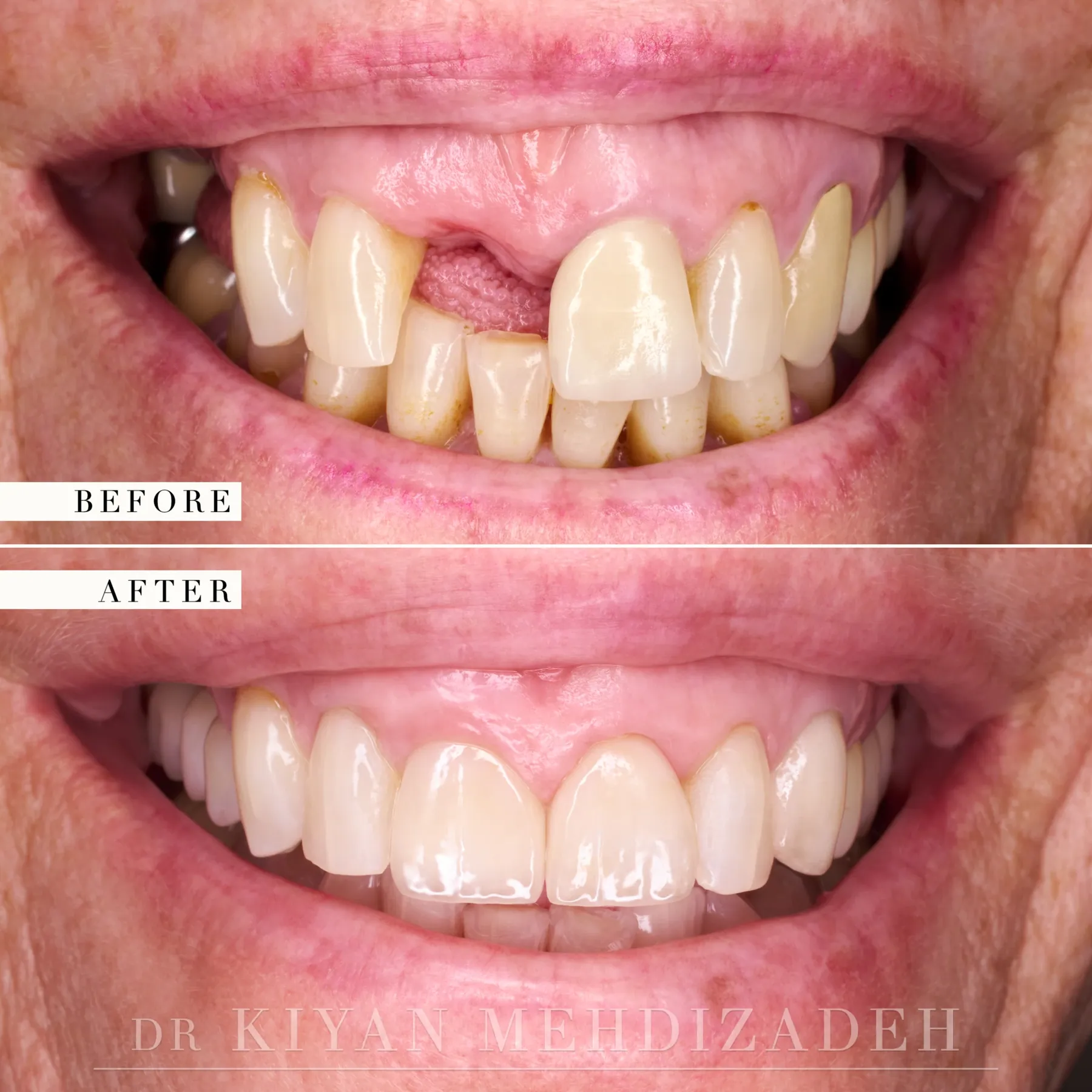 Three missing teeth replaced with implant crowns, the healthy teeth left untouched.See the case →
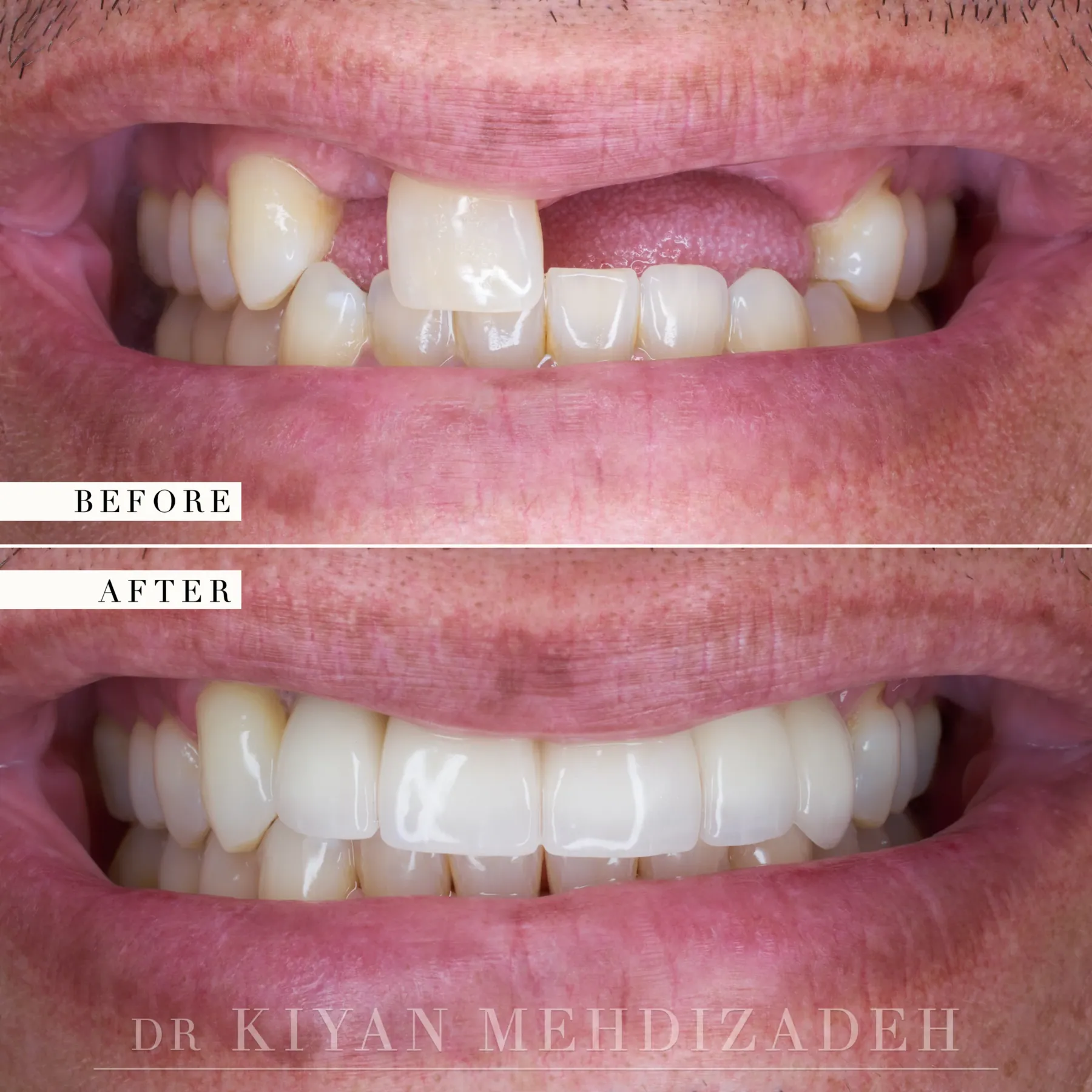 Four missing front teeth rebuilt with bone grafting, three implants and a bridge.See the case →
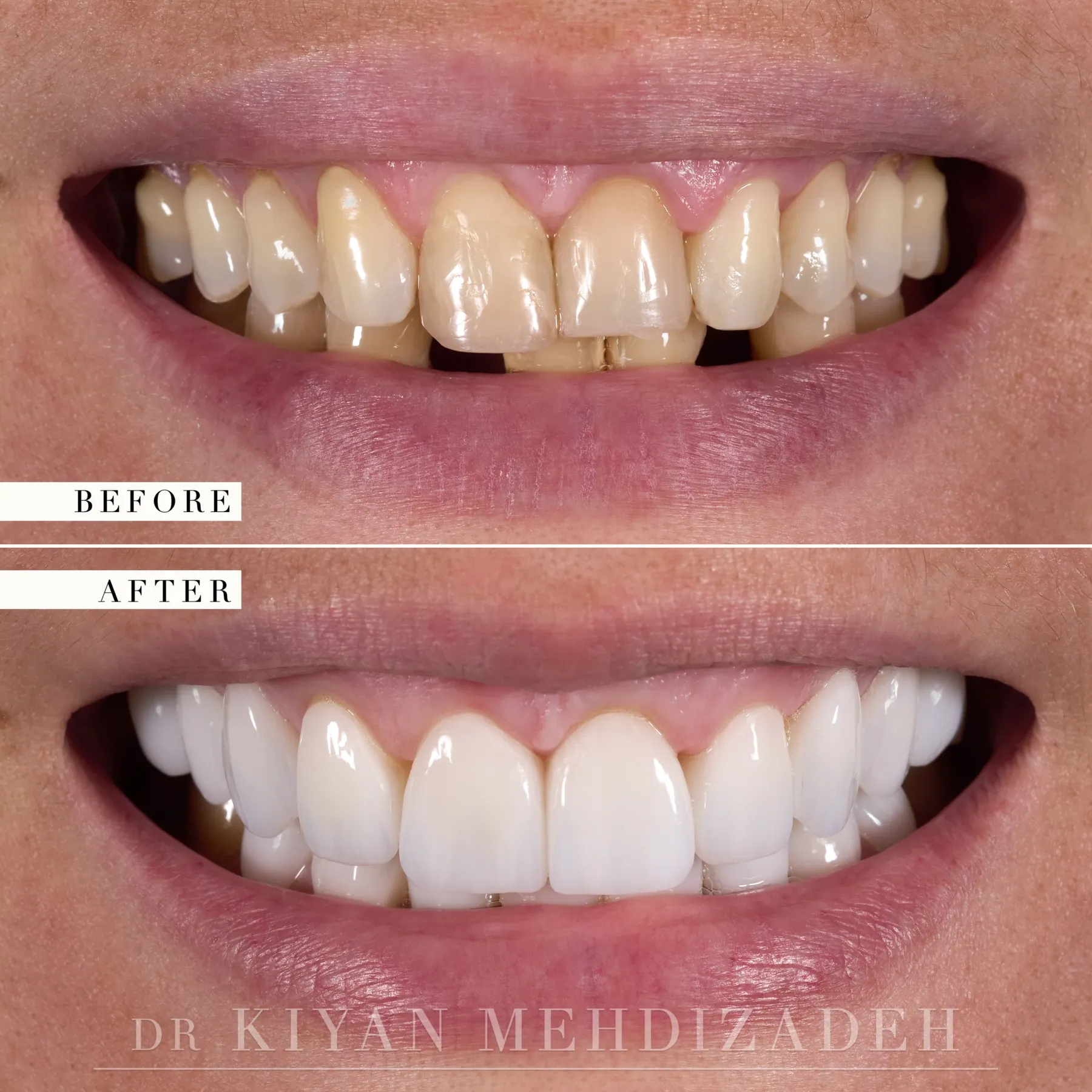 Two missing lower teeth on implants, and no more partial denture.See the case →
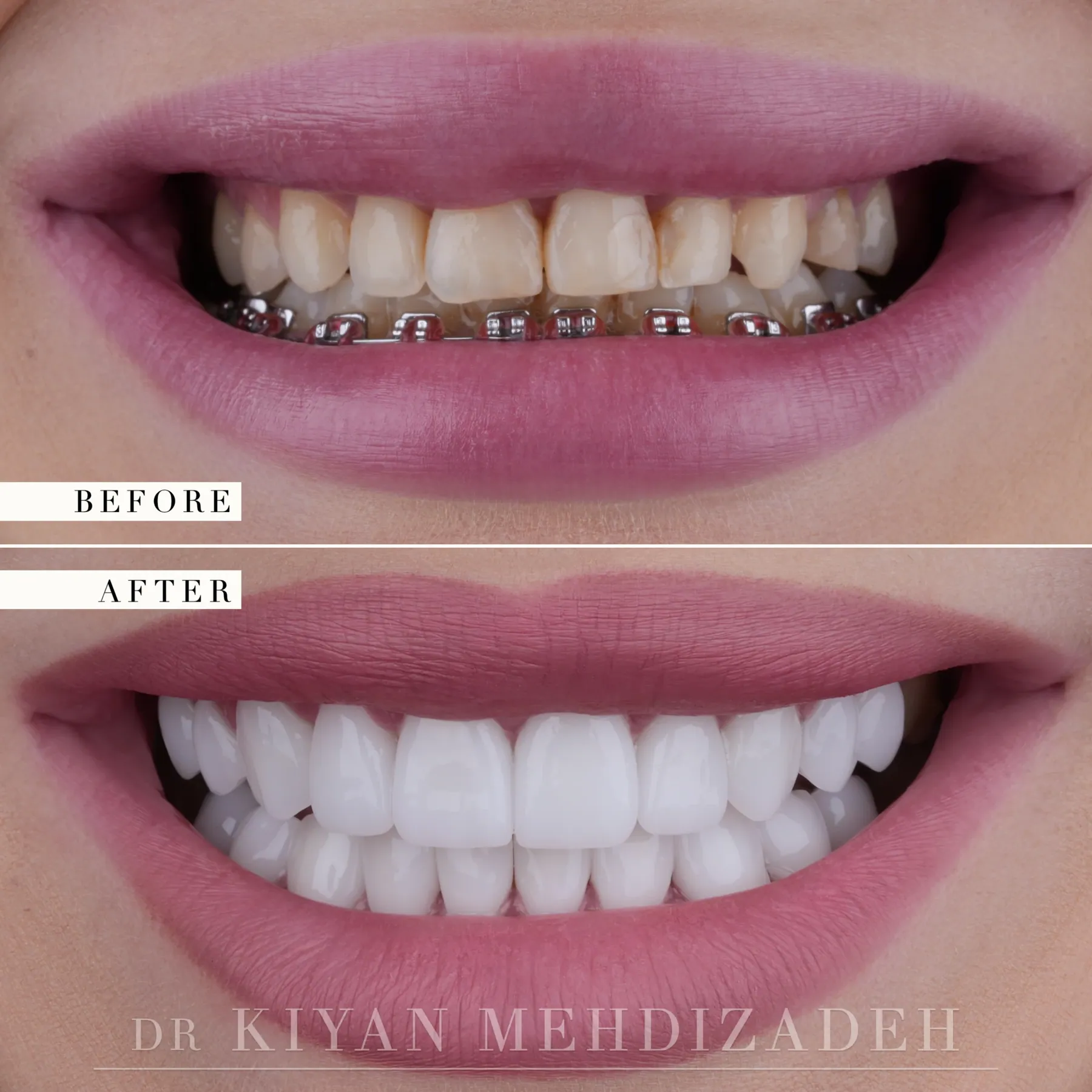 Two missing back teeth on implants, with veneers and a gum lift.See the case →
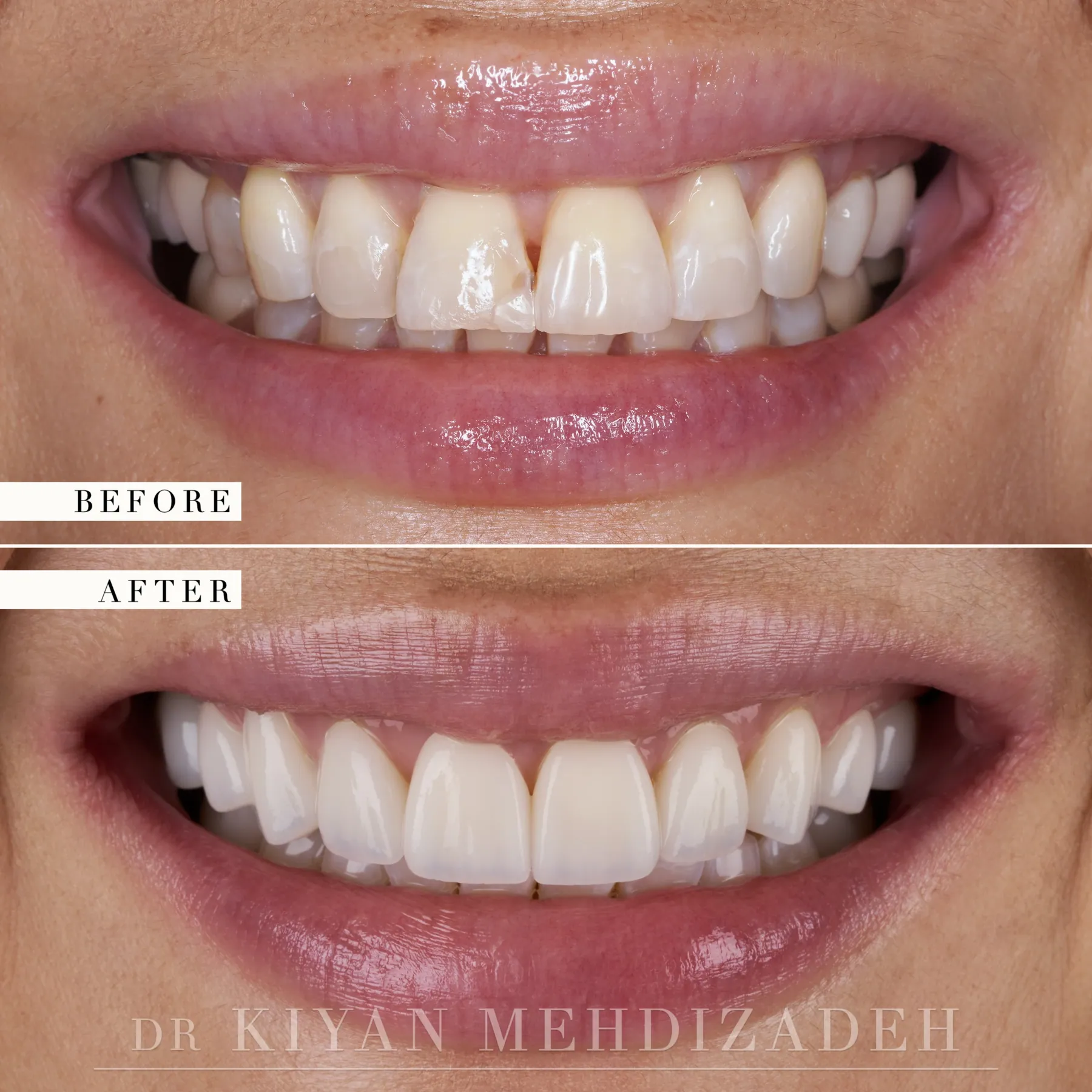 Missing molars replaced with implants, so new veneers sit in a supported bite.See the case →
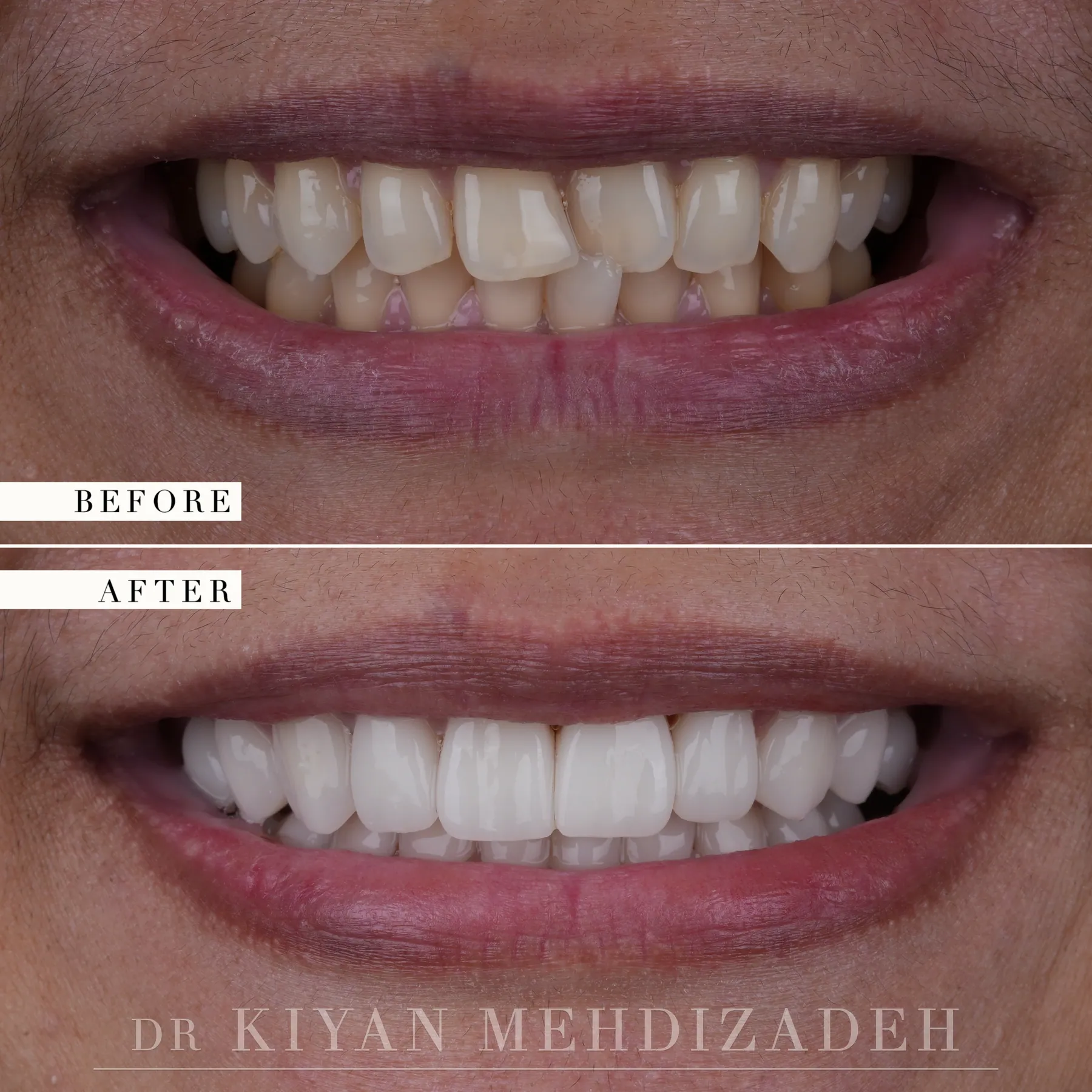 Two missing back teeth on implants, with veneers that corrected a crossbite.See the case →
Two ways, two prices.
Any bone grafting the case needs is part of the case total; in this case the total covered the graft as well as the implants and the bridge. Each case page states its total.
Implant bridge
$180/month
$15,000
144 payments at 9.99% APR, on approved credit.
Two implants carry a bridge of three or four teeth.
Single implant with a custom shade-matched crown
$84/month
$7,000
144 payments at 9.99% APR, on approved credit.
Where each missing tooth has its own implant, we quote the case as a whole rather than per tooth. Single tooth implants
IV sedation, if you choose it, is a flat fee of $1,500 - $1,800, added to the procedure. The consultation, including a 3D X-ray (CT scan), is complimentary. Most PPO plans contribute toward the cost of treatment. Financing is available.
What happens while teeth are missing.
The chewing force the teeth carry into the jaw keeps the bone in shape. Once a tooth is gone the ridge that held it starts to shrink, quickest in the first year and more slowly after that. A 2003 study of single extractions found the ridge lost about half its width within twelve months, two-thirds of that in the first three. A gap left for years is therefore both narrower and lower than it was.
The teeth around a gap change too. The neighbors tend to tip into the space, the opposing teeth can grow toward it, and the bite shifts. Missing back teeth matter even when they do not show: the remaining teeth take forces they are not shaped for, and new work at the front then sits in a bite that is already overloaded.
Many patients arrive wearing a removable partial denture, or a flipper for a front tooth. It fills the space, but it rests on the gum and carries its load into the gum rather than the bone, so the ridge keeps shrinking underneath it. That is why a partial that fitted well at the start needs relining as time passes.
One implant per tooth, or an implant bridge.
With one implant per tooth, each tooth stands on its own root. Nothing joins it to its neighbors, so you clean between the teeth as you would between natural ones, and no healthy tooth is involved. In this case three teeth were missing, at two sites in the upper arch. Dr. Mehdizadeh placed three implants without preparing any healthy tooth. Once the implants had integrated, we shaped the gum around each one with temporary crowns over several weeks, until it followed the same scalloped line as the gum around her natural teeth.
An implant bridge carries three or four teeth on two implants. The teeth between the implants are pontics: replacement teeth with no root of their own, shaped to rise out of the gum as a natural tooth would. A bridge needs fewer implants, and it lets them sit where the bone is best.
At the front of the mouth a bridge can also give a better gum line. Two implants placed side by side compete for the thin bone between them, and the papilla, the small triangle of gum between two teeth, is difficult to keep between two implants. A pontic spanning that space gives the gum a better chance of looking like gum between teeth rather than a flat shelf.
This case shows the reasoning. Four upper front teeth were missing, and only one central incisor still stood among them. Dr. Mehdizadeh rebuilt the shrunken ridge with a bone graft, then placed three implants rather than four: one carries a single crown, two carry a three-unit bridge with a pontic in the middle, and the natural central incisor received a veneer so it matched the new teeth. The flipper he had been wearing is gone.
You clean a bridge differently. Floss will not pass under a pontic, so you clean beneath it with interdental brushes and a water flosser, and we check the tissue at recall visits with instruments made for implant surfaces.
Teeth missing in different places.
When the gaps are apart from one another, each is usually its own implant. In this case the two missing teeth were lower first molars, one on each side of the jaw. Dr. Mehdizadeh placed both implants under IV sedation, and they integrated while the gum lift healed and our laboratory designed the veneers; the case ran eight weeks. In this one two lower front teeth were missing, at teeth twenty-three and twenty-six, and two implants replaced the partial denture she had been wearing.
In another, two implants replaced missing molars so that the new veneers at the front would sit in a bite the back teeth support. In a fourth, two implants replaced missing back teeth alongside veneers that corrected a crossbite. Where implants sit among veneers, our laboratory makes their crowns with the veneers as one set, so color and surface texture agree across the smile.
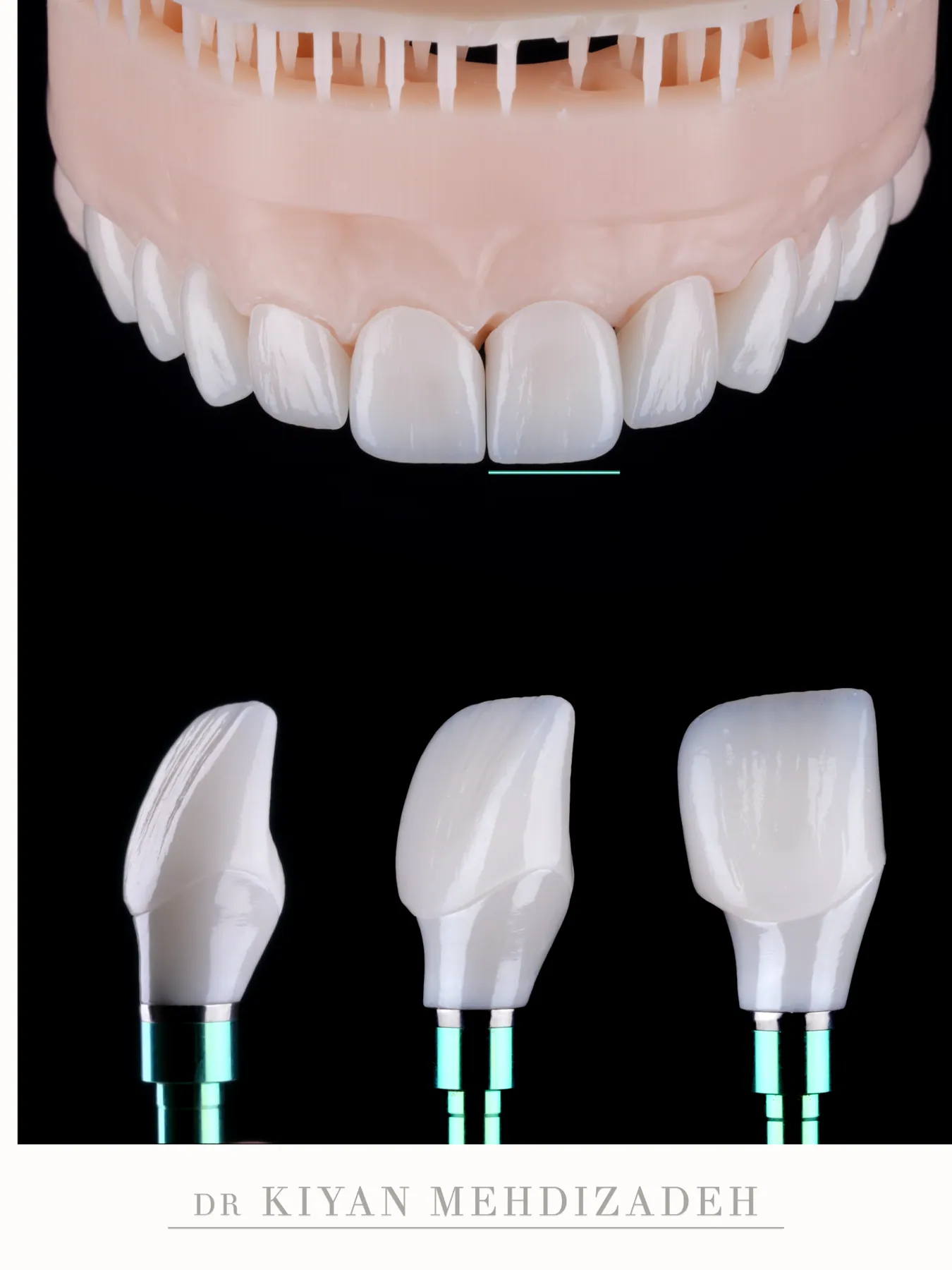
From the scan to the teeth.
The time depends mostly on the bone. One case took three months from the first implant to the final crowns; another took seven, because the graft had to heal before the implants went in.
Consultation and CT scan
The 3D X-ray shows how much bone each site has, and you receive a written plan with every visit and the total cost.
Whitening first
If front teeth are involved and you want them lighter. Porcelain does not lighten afterwards, so we record the shade only once your own teeth have settled.
Grafting
Where a ridge has shrunk too far to hold an implant. A graft may go in with the implants, or first, to heal before the implants go in.
Implant placement
Under local anesthesia or IV sedation given in this office by Dr. Mehdizadeh.
Integration
With a temporary in place meanwhile. At the front, temporary crowns on the implants then shape the gum over several weeks.
The bridge or crowns
Made by our laboratory and shade-matched to your own teeth, then tried in, adjusted to the bite and fixed in place.

One doctor, from consultation to final teeth.
Dr. Mehdizadeh places the implants and performs any bone grafting they need. Our laboratory, in the same building, makes the teeth that go on them.
Find out what your implants would cost.
Tell us what is going on. Add photos if you have them; if not, we will call and talk it through.
Or call (310) 770-3335.
Ask about implants for several teeth
Reviewed by our treatment coordination team. Call or text (310) 770-3335 if you would rather speak now.
Request received
A treatment coordinator will call you within two hours during office hours (Monday to Friday, 9 to 4).
To talk now, call (310) 770-3335.
Frequently Asked Questions
How much does an implant bridge cost?
An implant bridge is $15,000. $180/month: 144 payments at 9.99% APR, on approved credit. The consultation, including a 3D X-ray (CT scan), is complimentary.
Do I need an implant for every missing tooth?
No. Two implants can carry a bridge of three or four teeth. Where the gaps are separate, each usually gets its own implant.
Why would a bridge look better than separate implants at the front?
The papilla, the small triangle of gum between two teeth, is difficult to keep between two implants side by side. A pontic over that space gives the gum a better chance of looking natural.
What is a pontic?
A replacement tooth in a bridge with no implant or root of its own. The units on either side support it, and it is shaped to rise out of the gum as a natural tooth would.
I have worn a partial denture for years. Can I still have implants?
Yes. Bone shrinks under a partial, so the ridge may need rebuilding first, as it did for the four missing front teeth shown on this page. In another case here, two implants replaced a partial denture.
Does a partial denture stop bone loss?
No. It rests on the gum and carries its load into the gum rather than the bone, so the ridge keeps shrinking beneath it.
How do I clean an implant bridge?
Floss will not pass under a pontic, so you clean beneath it with interdental brushes and a water flosser, with recall visits using instruments made for implant surfaces.
How long does treatment take?
From three to seven months in the cases on this page, depending mostly on whether bone grafting comes first.
Can the implants be placed under sedation?
Yes. Dr. Mehdizadeh gives IV sedation in this office and holds a California sedation permit. It is a flat fee of $1,500 - $1,800, added to the procedure.
Last Updated: October 2026