Am I a Candidate for Dental Implants?
Most people who ask this have a reason to doubt the answer: a medical condition, a medication, a long-standing gap, or a dentist who said there was not enough bone. Three things decide it: the bone the implant will sit in, the health of the gums around it, and the general health of the person receiving it. A diagnosis rarely settles the question on its own. What matters is how well a condition is under control, which medications come with it, and how we plan the treatment around it.
Your consultation, including a 3D X-ray (CT scan), is free.
Send photos if you have them. Either way, we reply with a cost. No obligation.
Ask whether implants suit you
Reviewed by our treatment coordination team. Call or text (310) 770-3335 if you would rather speak now.
Request received
A treatment coordinator will call you within two hours during office hours (Monday to Friday, 9 to 4).
To talk now, call (310) 770-3335.
- A call within two hours during office hours.
- A written cost from us, before you commit to anything.
- No obligation. Many patients take weeks to decide. That is normal.
- Free consultation and 3D X-ray (CT scan)
- Private practice since 2012
- IV sedation in our own office
- In-house dental laboratory
What decides candidacy.
This page explains each of those in general terms. The answer for a particular person comes from the medical history, the examination and a 3D X-ray (CT scan).
Bone. An implant needs enough bone around it to hold it firmly from the day of surgery, and to keep holding it once it carries chewing force. Two things matter: volume, the height and width of the ridge, and quality, how dense the bone is. Volume shrinks once a tooth is lost, fastest in the first year.
When the bone falls short, it can usually be rebuilt. Grafting adds volume to the ridge, and a sinus lift adds height in the upper back jaw, often in the same appointment as the implant. Where the defect is larger, the graft goes in first and consolidates before the implant, which is why this case ran seven months rather than three. Dr. Mehdizadeh performs the grafting and sinus work himself; he holds a Mastership in Implant Dentistry & Grafting from Loma Linda University / gIDE.
See also: Bone grafting and sinus lifts.
Gum health. We treat active gum disease before an implant goes in. Periodontitis destroys the bone and attachment that hold teeth, and a history of it is a recognized risk indicator for peri-implantitis, the same kind of inflammation in the tissue around an implant. Treating the gums first is part of the plan rather than a reason to refuse it. Timing matters too: in this case, periodontal disease was failing the whole dentition, and removing the teeth while the bone still supported implants let Dr. Mehdizadeh place four implants in each arch without grafting.
General health. Anything that slows healing or weakens the response to infection is part of the assessment. None of the conditions below is an automatic yes or no.
Medical conditions and medications.
Diabetes. Well-controlled diabetes is compatible with implant treatment. Poorly controlled diabetes slows healing and raises the risk of infection, and studies of implant failure have found diabetes among the associated risk factors. We look at control: a recent HbA1c, the blood test that reflects average blood sugar over the past few months. Where control needs to improve, we coordinate with the physician and place the implant once it has.
Smoking and vaping. Smoking reduces blood flow to the gum and bone, and smokers have higher implant failure rates and more bone loss around their implants over the years. Vaping has a shorter research record, but it delivers nicotine, which narrows blood vessels as smoking does. Neither is a bar to treatment. We ask patients to stop before surgery and through healing.
Osteoporosis and bone medications. Osteoporosis on its own rarely prevents implants; the medication history matters more. Bisphosphonates, such as alendronate by mouth or zoledronic acid by infusion, and denosumab, by injection, slow the turnover of bone and carry a small risk of osteonecrosis of the jaw, an area of bone that fails to heal after surgery. The risk depends on the drug, the dose, the route and the length of treatment, and it is much higher at the doses used for cancer than at those used for osteoporosis. Bisphosphonates stay in bone for years, while the effect of denosumab fades over months, so the timing of surgery can sometimes follow the dose schedule. Dr. Mehdizadeh reviews the history and coordinates the plan with the prescribing physician, and only that physician changes the medication.
Blood thinners. Most patients on anticoagulant or antiplatelet medication have implant surgery without stopping it, and local measures control bleeding at the site. Stopping a blood thinner carries its own risk of a clot or a stroke, so any change is the prescribing physician's decision, not ours.
Heart conditions. Stable heart disease is usually compatible with implant surgery. Treatment waits after a recent heart attack or stroke, and some conditions, such as an artificial heart valve, call for an antibiotic before surgery on the cardiologist's guidance. Under IV sedation, we monitor oxygen level, blood pressure, ECG and breathing continuously.
Head and neck radiation. Radiation to the jaw reduces its blood supply for years afterwards, and surgery in irradiated bone risks osteoradionecrosis, bone that breaks down and fails to heal. Studies of implant failure have found prior head and neck radiation among the associated risk factors. The risk depends on the dose the jaw received and where, and Dr. Mehdizadeh plans with the oncology team, from the radiation record.
Autoimmune conditions and immune-suppressing medication. Rheumatoid arthritis, lupus and similar conditions, and drugs such as steroids, biologics and anti-rejection medication, can slow healing and raise the risk of infection. Many patients with them have implants. The plan depends on how active the condition is and what the medication does, and we time surgery with the treating physician.
Pregnancy. We defer implant treatment during pregnancy. The CT scan, any sedation and the surgery wait until after the birth.
Grinding and clenching. Grinding does not rule out implants, but it loads implant teeth harder and in directions they are not designed for, and an implant has no ligament to cushion that force the way a natural tooth does. Dr. Mehdizadeh designs the bite to spread the load, and a night guard worn while sleeping protects the result.
Age.
Age on its own is not a limiting factor; bone and general health are.
Growing patients are the exception. An implant does not move with a growing jaw: placed too early, it stays fixed while the teeth and bone around it keep developing, and the implant tooth ends up too short or out of line. Implants wait until jaw growth is complete, and a temporary tooth fills the space until then.
If the surgery itself is the worry.
For many patients the obstacle is not their health but their nerves. IV sedation lets them go through implant surgery relaxed, and most sedated patients remember very little of it. Dr. Mehdizadeh gives the sedation himself, in this office. He trained in IV sedation at the University of Alabama at Birmingham and holds a California sedation permit. The same medical history decides candidacy for the implant and for sedation, and he reviews the two together.
See also: IV sedation.
How we find out.
Three things answer the question for a particular person. The first is the medical history: conditions, medications with their doses, and any letters from physicians. The second is the 3D X-ray (CT scan), which shows the height, width and density of the bone, and where the nerve in the lower jaw and the sinus above the upper jaw lie. The third is the examination, at which Dr. Mehdizadeh assesses the gums, the bite and the teeth that remain.
The consultation, including a 3D X-ray (CT scan), is complimentary. Patients who live outside Los Angeles can begin with a virtual call and a CT scan near home; Dr. Mehdizadeh makes the diagnosis in person here.
See also: Traveling patients.
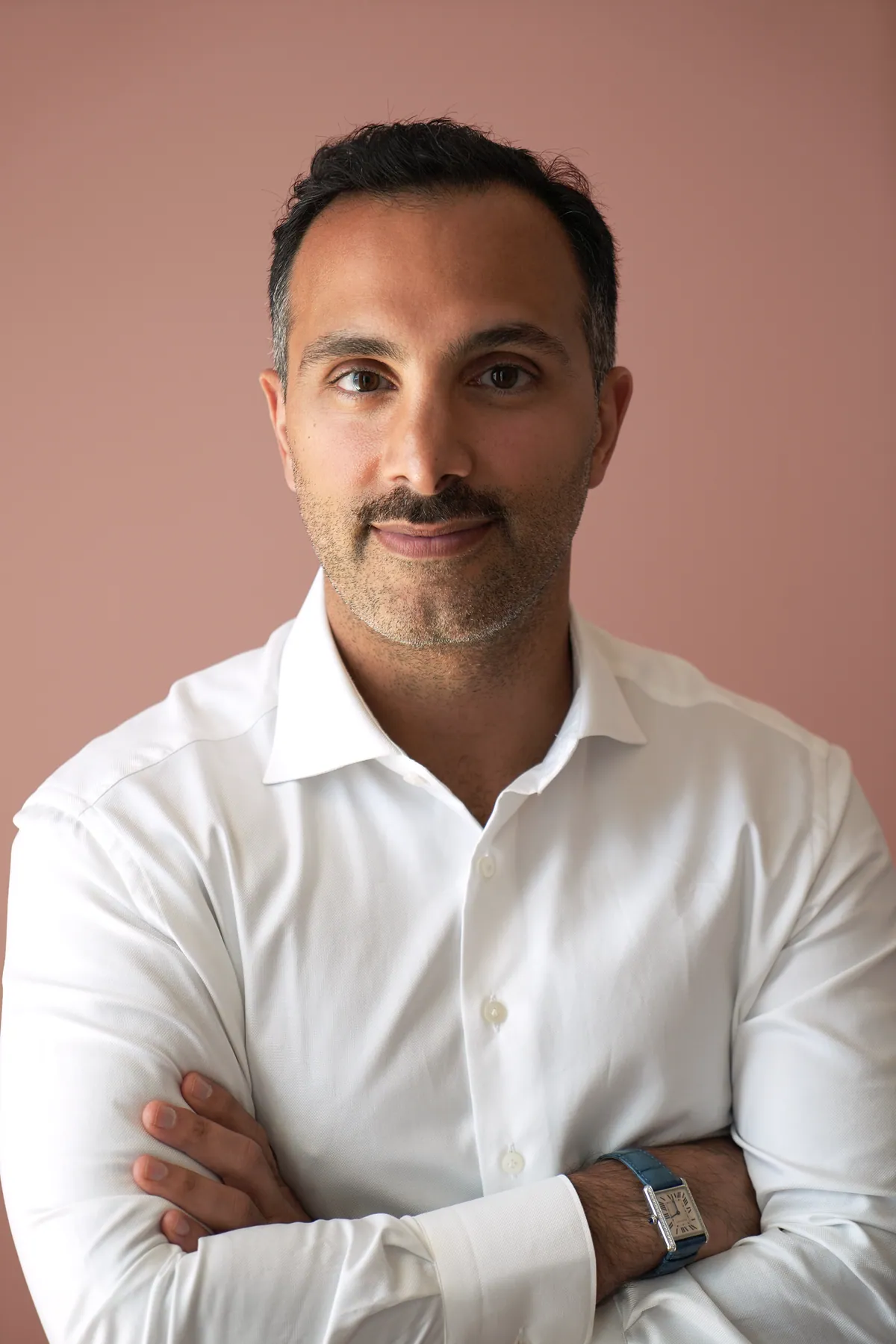
One doctor, from consultation to final teeth.
Dr. Mehdizadeh examines you, gives the IV sedation, places the implants and designs the teeth, and our laboratory, in the same building, makes them.
Find out what your new smile would cost.
Tell us what is going on. Add photos if you have them; if not, we will call and talk it through.
Or call (310) 770-3335.
Ask whether implants suit you
Reviewed by our treatment coordination team. Call or text (310) 770-3335 if you would rather speak now.
Request received
A treatment coordinator will call you within two hours during office hours (Monday to Friday, 9 to 4).
To talk now, call (310) 770-3335.
Frequently Asked Questions
Can I have dental implants if I have diabetes?
Many people with diabetes have implants. Control is what matters: we look at a recent HbA1c, coordinate with the physician where it needs to come down, and place the implant once it has.
I take a blood thinner. Do I have to stop it?
In most cases, no. Most implant surgery goes ahead on anticoagulant or antiplatelet medication, with local measures to control bleeding. Stopping it carries its own risks, so any change is the prescribing physician's decision.
I take, or have taken, medication for osteoporosis. Can I have implants?
Often, yes. Bisphosphonates and denosumab carry a small risk of osteonecrosis of the jaw after surgery, depending on the drug, the dose, the route and the length of treatment. Dr. Mehdizadeh reviews the history and plans with the prescribing physician, who alone decides any change to the medication.
Do I have to stop smoking or vaping?
We ask patients to stop before surgery and through healing. Smoking raises the risk of implant failure and of bone loss around implants, and the nicotine in vaping narrows blood vessels in the same way.
Am I too old for implants?
Age on its own is not a limiting factor; bone and general health are. For growing patients, implants wait until jaw growth is complete.
I was told I do not have enough bone. Can I still have implants?
Yes. Bone can be rebuilt with grafting, and the upper back jaw with a sinus lift, often in the same appointment as the implant.
I am anxious about surgery. Can I be sedated?
Yes. Dr. Mehdizadeh gives IV sedation in this office and holds a California sedation permit. Most sedated patients remember very little of the surgery.
Is the consultation free?
Yes. The consultation, including a 3D X-ray (CT scan), is complimentary.
Last Updated: October 2026