Veneers After BracesWhen straight is not finished.
Braces put the teeth in the right place. Veneers finish what braces cannot reach: the shape, the width, the length and the color of the teeth themselves.
Four veneers from $16,000
$192/month 144 payments at 9.99% APR, on approved credit.
Your consultation, including a 3D X-ray (CT scan), is free.
Send photos if you have them. Either way, we reply with a cost. No obligation.
Ask about veneers
Reviewed by our treatment coordination team. Call or text (310) 770-3335 if you would rather speak now.
Request received
A treatment coordinator will call you within two hours during office hours (Monday to Friday, 9 to 4).
To talk now, call (310) 770-3335.
- A call within two hours during office hours.
- A written cost from us, before you commit to anything.
- No obligation. Many patients take weeks to decide. That is normal.
- Free consultation and 3D X-ray (CT scan)
- Private practice since 2012
- IV sedation in our own office
- In-house dental laboratory
Before, and after.
Every smile on this site was made here: our patients, our laboratory, our work.
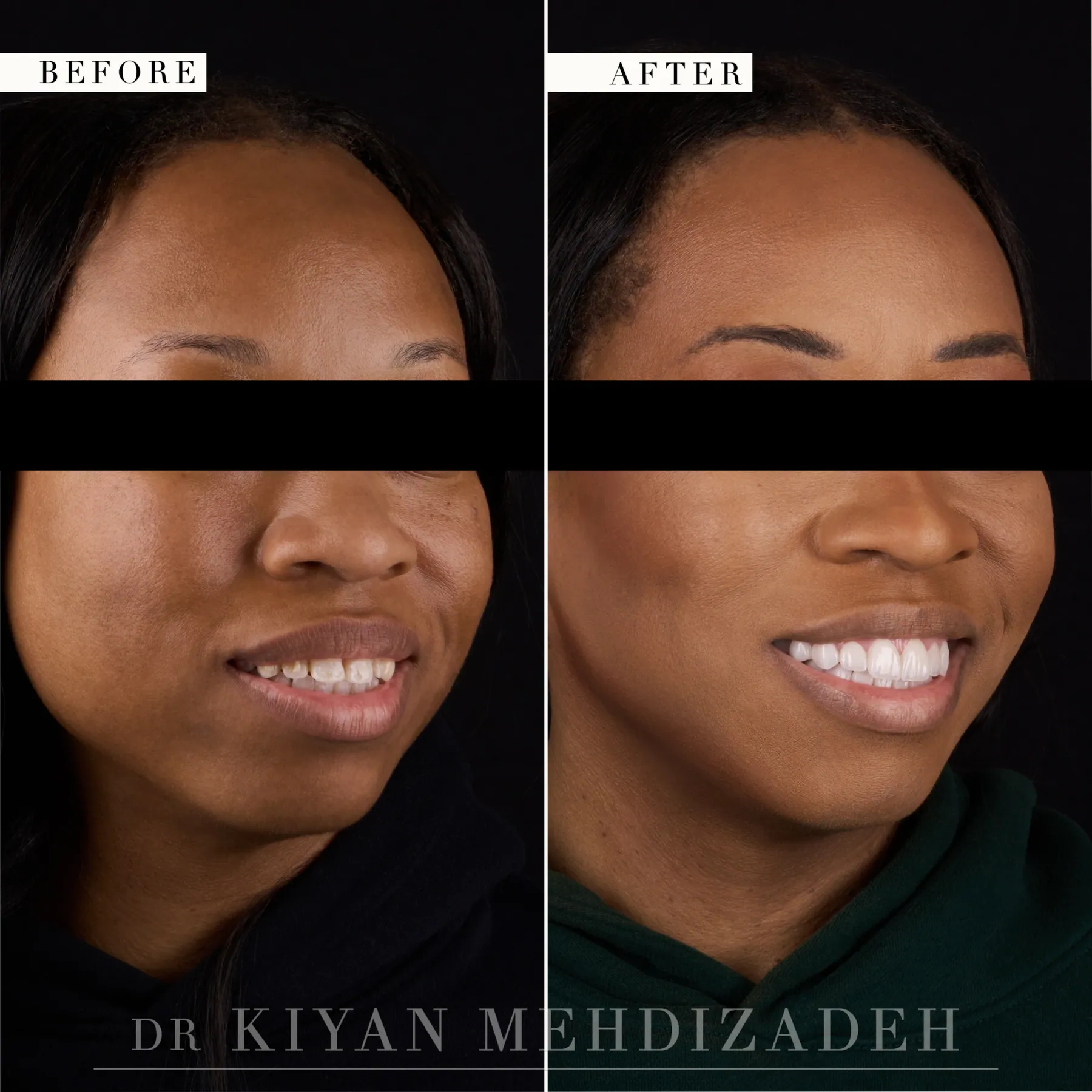
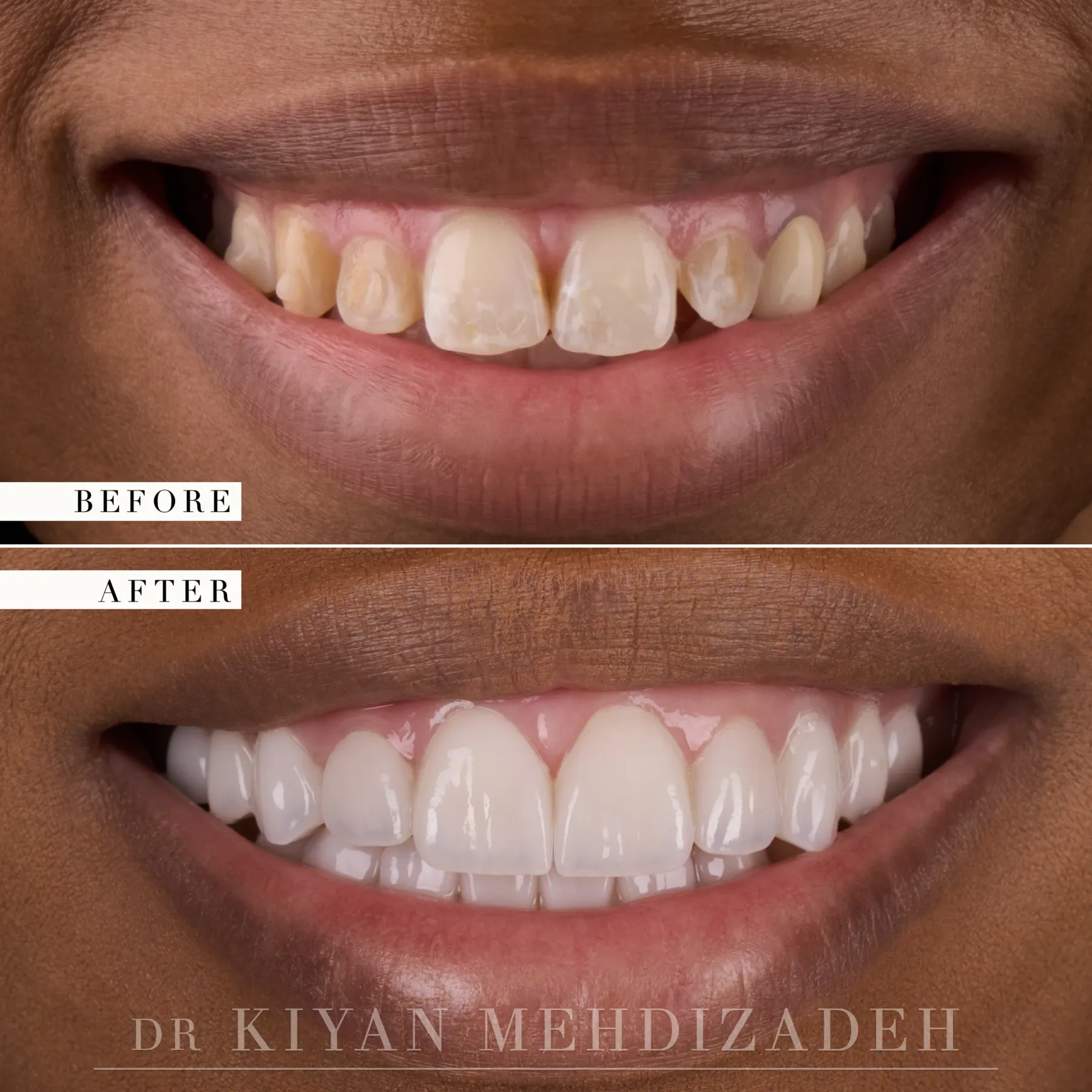 Flared, discolored teeth left by braces, corrected with veneers.See the case →
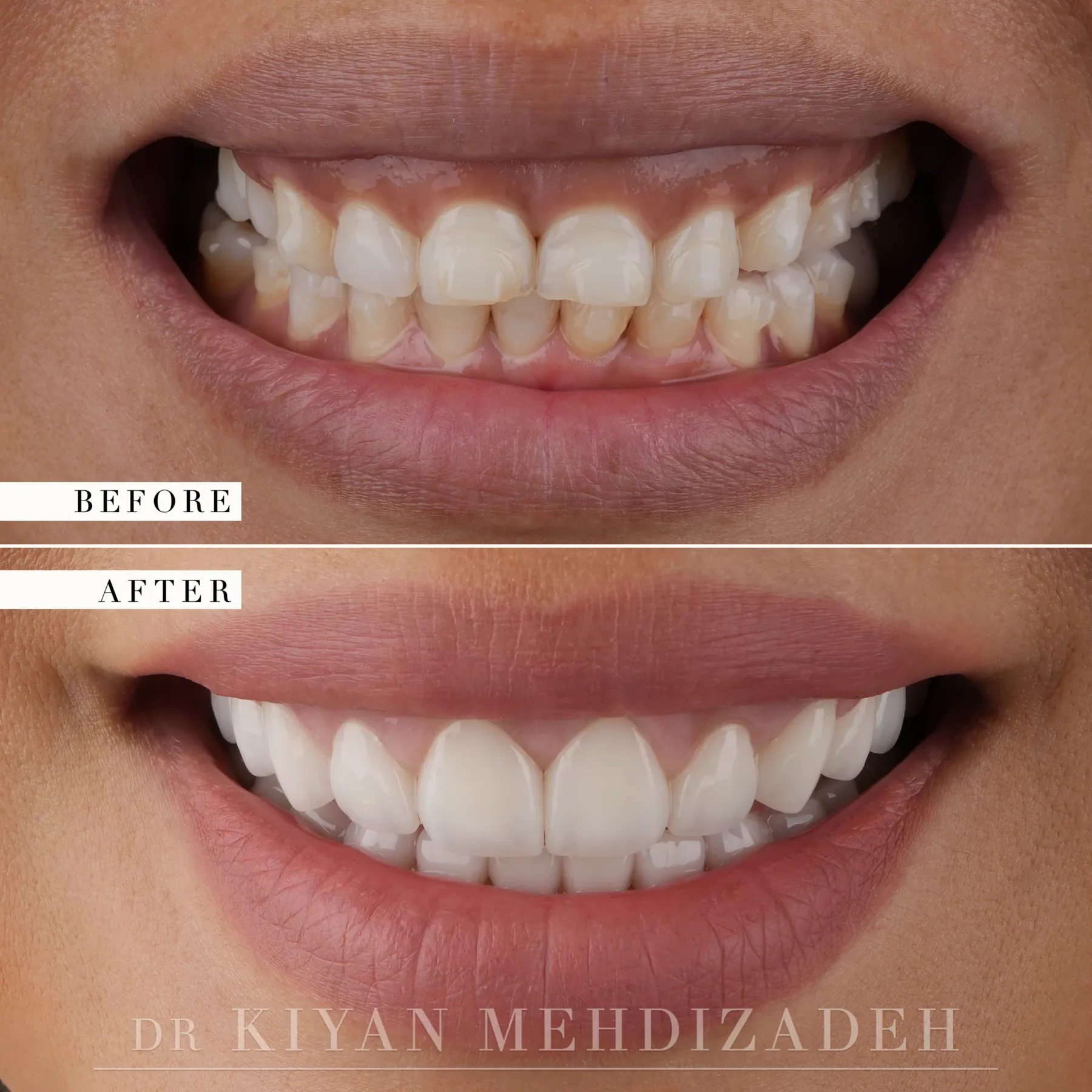 A gummy smile and worn teeth after clear aligners, corrected with a gum lift and veneers.See the case →
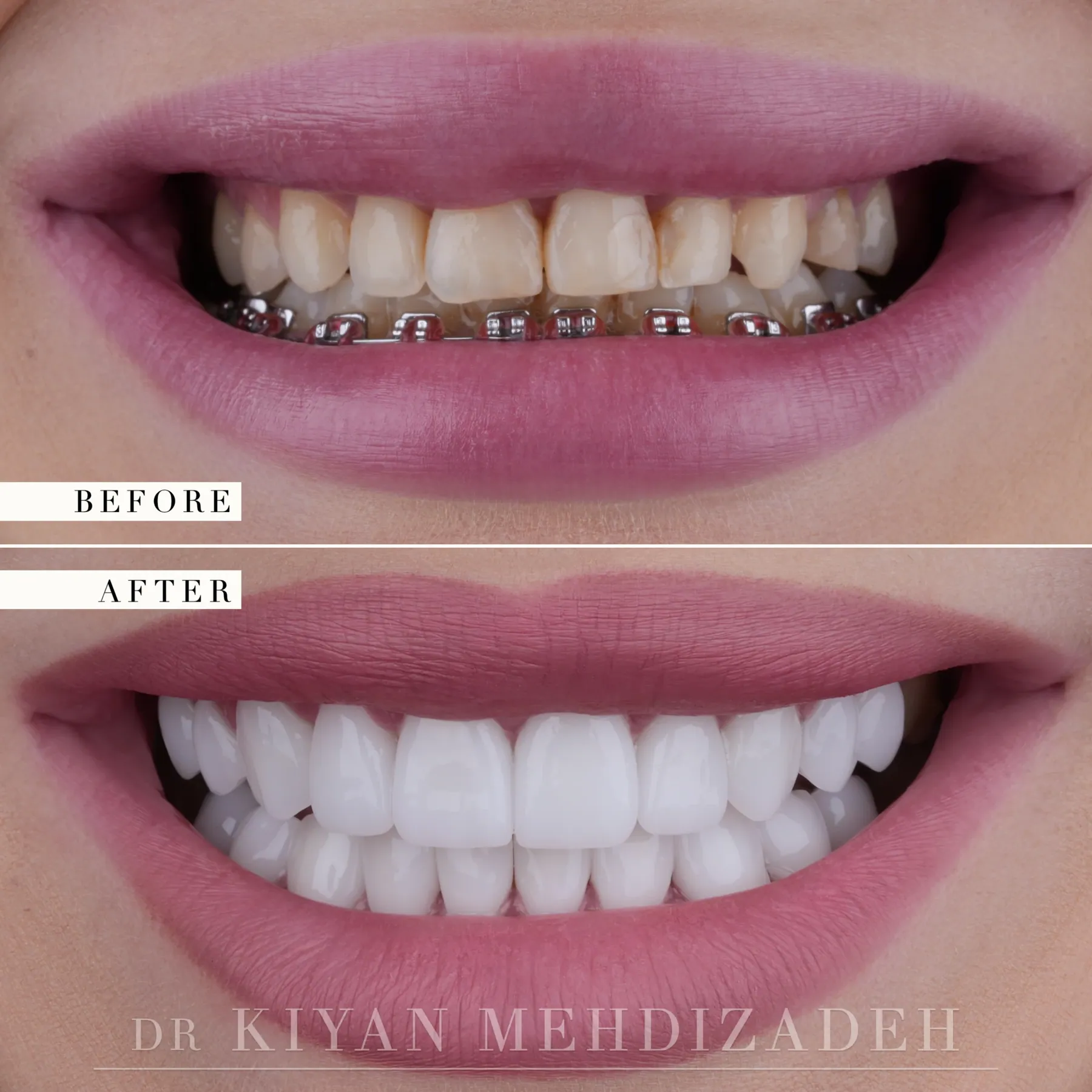 Straight after braces, then twenty veneers, two implants and a gum lift.See the case →
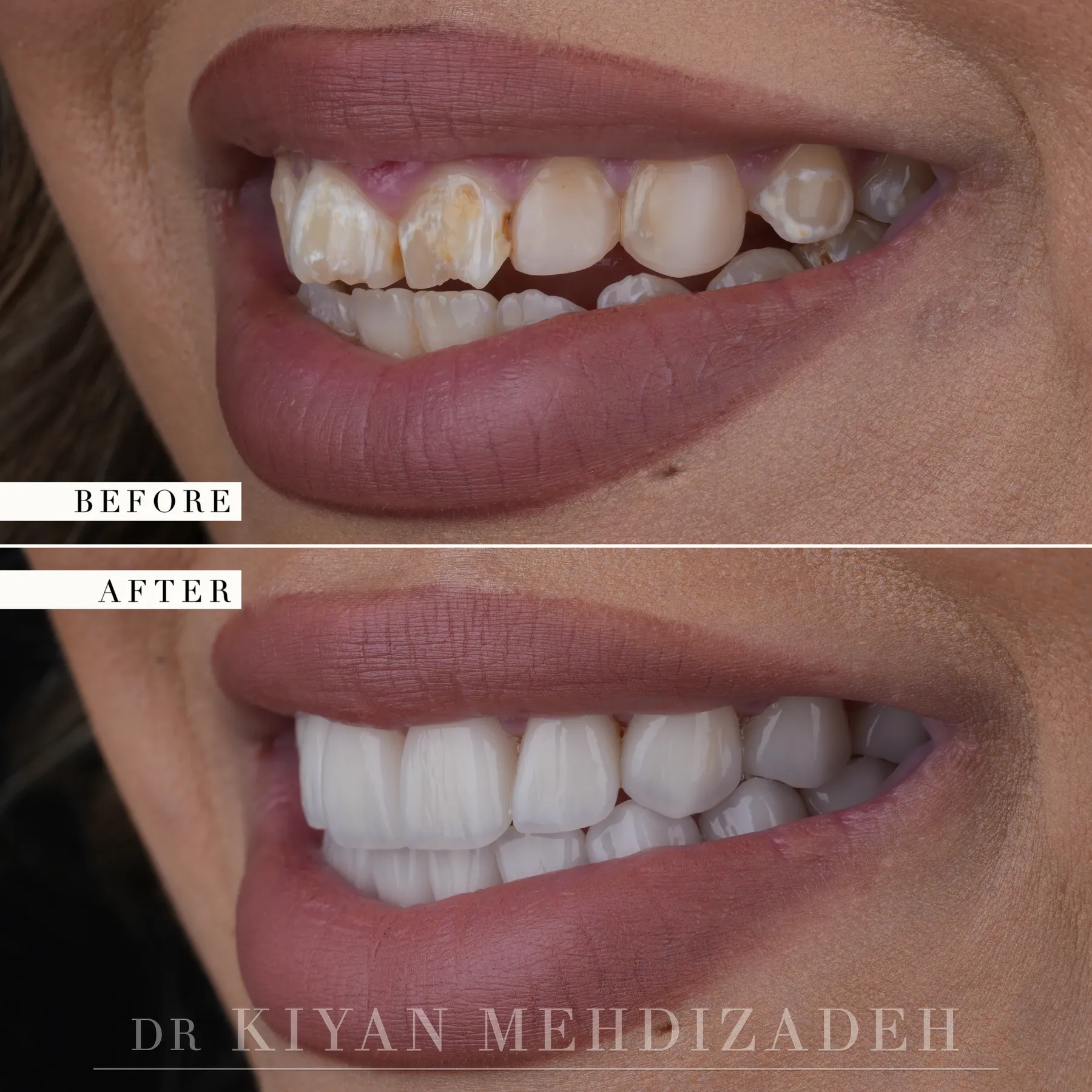
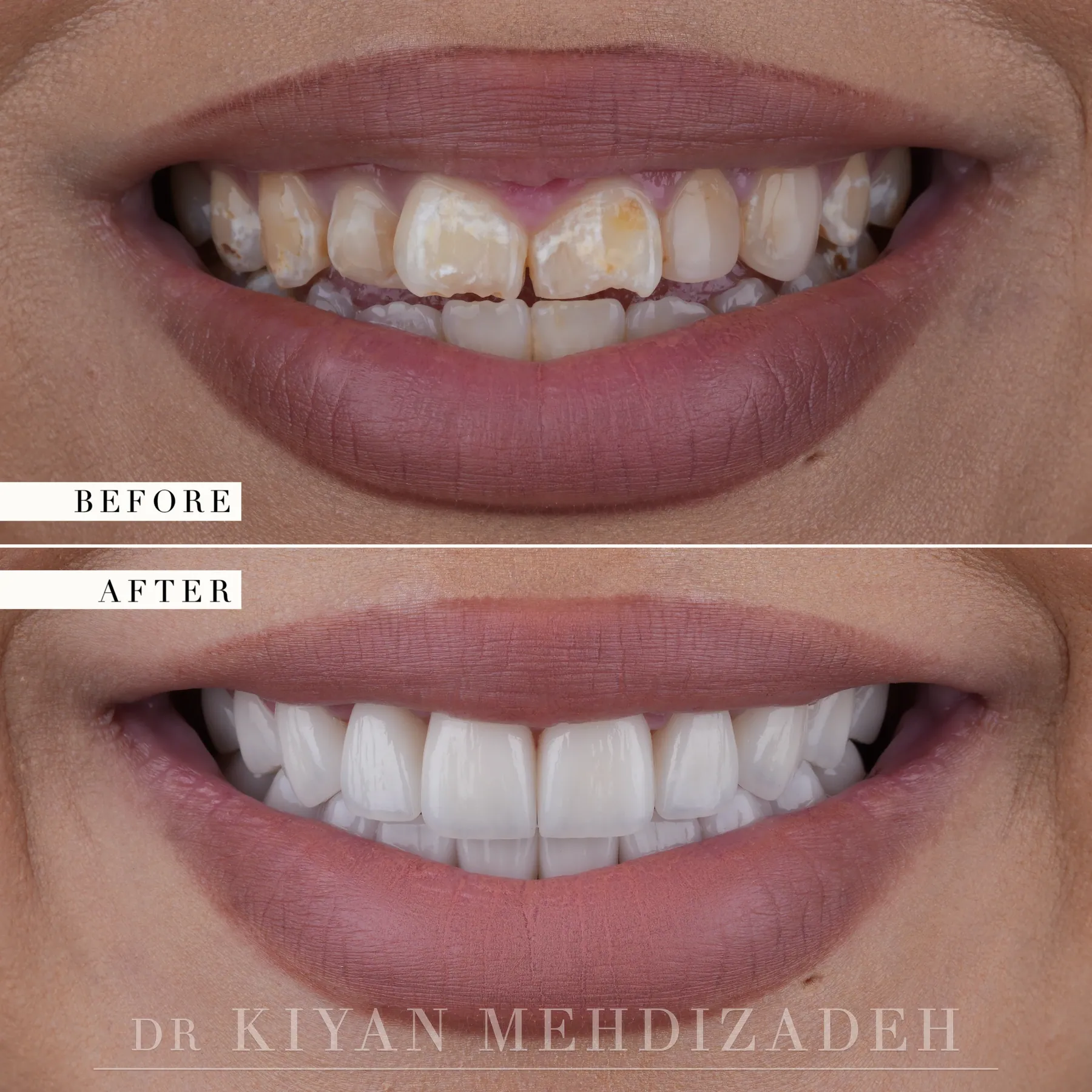 Marks from braces and dark bonding, replaced with porcelain veneers.See the case →
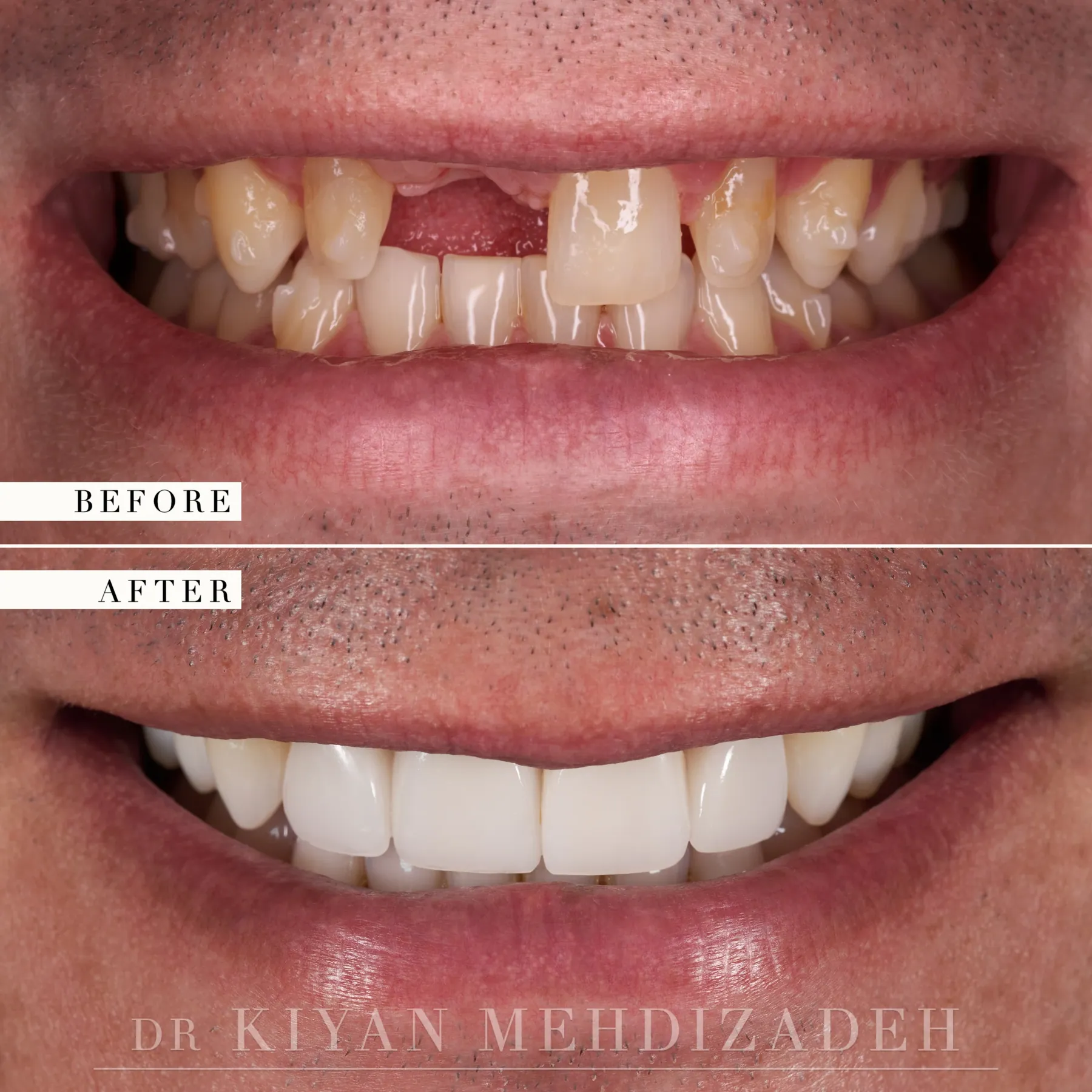 Gaps braces could not close, closed with an implant crown and three veneers.See the case →
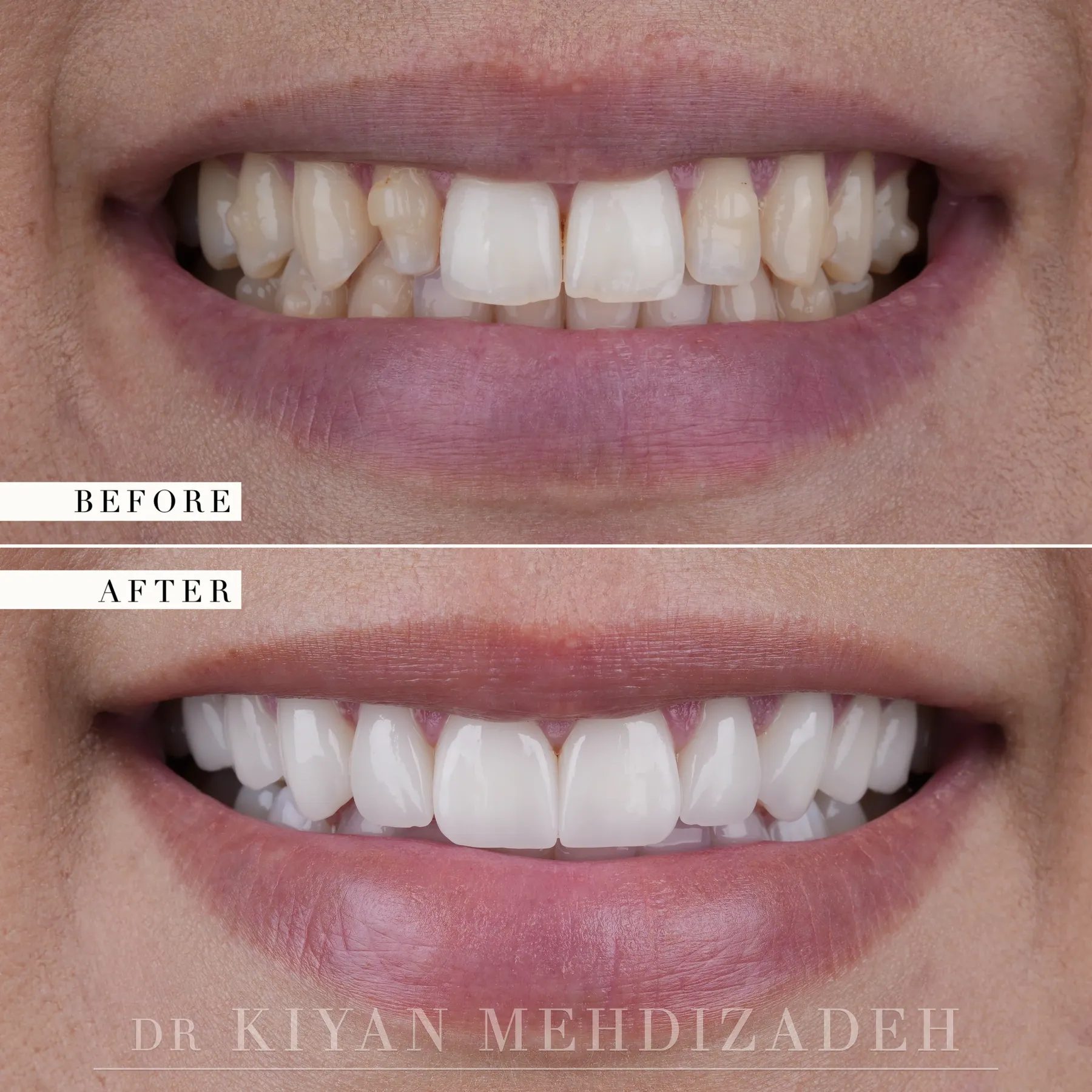 Small lateral incisors that aligners could not change, widened with ten veneers.See the case →
Straight is not the same as finished.
This page explains what braces and aligners leave behind, what veneers can change after them, why the order matters, when to start, what happens to your retainer, and what treatment costs.
Orthodontics moves teeth. It does not change their shape, their shade, or how wide they are, and many patients finish braces with straight teeth and a smile that still does not look right. The reasons fall into a few groups.
Teeth that are too small. Undersized lateral incisors leave spaces that moving teeth cannot remove, as in this case and another.
Shape, color and flare. In this case, the teeth were straight but discolored, slightly spaced and flared outward.
Worn edges and the gum line. Wear from grinding, and gum that covers too much of the teeth, are untouched by orthodontics; this case needed a gum lift and veneers after clear aligners.
Marks left by the brackets. Plaque held around brackets can dissolve mineral from the enamel and leave white or brown marks. In this case, bonding placed over them elsewhere had discolored and chipped, and decay was found beneath it.
Missing teeth. Braces can open or close space, but they cannot replace a tooth. In this case, two missing lower molars were replaced with implants alongside the veneers.
Shape, width, length and color, on teeth already in place.
Veneers work on the teeth themselves. They can widen a narrow tooth, lengthen a short or worn one, even out the edges, and set a shade whitening cannot reach. They can also correct the look of a mild flare: in this case, the veneers were made fuller near the gum, to fill the small spaces, and flatter across the front, to take away the outward flare without adding bulk. A gum lift first gave the teeth the length to carry that change.
Because the teeth are already straight, the porcelain can be thin. Minimal-preparation veneers need 0.3 to 0.5mm of enamel, about the thickness of a contact lens, and teeth that are well positioned need less reduction than crooked teeth disguised with porcelain.
Why braces first is often the right order.
Restorative treatment corrects width and shape efficiently and corrects position expensively, which is why the two disciplines are sequenced rather than substituted for one another. Orthodontics puts the teeth where they belong; porcelain changes the teeth themselves.
Veneers can disguise minor misalignment, but crowded or rotated teeth covered with porcelain need more enamel removed and give the design less room. Straightening first often means fewer veneers, and thinner ones. In this case, the braces had already put the teeth where they belonged, which is what allowed four restorations to finish the case rather than a full arch of them.
If you have not yet started orthodontics and expect to want veneers afterwards, the two can be planned together, so the teeth are moved to where the veneers need them and any space the porcelain will close is left in the right place.
When to start, and what happens to your retainer.
Veneers are prepared and bonded on the bare tooth surface, so the braces have to come off first, and the teeth should be stable in their new positions before the design is made.
Veneers do not hold teeth in place. Without retainers, teeth moved by orthodontics can relapse toward their original positions, and that stays true after veneers. A removable retainer made before the veneers may not fit once the shape of the teeth has changed, so a new one is made to the finished teeth.
Marks from brackets are assessed before anything is covered. Early white spots can sometimes be improved with resin infiltration or microabrasion, without veneers. Where the enamel has broken down or decay has started, the decay is treated first, as in this case, and the porcelain covers what remains.
The gum line, the shade, and a design you test first.
The gum line is the frame. Braces do not move the gum line, and a gummy or uneven gum line is still there after them. Where it needs it, a gum lift comes first: in this case, about 1.5 to 2mm of gum was reshaped over the upper front teeth before twenty veneers.
The shade comes after whitening. Porcelain does not respond to whitening, so natural teeth that stay are whitened first and the veneers are matched to them.
Where the porcelain ends. Four, eight, ten or twenty veneers; two and six are avoided. How many veneers do you need? explains why.
You see it before it is final. In this case, the patient wore temporary veneers, had them revised to her preference and chose the final shade herself.
What veneers after braces cost.
We quote each case as a whole, by the number of veneers it needs, never per tooth. Four veneers start at $16,000. $192/month: 144 payments at 9.99% APR, on approved credit. Ten start at $24,000 and twenty at $38,000. Most cases also include a gum lift or whitening. Every number and its price is set out in the full price table.
As examples, the total for this case was $42,000, covering twenty veneers and onlays across both arches, and the total for another was $23,000, covering whitening, one implant and its crown, and three veneers.
The consultation, including a 3D X-ray (CT scan), is complimentary. Most PPO plans contribute toward the cost of treatment. Financing is available. Porcelain veneers covers the treatment itself.

One doctor, from the design to the final porcelain.
Dr. Mehdizadeh designs every veneer case himself, and our laboratory, in the same building, makes the veneers.
Tell us what braces left behind.
Tell us what is going on. Add photos if you have them; if not, we will call and talk it through.
Or call (310) 770-3335.
Ask about veneers
Reviewed by our treatment coordination team. Call or text (310) 770-3335 if you would rather speak now.
Request received
A treatment coordinator will call you within two hours during office hours (Monday to Friday, 9 to 4).
To talk now, call (310) 770-3335.
Frequently Asked Questions
Can you get veneers after braces?
Yes. Once the braces are off and the teeth are stable, veneers can change the shape, width, length and color that orthodontics does not.
How long after braces can I get veneers?
Once the teeth are stable in their new positions and your retainer plan is in place. Dr. Mehdizadeh assesses that at the consultation; there is no single interval that suits everyone.
Do I still need a retainer with veneers?
Yes. Veneers do not hold teeth in place, and without retainers teeth moved by orthodontics can relapse toward their original positions. A new retainer is made to fit the finished teeth.
Can veneers close gaps that braces left?
Yes, when the gaps come from teeth that are too small. Braces move teeth but cannot make them wider; porcelain can, with the width shared across several teeth.
Can veneers cover white spots from braces?
Yes. Early white spots can sometimes be improved without veneers, with resin infiltration or microabrasion. Where the enamel has broken down or decay has started, the decay is treated first and veneers cover the damage.
Should I get veneers instead of braces?
Not when the teeth are crowded or the bite needs correcting. Veneers can disguise minor misalignment, but straightening first often means fewer, thinner veneers and less enamel removed.
How much do veneers after braces cost?
Four veneers start at $16,000. $192/month: 144 payments at 9.99% APR, on approved credit. Ten start at $24,000 and twenty at $38,000. Most cases also include a gum lift or whitening.
Last Updated: October 2026