Last Updated: October 2026
Have your teeth worn flat or short?
Grinding takes enamel off the biting edges a little at a time, and the teeth lose length and shape before most people notice. Restoring their proportions restores the way they meet as well as the way they look. Send us a photograph of your smile and we will tell you what is involved.
- A call within two hours during office hours.
- A written cost from us, before you commit to anything.
- No obligation. Many patients take weeks to decide. That is normal.
Ask about your case
Reviewed by our treatment coordination team. Call or text (310) 770-3335 if you would rather speak now.
Request received
A treatment coordinator will call you within two hours during office hours (Monday to Friday, 9 to 4).
To talk now, call (310) 770-3335.
Treatment Plan by Dr. Mehdizadeh
- Cleaning and gum therapy, so the gums were healthy before cosmetic work.
- Smile and bite design, setting length, shape and proportion before any tooth was prepared.
- In-office whitening, with take-home trays to keep the lower teeth matched to the new shade.
- Prototype veneers, worn and revised in the mouth to test the new length and the bite.
- Ten upper e.max veneers, second premolar to second premolar, and e.max onlays on the two upper first molars.
- Enamel contouring on the six lower front teeth.
- A partial ceramic crown on the upper right second molar after decay removal.
- A night guard, worn every night to protect the new work.
The Patient's Journey
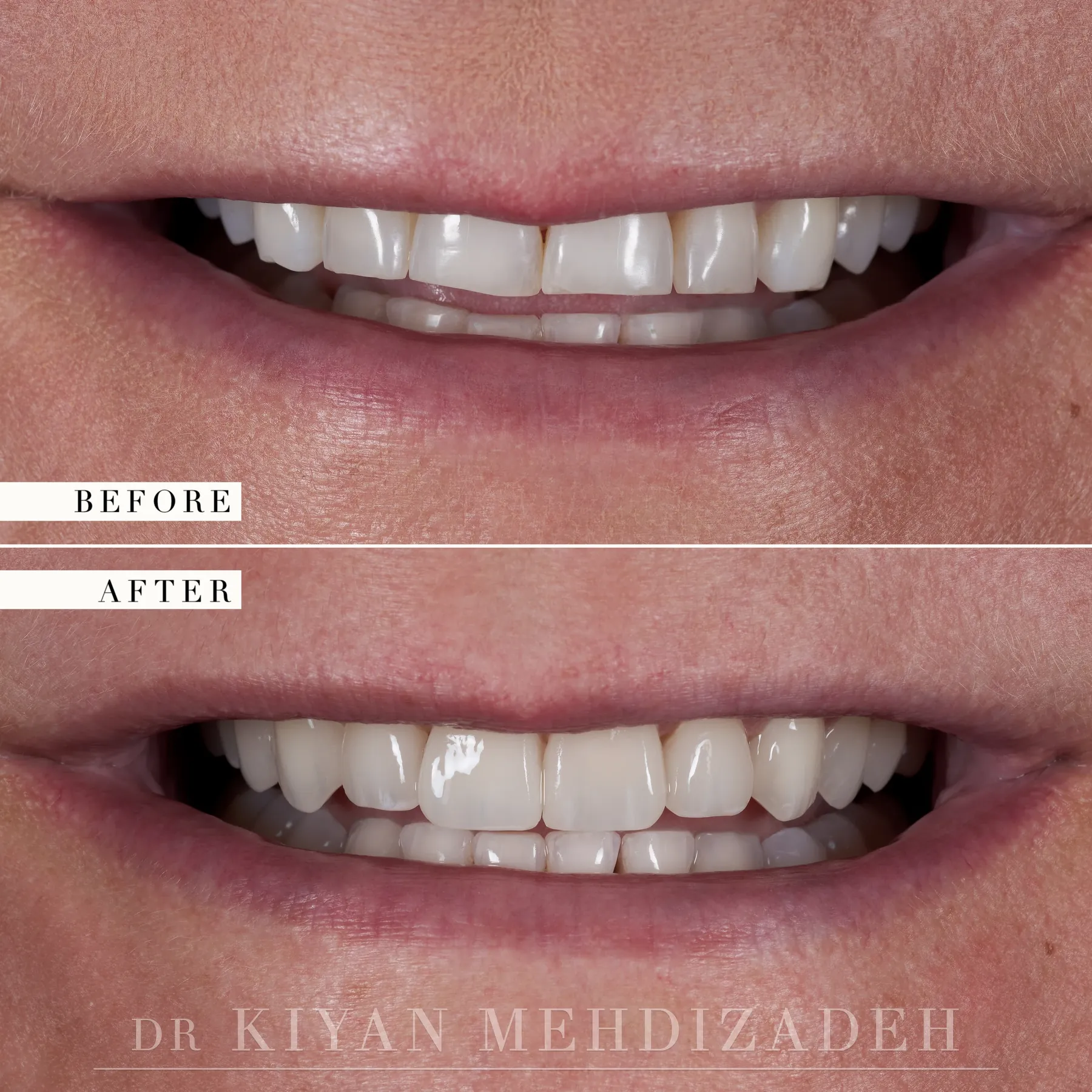
This patient came in because she had been grinding her teeth and could see what it had done to them. Her teeth had become flat and short. She had also started to feel discomfort in her jaw muscle, the masseter, which does most of the work when someone grinds.
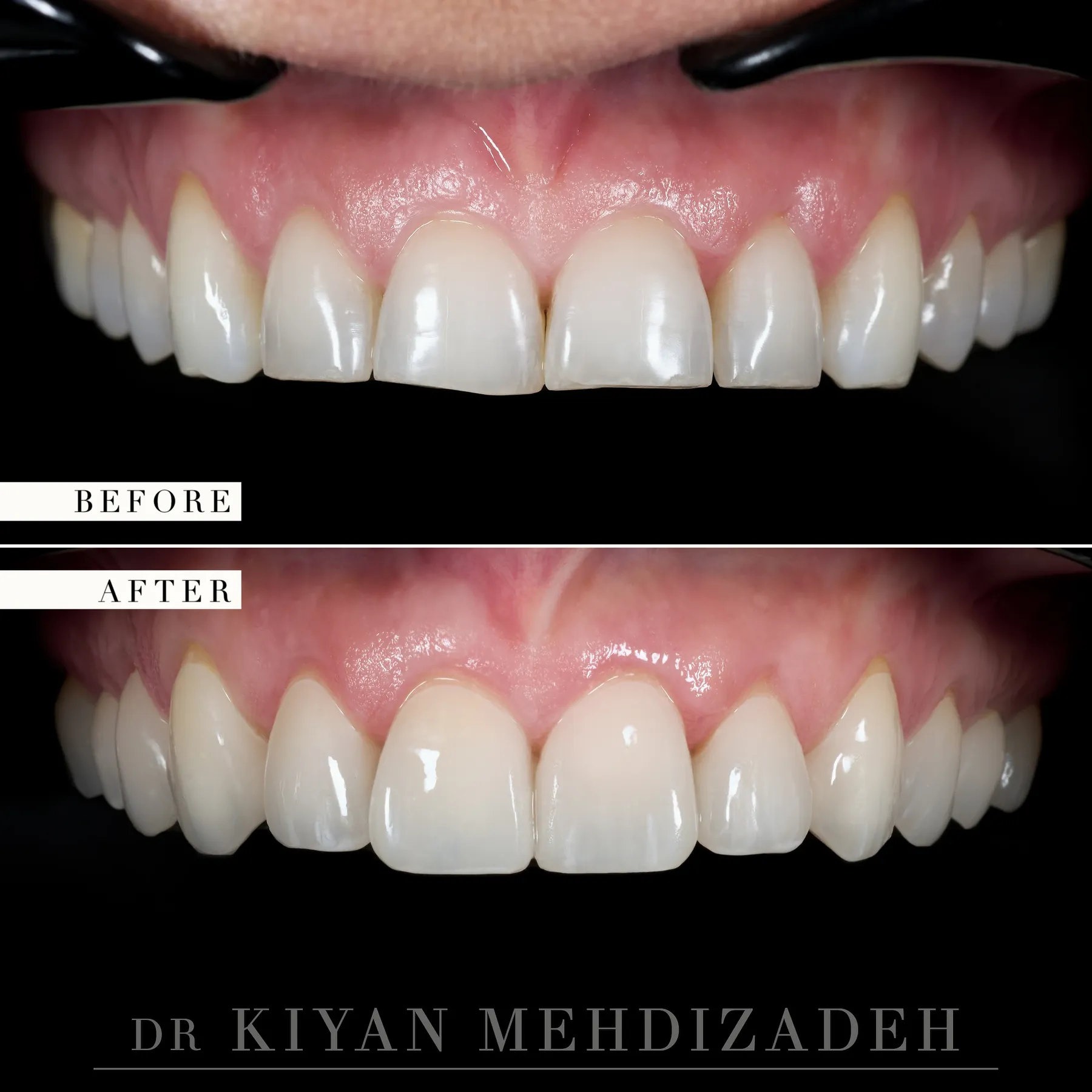
Grinding, or bruxism in the clinical term, wears enamel off the biting edges a little at a time. Once the enamel thins, the softer dentin underneath wears faster, so the loss speeds up as it goes. The front teeth lose length, the edges turn flat, and the smile shows less tooth than it used to.
Why Tooth Length Matters to the Bite
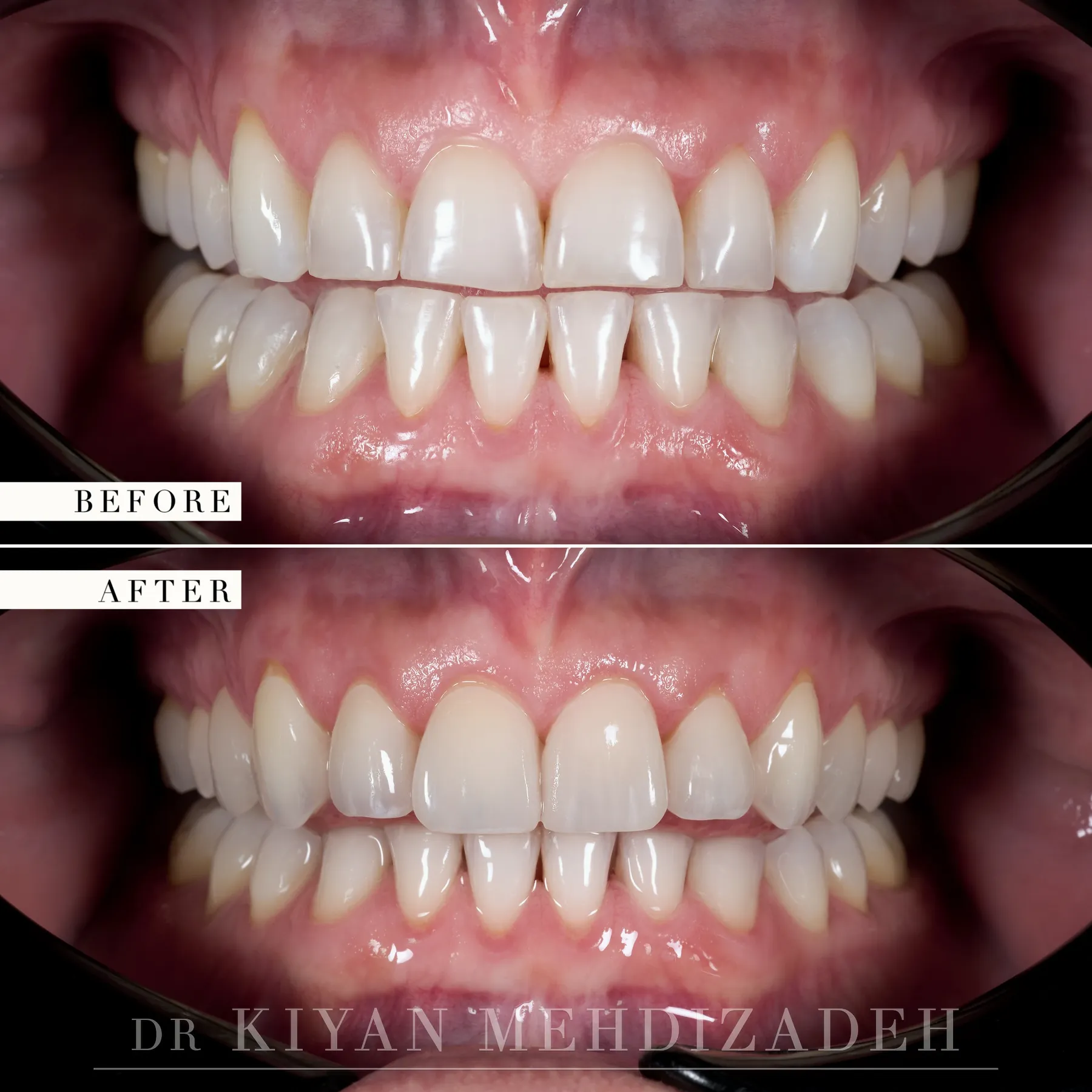
The length of the front teeth does more than set how the smile looks. It sets how the upper and lower teeth meet, and how the front teeth guide the jaw when it moves forward and from side to side. When grinding shortens them, that guidance weakens, and more of the load falls on the back teeth, which carry it less well.
Dr. Mehdizadeh treated this as a question of form and function together. The aim was to give the teeth back their natural proportions, because the right length and shape restore the way the teeth work as well as the way they look.
How We Planned the Treatment
We started with a cleaning and gum therapy, so the gums were healthy before any cosmetic work began. Dr. Mehdizadeh then designed the smile and the bite together, setting the length, shape and proportion of each tooth before we prepared any of them.
She wore prototype veneers built to that design first. Prototypes are temporary veneers in the planned shape, and they let a patient test the new length while she speaks, eats and closes her teeth together. We revised them in the mouth until the length and the bite were right.
The final restorations are ten e.max veneers from second premolar to second premolar, and e.max onlays on the two upper first molars. An onlay covers the biting surface of a back tooth and rebuilds the height that grinding took from it. E.max is a lithium disilicate ceramic, strong enough for the biting load and translucent enough to read as enamel. On the six lower front teeth we contoured the enamel, smoothing the worn edges rather than covering them. Whitening brought the lower teeth up to the shade of the new upper work.
We also removed decay from the upper right second molar and restored it with a partial ceramic crown, which replaces only the part of the tooth the decay had damaged.
The Result: Natural Proportions, and the Bite With Them
The whole treatment took five weeks. Her teeth now have the length and proportion they had before the grinding wore them down. The smile shows the tooth it used to, and the bite works the way it did when the teeth were whole.
Porcelain holds its shape and its color, but dental work does not last forever, and a patient who grinds puts more load on it than most. We recommended a night guard to wear every night, which takes the force of the grinding off the new ceramic while she sleeps.
Frequently Asked Questions About Restoring Worn Teeth
Can veneers restore teeth worn down by grinding?
Yes. Veneers and onlays rebuild the length and shape the enamel has lost, and the ceramic carries the biting load in its place. We design from the proportions the teeth should have, not from the worn teeth as they are.
Why do teeth get shorter when you grind them?
Grinding wears the enamel off the biting edges. Once the enamel thins, the dentin underneath is softer and wears faster, so the teeth lose length more quickly the longer the grinding goes on.
Does the length of the front teeth affect the bite?
Yes. The front teeth set how the upper and lower teeth meet and guide the jaw when it moves. When grinding shortens them, that guidance weakens and more load falls on the back teeth.
What are prototype veneers?
Temporary veneers made to the planned design. The patient wears them before the final veneers, and we adjust them in the mouth until the length, shape and bite are right. The final veneers copy the approved prototypes.
Why onlays on the molars instead of veneers?
A veneer covers the front of a tooth. On a molar the wear is on the biting surface, so an onlay, which covers that surface, is what rebuilds its height.
Why were the lower teeth not veneered?
The lower front teeth needed reshaping, not covering. We contoured their worn edges, and whitening brought them up to the shade of the upper work.
Is e.max strong enough for someone who grinds?
E.max is a lithium disilicate ceramic, among the strongest glass ceramics used for veneers, and it still passes light the way enamel does. Grinding puts extra load on any dental work, so we recommended a night guard every night to protect it.
What is a partial ceramic crown?
A restoration that replaces only the damaged part of a tooth and keeps the healthy structure around it. Here it restored a molar after we removed decay.
How long did treatment take, and what did it cost?
Five weeks from the first appointment to the final restorations. This case was $28,000, covering the cleaning and gum therapy, the smile and bite design, whitening, prototype veneers, ten e.max veneers, two e.max onlays, the lower contouring and a partial ceramic crown. $335/month: 144 payments at 9.99% APR, on approved credit.
Last Updated: October 2026