Bruxism: Teeth Grinding and ClenchingRelax the muscles. Rebuild the teeth.
Bruxism is grinding or clenching the teeth, in sleep or while awake. It wears teeth down, chips their edges and tires the jaw. We treat both sides of it: Botox relaxes the jaw muscles that do the grinding, a night guard protects the teeth while you sleep, and when the teeth are already worn, a full-mouth reconstruction rebuilds them on a bite designed to take the load.
Full-mouth reconstruction: our recent cases start at $28,000
$335/month 144 payments at 9.99% APR, on approved credit.
Your consultation, including a 3D X-ray (CT scan), is free.
Send photos if you have them. Either way, we reply with a cost. No obligation.
Ask about grinding and worn teeth
Reviewed by our treatment coordination team. Call or text (310) 770-3335 if you would rather speak now.
Request received
A treatment coordinator will call you within two hours during office hours (Monday to Friday, 9 to 4).
To talk now, call (310) 770-3335.
- A call within two hours during office hours.
- A written cost from us, before you commit to anything.
- No obligation. Many patients take weeks to decide. That is normal.
- Free consultation and 3D X-ray (CT scan)
- Private practice since 2012
- IV sedation in our own office
- In-house dental laboratory
What grinding does to teeth.
Most grinding happens in sleep, so many people first hear about it from a partner or from their dentist. About one adult in five grinds at night, and about as many clench during the day.
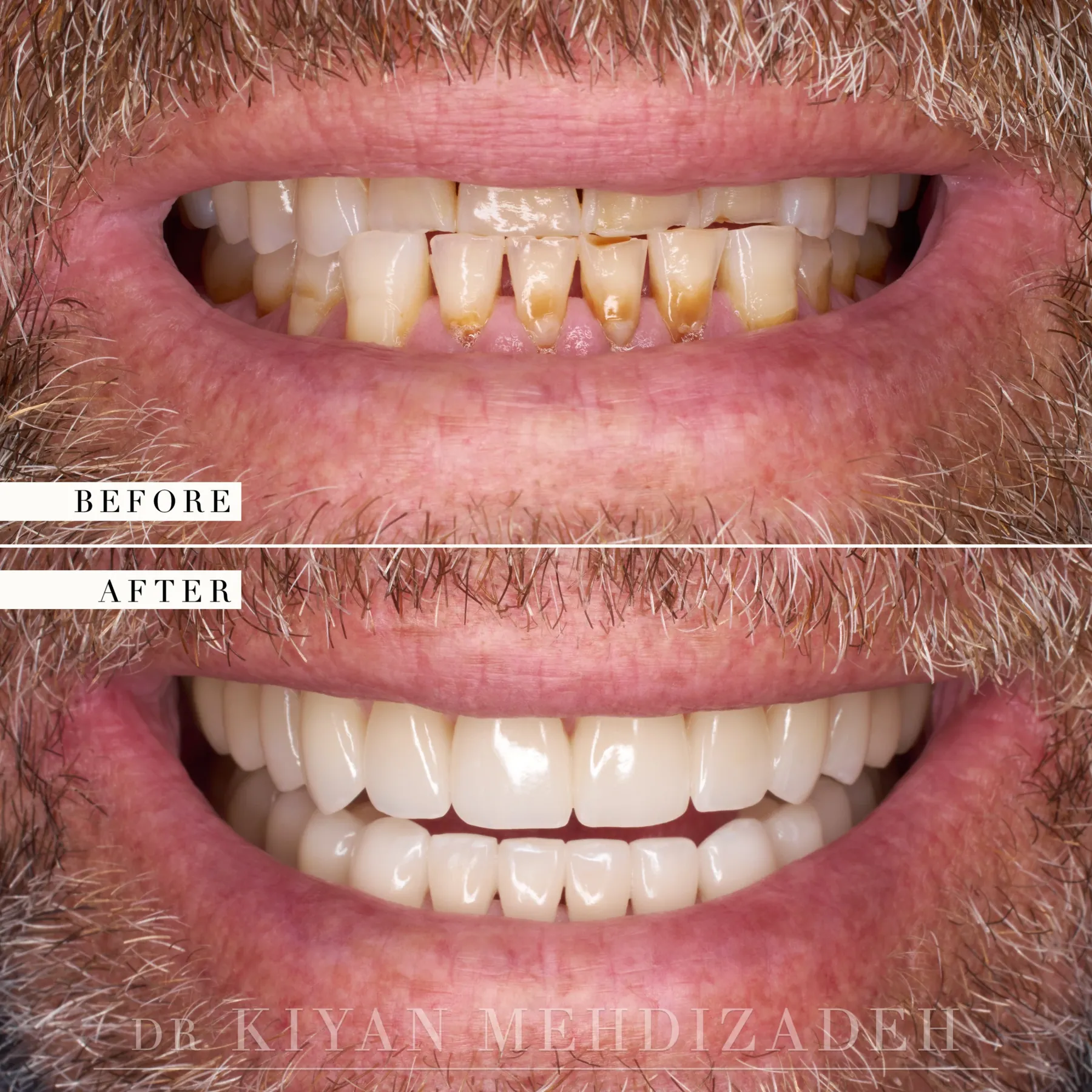
The teeth show it first. The front teeth flatten and shorten, their edges chip, and the back teeth lose their shape. Fillings and crowns break, teeth crack, and small notches appear where the teeth meet the gum. The muscles show it too: a tired or sore jaw on waking, a dull headache at the temples, and jaw muscles that grow larger from the work. A worn smile looks older than the face around it.
Why people grind.
Night grinding starts in the brain. It happens during brief arousals from sleep, which is why it continues whatever the shape of the teeth. Stress and anxiety, alcohol, caffeine and smoking each raise the risk, and some medications, including certain antidepressants, are linked to it. If you snore or wake unrefreshed, tell us at your consultation.
Because the cause is in the muscles and the nervous system, we treat the muscles and protect the teeth, and we rebuild the teeth grinding has already worn.
Botox for grinding and clenching.
Dr. Mehdizadeh injects small doses of Botox into the masseter muscles, the large muscles at the angle of the jaw, and where needed into the temporalis muscles at the sides of the head. The muscles relax and bite with less force. In clinical trials, patients ground less often, the muscles worked less hard, and jaw pain eased.
The effect builds over the first few weeks and lasts about three to six months, so we repeat it. The appointment takes minutes, and you go back to your day.
A night guard protects the teeth.
A hard guard made to fit your teeth takes the wear while you sleep, so the enamel and any porcelain do not. For anyone who grinds and has veneers, crowns or implants, it is what keeps the work intact: in one study of porcelain veneers, failures were about twice as common in patients who grind, and a night guard lowered the risk.
When the teeth are already worn.
Years of grinding take length off the teeth. As the edges wear, the bite closes, the lips lose support, and the smile shows less tooth than it should. Filling or bonding one tooth at a time does not hold, because the force that wore them down is still there.
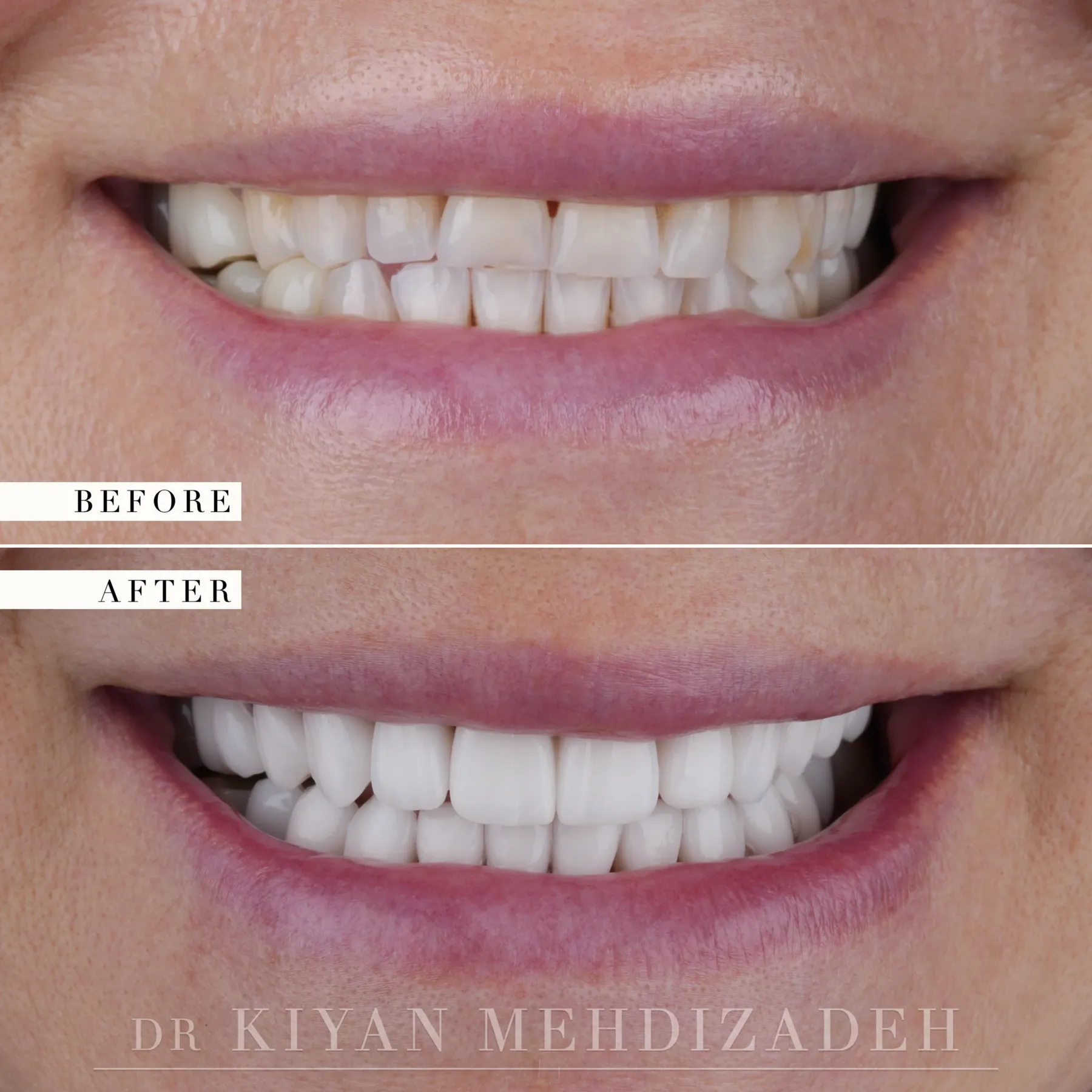
A full-mouth reconstruction rebuilds the teeth as one plan. We measure the bite first and decide the length and shape every tooth is allowed. You wear the new bite and the new teeth as temporaries, and we adjust them in your mouth until they feel right and look right. Our own master ceramist then makes the final porcelain, copied from the temporaries you approved.
Balancing the bite.
Bite balancing means adjusting the way the teeth meet so the force of closing spreads evenly across them, rather than landing on one tooth or one corner of a crown. In a reconstruction we design the bite before any tooth is made, set the front teeth to guide the jaw, and check every contact in your mouth when the porcelain goes in. A balanced bite is what lets porcelain last in a mouth that grinds.
Before, and after.
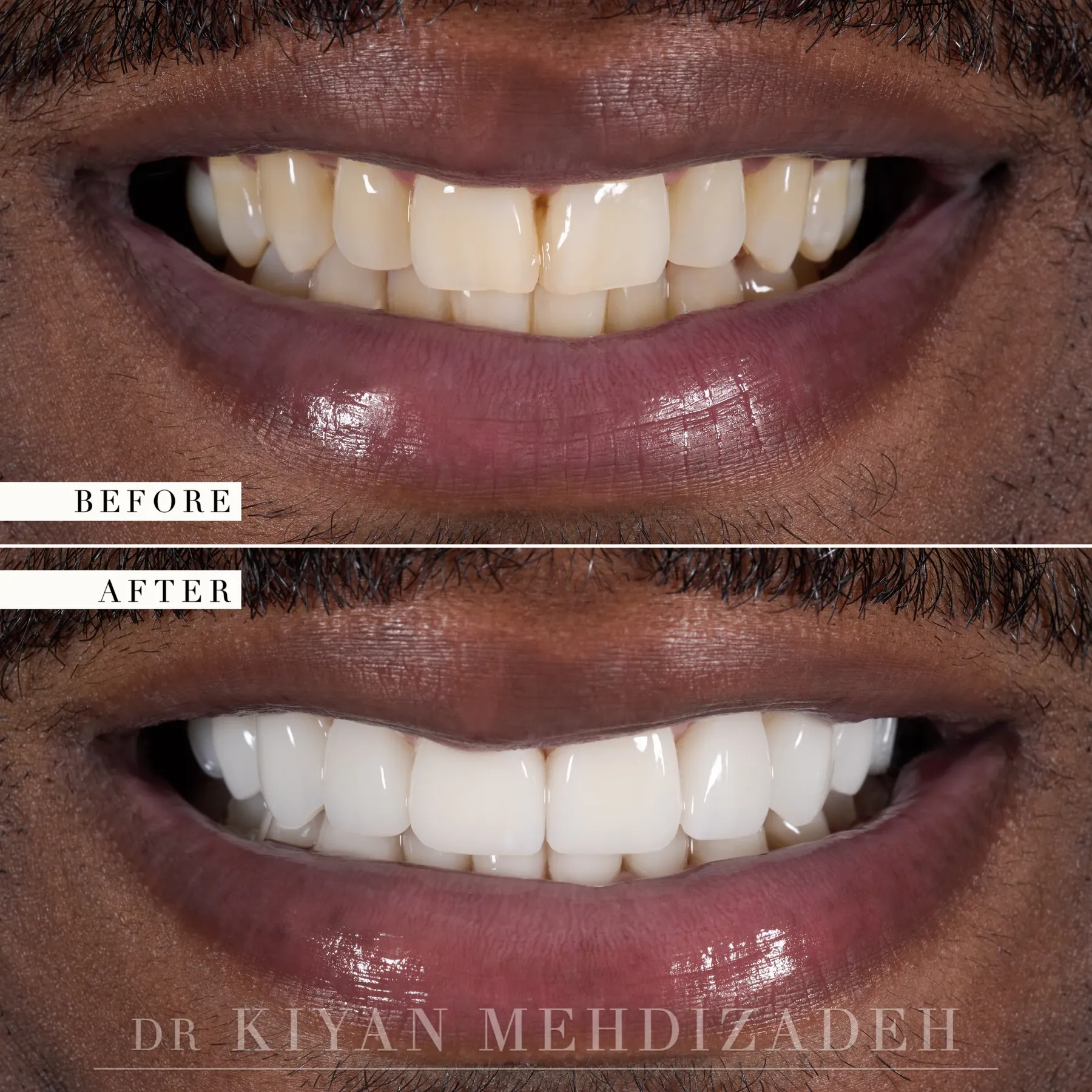
Every practice says its work looks natural. We show you. Here are 52 of our own cases, each photographed before and after.
What treatment costs.
Each reconstruction is priced as a whole case, in writing, before you agree to treatment. Our recent reconstructions start at $28,000, or $335/month: 144 payments at 9.99% APR, on approved credit. Each case on our site states its total. The price of Botox and of a night guard is given at your consultation, which is free and includes a 3D X-ray (CT scan). Financing is available. Most PPO plans contribute toward the cost of treatment.

One doctor, from the bite to the final porcelain.
Dr. Mehdizadeh plans the bite, administers the Botox and designs the new teeth. He trained in advanced occlusion and bite design at UCLA and in fixed prosthodontics under Mauro Fradeani in Italy.
Tell us what is going on.
Add photos of your teeth if you have them; if not, we will call and talk it through.
Or call (310) 770-3335.
Ask about grinding and worn teeth
Reviewed by our treatment coordination team. Call or text (310) 770-3335 if you would rather speak now.
Request received
A treatment coordinator will call you within two hours during office hours (Monday to Friday, 9 to 4).
To talk now, call (310) 770-3335.
Frequently Asked Questions
What is bruxism?
Bruxism is grinding or clenching the teeth. Sleep bruxism happens at night, often without the person knowing; awake bruxism is clenching or bracing the jaw during the day.
How do I know if I grind my teeth?
Flattened or chipped front teeth, a sore jaw or a headache on waking, broken fillings and enlarged jaw muscles are the usual signs. A partner often hears it first. We see it on the teeth at your consultation.
How does Botox help with grinding?
It relaxes the jaw muscles that grind and clench, so they bite with less force. Patients grind less often, and jaw pain eases.
How long does Botox for grinding last?
About three to six months. We repeat it when the effect wears off.
How soon does it start working?
The effect builds over the first few weeks after the injections.
Does a night guard stop grinding?
It protects the teeth and any porcelain from the wear while you sleep. Botox is what relaxes the muscles.
Can worn teeth be rebuilt?
Yes. A full-mouth reconstruction restores the length and shape grinding took, on a bite designed for the load. You wear the new teeth as temporaries first.
Will veneers or implants last if I grind?
Yes, with a bite designed for it and a night guard. Grinding raises the risk of chipping and fracture, which is why we design the bite first and make you a night guard.
Why do I wake up with a sore jaw or a headache?
Clenching and grinding through the night tire the jaw muscles and the muscles at the temples. Botox relaxes them.
Last Updated: October 2026